[mooc] Pastoraltheologie kompakt #imoox

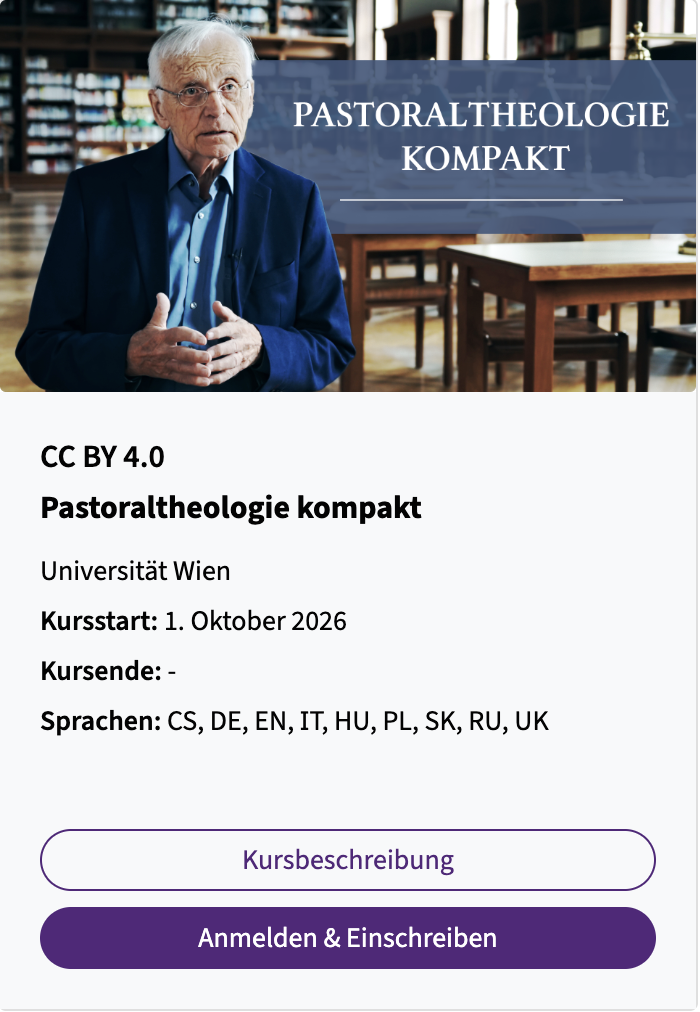
Die Universität Wien stellt ab sofort einen MOOC zu „Pastoraltheologie kompakt“ zur Verfügung:

Dieser Kurs bietet eine kompakte Einführung in die Pastoraltheologie. Die Inhalte sind logisch in einem Dreischritt gegliedert, der die wesentlichen Spannungsfelder des Fachbereichs abdeckt:
– Die Welt von heute (Lektionen 1-3): Analyse der gegenwärtigen gesellschaftlichen Kontexte.
– Gottesbilder, Tod, Jesusbewegung (Lektionen 4-6): Theologische Grundfragen und die Rückbesinnung auf die Ursprünge.
– Die Kirche in der Welt von heute (Lektionen 7-12): Praktische Implikationen und die Rolle der kirchlichen Gemeinschaft in der Moderne.

Selbstverständlich ist der MOOC kostenlos und jederzeit besuchbar: [Link zur kostenlosen Anmeldung]

[mooc] Elektromagnetische Kompatibilität – ein Kurs für Ingenieur:innen #imoox #tugraz

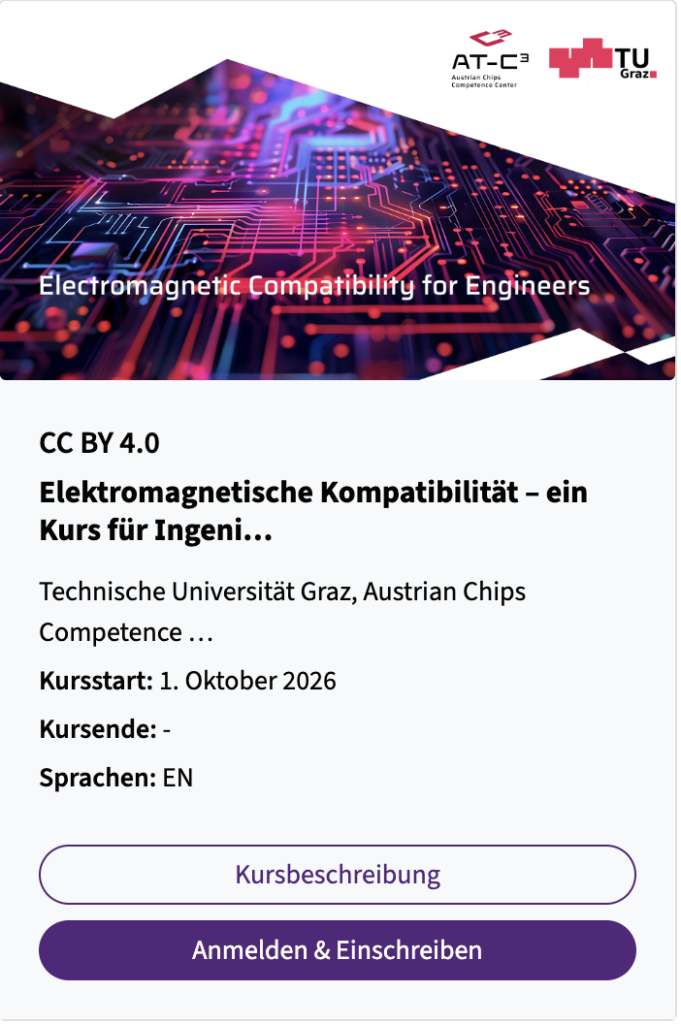
Es geht heute ein neuer MOOC mit dem Titel „Elektromagnetische Kompatibilität – ein Kurs für Ingenieur:innen“ an den Start.

Sie sind Ingenieur*in und möchten ihr Wissen im Bereich der elektromagnetischen Verträglichkeit (EMV) erweitern? Dann sind Sie hier genau richtig! 
Das Institut für Elektronik an der Technische Universität Graz gemeinsam mit dem  Austrian Chips Competence Center haben diesen MOOC entwickelt.
Er vermittelt praxisnahes Wissen und unterstützt Ingenieur*innen dabei, ihre Kompetenzen im Bereich EMV gezielt auszubauen – für aktuelle und zukünftige Herausforderungen in Industrie und Forschung.
Der Kurs richtet sich in erster Linie an berufstätige Ingenieur*innen, aber auch Masterstudierende und Doktorand*innen profitieren von den vermittelten Inhalten.

Natürlich ist der MOOC kostenlos: [Link zur kostenlosen Anmeldung]

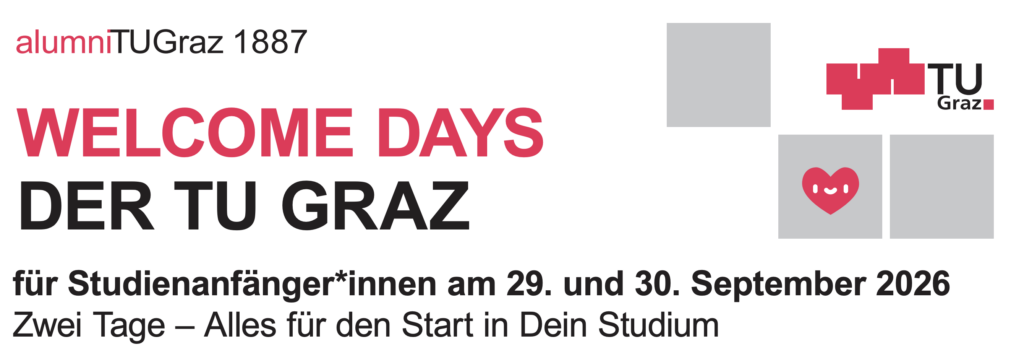
Welcome Days 2026 an der TU Graz #tugraz #welcome

Es ist wieder soweit: Das Wintersemester 2026 startet und damit dürfen wir auch heuer unsere Beginnerinnen und Beginner herzlich an der TU Graz begrüßen.

Dafür veranstalten wir – schon traditionell – die Welcome Days, mit dem Ziel kurz und kompakt einen guten Studieneinstieg zu ermöglichen

Das gesamte Programm und weitere Informationen findet man auf der zugehörigen Webseite.

Und natürlich – herzlich Willkommen an der TU Graz.

[publication] Prompting.School: A Design-Based Research Approach to Teaching AI Literacy Through Guided Prompt Engineering Practice #AIinEducation #tugraz #AI

Our publication (presented at least year ICL conference) about „Prompting.School: A Design-Based Research Approach to Teaching AI Literacy Through Guided Prompt Engineering Practice“ is published now.

Abstract:
We introduce prompting.school, a browser-based learning platform that teaches foundational prompt engineering skills to support AI literacy. Developed using a design-based research approach, the platform was evaluated through four iterative cycles with pre-service and in-service teachers, as well as vocational learners. Aligned with the UNESCO AI Competency Framework and DigComp 2.3 AT, it combines scaffolded lessons, interactive feedback, and real-time AI responses to promote self-regulated learning. Findings show that structured, hands-on prompting practice enhances learners’ understanding, with notable differences in engagement and performance across educational contexts.

[publication @ publisher’s homepage]
[draft @ ResearchGate]

Reference: Brünner, B., Jahic, I., Ebner, M. (2026). Prompting.School: A Design-Based Research Approach to Teaching AI Literacy Through Guided Prompt Engineering Practice. In: Auer, M.E., Toth, P. (eds) Innovation via Collaborative Learning in Engineering Education. ICL 2025. Lecture Notes in Networks and Systems, vol 1848. Springer, Cham. [https://doi.org/10.1007/978-3-032-20381-6_62]

This is an impactful contributions, methodological rigor, and exceptional novelty in the research field of AI in education.

[publication] On Using an LLM-Based Approach for Automatic Evaluation of Programming Tasks in MOOC Videos #tugraz #AIinEducation

Our publication about „On Using an LLM-Based Approach for Automatic Evaluation of Programming Tasks in MOOC Videos“ has been published.

Abstract:
Interactive videos promote learner engagement by transforming the passive activity of watching videos into an active learning process. LIVE, a web platform developed in previous research that allows for the integration of interactive elements into videos, also supports embedding programming tasks. However, at the beginning of our research, the output of the submitted solution was automatically compared to the reference output, but the code itself still had to be checked manually, as no automatic process was available to verify the solution and provide feedback. To address this, a stand-alone application was developed that automatically evaluates students’ solutions to Python programming tasks using a self-hosted large language model. This application was then integrated into the existing platform. To test this approach, a massive open online course containing four interactive videos with several programming tasks and quizzes was created. Students’ performance was analyzed using quiz results, task submissions, self-assessments, and user statistics provided by the course platform and LIVE. The results indicate that utilizing a large language model for automated feedback can positively impact learning outcomes. However, some limitations must be taken into account, such as the need to correct some of the model’s generated outputs manually due to insufficient feedback quality for certain tasks. This suggests that the combination of automated and manual evaluation seems to be the most effective approach for now.

[full article @ publisher’s homepage]
[draft @ ResearchGate]

Reference: Kindlhofer, C., Wachtler, J., Ebner, M. (2026). On Using an LLM-Based Approach for Automatic Evaluation of Programming Tasks in MOOC Videos. In: Smith, B.K., Borge, M. (eds) Learning and Collaboration Technologies. HCII 2026. Lecture Notes in Computer Science, vol 16733. Springer, Cham. https://doi.org/10.1007/978-3-032-30784-2_13

[publication] Code Meets Career: Employer Interpretations of Coding Bootcamp Graduates in Austria and Germany #edmedia

We are happy about another publication at this year’s edmedia conference titled „Code Meets Career: Employer Interpretations of Coding Bootcamp Graduates in Austria and Germany„

Abstract:
Coding bootcamps have expanded rapidly in response to skill shortages in the IT sector and as alternative pathways into the field. However, little is known about how these pathways are perceived and valued within organizations, especially in Austria and Germany. This study therefore examines how companies in Austria and Germany perceive, evaluate, and integrate coding bootcamp graduates. Drawing on a qualitative content analysis of five semi-structured interviews with decision-makers in software development, IT consulting, and human resources, the study focuses on socially situated employer perspectives on skills, potential, and legitimacy. The findings reveal a nuanced picture: while graduates are generally valued for their motivation, adaptability, learning orientation, teamwork, and practical engagement, concerns persist regarding theoretical depth, project experience, and formal recognition. In the case of refugee participants, language proficiency emerged as an additional challenge shaping labor market integration. The findings further suggest that workplace integration depends less on the bootcamp model itself than on organizational conditions such as onboarding structures, mentoring opportunities, and continued professional development. Overall, the study provides exploratory insights into how coding bootcamp qualifications are interpreted and evaluated by employers and contributes to alternative educational pathways into software development careers.

[article @ conference homepage]
[draft @ ResearchGate]

Reference: Wolf, D., Ebner, M. & Brünner, B. (2026). Code Meets Career: Employer Interpretations of Coding Bootcamp Graduates in Austria and Germany. In Proceedings of EdMedia 2026 Edinburgh (pp. 1170-1184). Edinburgh, Scotland: Association for the Advancement of Computing in Education (AACE). Retrieved July 1, 2026 from https://www.learntechlib.org/primary/p/2129750/.

[publication] How Embodiment Changes AI Tutoring: Comparing Student Perceptions of Text and AI Human Avatar-Based Chatbot Systems #AIinEducation #chatbot #tugraz

Our publication titled „How Embodiment Changes AI Tutoring: Comparing Student Perceptions of Text and AI Human Avatar-Based Chatbot Systems“ is now published.

Abstract:
Embodied conversational interfaces are able to deliver generative AI tutoring via synthesised speech and human-like video avatars. However, there is limited empirical evidence on how embodiment shapes the learner experience and self-regulated learning (SRL). This study compares the perceptions of students interacting with a text-based Retrieval-Augmented Generation (RAG) tutor and an avatar-based RAG tutor in two authentic higher education contexts (introductory computer science and Python programming) across two European universities. Adopting a Design-Based Research approach, we collected (1) questionnaire data from users and non-users, and (2) anonymised interaction logs comprising 341 user messages, which were coded using an SRL process–action framework. The results show that the perceived level of learning support is largely consistent with previous text-only deployments: the tutor is primarily valued for providing explanations and support related to practice, while motivational support is still comparatively weak. However, embodiment notably improves perceptions of the system as a communication partner, with active users rating this dimension more positively than non-users. Modality ratings suggest that audio output is perceived as more helpful than the visual avatar. Log analyses show that interactions are still dominated by information-seeking (Seeking–Search) and that metacognitive SRL actions (e.g. goal setting and self-evaluation) are rare. Embodiment also introduces additional peripheral interactions (e.g. character-focused prompts and human-likeness checks), thereby increasing the proportion of non-learning dialogue. Overall, the findings suggest that, while embodiment enhances social presence, it does not automatically foster deeper SRL. Explicit pedagogical scaffolding is needed to encourage learners to engage in metacognitive regulation.

[full paper @ publisher’s homepage]
[draft @ ResearchGate]

Reference: Brünner, B., Nestler, M., Pucher, L., Ebner, M. (2026). How Embodiment Changes AI Tutoring: Comparing Student Perceptions of Text and AI Human Avatar-Based Chatbot Systems. In: Smith, B.K., Borge, M. (eds) Learning and Collaboration Technologies. HCII 2026. Lecture Notes in Computer Science, vol 16731. Springer, Cham. https://doi.org/10.1007/978-3-032-30542-8_25

This is an impactful contributions, methodological rigor, and exceptional novelty in the research field of AI in education, Chatbots and MOOCs.

[blogpost] Generative KI in der Hochschullehre – Wie wir Innovation verantwortungsvoll gestalten #hfd #tugraz #AI

Wir haben einen kurzen Blogpost über „Generative KI in der Hochschullehre – Wie wir Innovation verantwortungsvoll gestalten,“ beim Hochschulforum Digitalisierung verfasst um auch auf unsere Whitepaper hinzuweisen:

Dieser Blogbeitrag von Philipp Leitner, Benedikt Brünner, Martin Ebner und Sandra Schön bietet Hochschulen eine kompakte Anleitung, wie sie generative KI überlegt in der Lehre einsetzen können. Die Tipps wurden aus der Praxis an der TU Graz entwickelt und getestet und werden ergänzt mit Beispielen sowie Hinweisen auf nützliche Tools.

[Link zum Blogpost]

Whitepaper: Schön, S., Brünner, B., Ebner, M., & Leitner, P. (2026). Evaluating GenAI Innovation in Higher Education. A Whitepaper (Version 1.0 – May 22, 2026). Graz University of Technology. https://doi.org/10.3217/1tfkj-ntj85


[mooc] Informatik-FIT #tugraz #brückenkurs

Fast schon traditionell, darf ich den Start des MOOC „Informatik-FIT“ verkünden, welcher vor allem unseren Studienanfänger:innen helfen soll, den Einstieg in die Informatik zu erleichtern:

Die Vielfalt der Probleme, die in der Informatik behandelt werden, macht eine kurze und dennoch vollständige Definition dessen, was Informatik ist, unmöglich.
Unmöglich ist es auch, alle Themen in einem Einführungskurs unterzubringen.
Irgendwo müssen wir aber trotzdem anfangen und so haben wir versucht, die wichtigsten Grundbegriffe und Ideen der Informatik auszuwählen und diese so zu vermitteln, dass sich die Teilnehmer:innen schnell ein breiteres Bild von der Informatik machen können.
Darüber hinaus soll es für die Teilnehmer:innen möglich sein, Zusammenhänge zwischen den einzelnen Themen zu erkennen bzw. herzustellen. 

Der Trailer zum MOOC:

YouTube

Mit dem Laden des Videos akzeptieren Sie die Datenschutzerklärung von YouTube.
Mehr erfahren

Video laden

Die Teilnahme ist natürlich wie immer kostenfrei: [Link zur Anmeldung zum MOOC]

[mooc] Level-Up: Ein Blick in die Informatik #imoox #tugraz #informatik #schule

Die TU Graz bietet einen Online-Kurs für Schülerinnen und Schüler an, mit dem Titel „Level-Up: Ein Blick in die Informatik„. Damit soll ein wenig Einblick in die Informatik gegeben werden:

Dieser Kurs bietet einen leicht zugänglichen Einstieg in die Informatik, Programmierung und Künstliche Intelligenz.
Die Teilnehmenden lernen, wie digitale Technologien funktionieren, und sammeln praktische Erfahrungen mit grundlegenden Programmierkonzepten in Python.
Der Kurs unterstützt Schülerinnen und Schüler dabei, fundierte Entscheidungen für zukünftige technische Studienrichtungen zu treffen.

Der Kurs ist natürlich kostenlos: [Link zur kostenlosen Anmeldung]