Die Folien zu meiner heutigen Keynote bei der Moodle Moot in Lübeck sind nun online verfügbar. Wie immer freue ich mich über Rückmeldungen:
Klicken Sie auf den unteren Button, um den Inhalt von www.slideshare.net zu laden.
Digitale Lehre an und rund um der Technischen Universität Graz
Veröffentlichungen zu jeweiligen Thema
Die Folien zu meiner heutigen Keynote bei der Moodle Moot in Lübeck sind nun online verfügbar. Wie immer freue ich mich über Rückmeldungen:
Klicken Sie auf den unteren Button, um den Inhalt von www.slideshare.net zu laden.
Our publication about „Leveraging Learning Analytics in a Personal Learning Environment using Linked Data“ for the Bulletin of the Technical Committee on Learning Technology is now online available.
Abstract:
We report on the reflection of learning activities and revealing hidden information based on tracking user behaviors with Linked Data. With in this work we introduce a case study on usage of semantic context modelling and creation of Linked Data from logs in educational systems like a Personal Learning Environment (PLE) with focus on reflection and prediction of trends in such systems. The case study demonstrates the application of semantic modelling of the activity context, from data collected for over two years from our own developed widget based PLE at Graz University of Technology. We model learning activities using adequate domain ontologies, and query them using semantic technologies as input for visualization which serves as reflection and prediction medium as well for potential technical and functional improvements like widget recommendations. As it will be shown, this approach offers easy interfacing and extensibility on technological level and fast insight on trends in e-learning systems like PLE.
Reference: Softic, S., De Vocht, L., Taraghi, B., Ebner, M., Mannes, E. Van Der Walle, R. (2014) Leveraging Learning Analytics in a Personal Learning Environment using Linked Data, Bulletin of the Technical Committee on Learning Technology, Volume 16, Issue 4, pp. 10-13
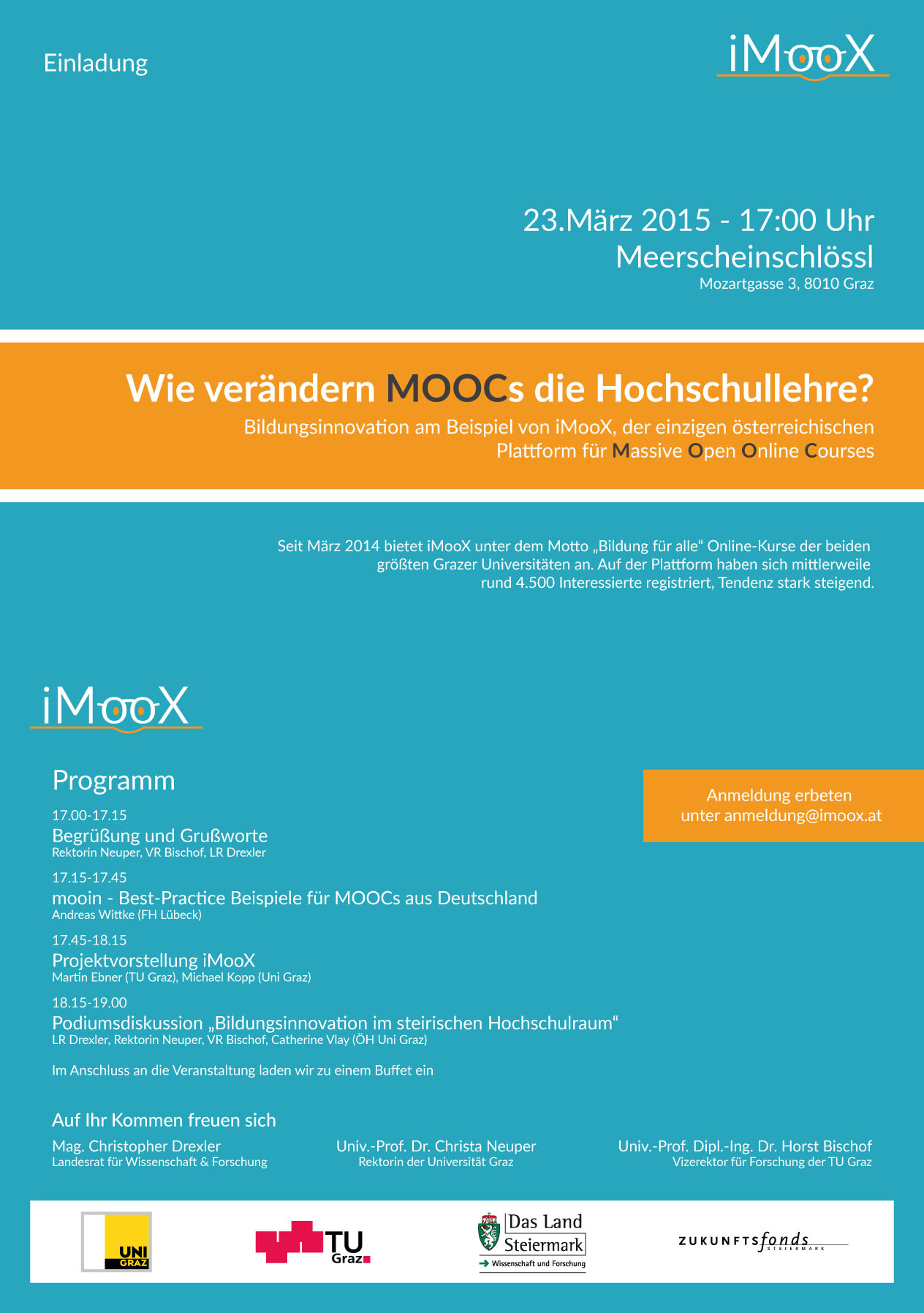
Es freut uns sehr, dass wir am 23.3.2015 zu einen Symposium rund um unsere iMooX Initiative laden können. Nicht nur, dass das Land Steiermark und die Leitungsebenen mit uns über die Möglichkeiten von MOOCs in der Hochschullehre diskutieren, es hat uns auch Andreas Wittke zugesagt einen externen Input und die Sicht aus Deutschland einzubringen. Die Veranstaltung ist kostenlos, bitte einfach kurz unter anmeldung@imoox.at anmelden.
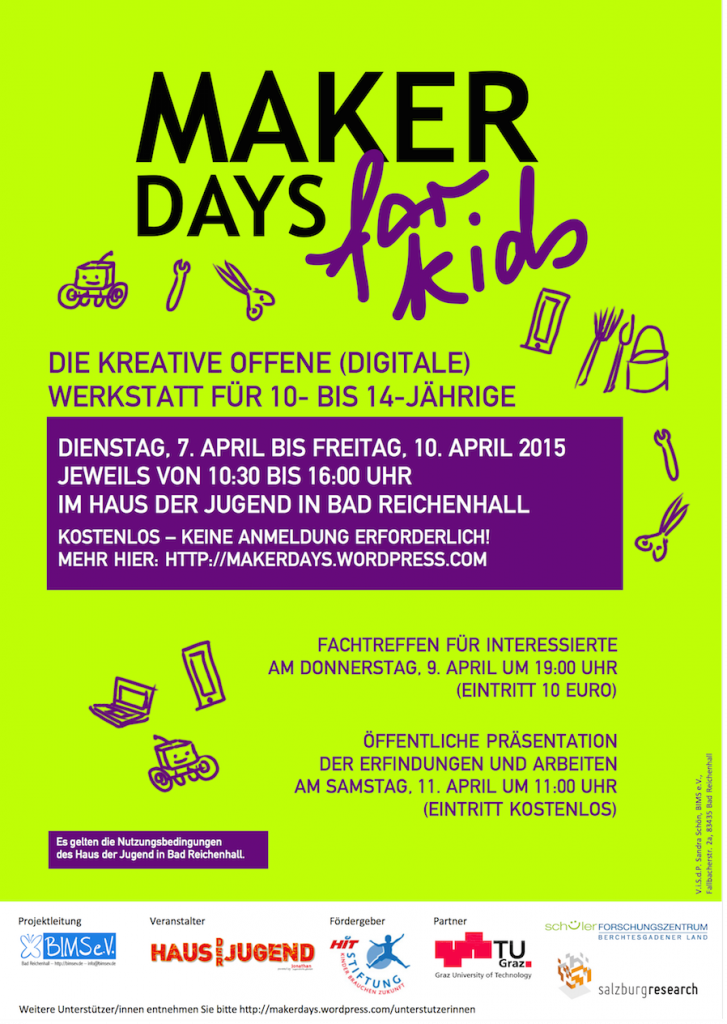
Unter der Leitung des BIMS e.V. finden vom 7.April 2015 – 10.April 2015 die ersten deutschen Makerdays für Kinder statt. Wir freuen uns zusammen mit vielen anderen als Kooperationspartner dabei sein zu dürfen und laden auch hiermit viele Kinder ein mitzumachen.
Also hinkommen und mitmachen, es wird sicher lustig, interessant, kreativ, spannend, und, und, …
Im Rahmen des Seminars „AK Technology Enhanced Learning“ haben wir unter anderem vier Kapitel von L3T behandelt. Als Seminararbeit wurde die Aufgabe gestellt, die im Kapitel vorhandenen Übungsfragen zu beantworten. So haben wir nun ein Ergebnis für die Kapitel „Bildungstechnologien im Sport„, „Game-Based Learning„, „Multimediale und interaktive Materialien“ und „Technologieeinsatz in der Schule“ vorliegen, welches wir gerne teilen:
Klicken Sie auf den unteren Button, um den Inhalt von www.slideshare.net zu laden.
Our publication about „Aspects to Be Considered when Implementing Technology Enhanced Learning Approaches: A Literature Review“ got published in the Open Access Journal Future Internet.
Abstract:
The significance of approaches to technology-enhanced learning (TEL) has increased rapidly during the last few years. Nowadays in education different approaches such as game-based learning, web-based learning, video-based online courses, and many others are used on a daily basis. However, what defines the success of technology-enhanced learning approaches and how can such approaches be developed in a structured way? Furthermore, what different aspects have to be considered while doing so? To answer these questions, 4567 publications were analyzed in this present literature review in order to recognize the different aspects of implementing technology-enhanced learning approaches. Finally, 20 categories are defined in four main areas that summarize all the aspects in the field of technology-enhanced learning. Moreover, the study also reveals research areas that are important but hardly investigated in the observed journals of this study.
Reference: Schweighofer P, Ebner M. (2015) Aspects to Be Considered when Implementing Technology Enhanced Learning Approaches: A Literature Review. Future Internet. 2015; 7(1):26-49
Nachdem ich leider die fünfte Einheit krankheitsbedingt absagen musste, war die letzte Einheite quasi eine doppelte. Wir beschäftigten uns im Seminar „Ausgewählte Kapitel aus Technology Enhanced Learning“ diesemal mit Interaction Design. Hier die Folien zu den Gruppenarbeiten:
Klicken Sie auf den unteren Button, um den Inhalt von www.slideshare.net zu laden.
Norbert did his master thesis about the usage of a leap motion controller for learning with school children. His master defense „The Use of Modern Controller Devices at Schools: Game-Based Learning with the Leap Motion“ is now online available:
Klicken Sie auf den unteren Button, um den Inhalt von www.slideshare.net zu laden.
Ich durfte am neuen Buch „Das neue Arbeiten im Netz“ von der Initiative WerdeDigital.at mitarbeiten und ein Kapitel mit Sandra rund um freie Bildungsressourcen schreiben. Das gesamte Buch findet man hier, unseren kleinen Essay hänge ich gleich hier dazu.
Zitation: Schön, S.; Ebner, M. (2015) Warum Trainer_innen und Lehrende offene Bildungsressourcen benötigen, In: Das neue Arbeiten im Netz, Akin-Hecken, M. & Röthler, D. (Hrsg.), edition mono/monochrom, Wien, S. 162-164
Lehrer_innen, Trainer_innen in der Weiterbildung oder Lehrende an Hochschulen sind auf gute Lern- und Unterrichtsmaterialien angewiesen. Und natürlich nutzen sie, wie viele Wissensarbeiter_innen das Internet, um da und dort etwas nachzulesen, sich inspirieren zu lassen oder um Vorarbeiten von anderen zu nutzen.
Zwar ist die Nutzung von Internetmaterialien für das individuelle Lernen aus rechtlicher Perspektive weitgehend unbedenklich, wenn Lehrende jedoch Material aus dem Internet für ihren Unterricht verwenden möchten, setzt ihnen das Urheberrecht insbesondere im deutschsprachigen Raum enge Grenzen. Ungefragt dürfen i.d.R. keine Texte, Bilder oder Videos eingesetzt werden31.
Wenn Lehrende ihre Unterlagen nicht komplett neu erstellen und auf der sicheren Seite sein möchten, hilft Ihnen seit einigen Jahren der Griff zu bzw. die gezielte Suche nach sogenannten “offenen Bildungsressourcen” (engl. “Open Educational Resources”, kurz OER). Darunter werden Materialien für Lernende und Lehrende verstanden, welche kostenlos im Web zugänglich sind, über eine entsprechende Lizenzierung zur Verwendung verfügen und auch zur Modifikation freigegeben sind (Geser 2007; Mruck et al. 2013). Dazu werden v.a. die Creative-Commons-Lizenzen eingesetzt (i.d.R. werden die Lizenzen CC BY und CC BY-SA als OER-konform betrachtet).
Einige Initiativen und Projekte zeigen, dass offene Bildungsressourcen gefragt sind. So verzeichnet das offene Lehrbuch “Lernen und Lehren mit Technologien” (kurz L3T, l3t.eu) bereits mehr als 360.000 Downloads, beim ersten offenen Online-Kurs zum Thema (coer13.de) haben sich mehr als 1.000 Lernende angemeldet und die UNESCO wie auch die Europäische Kommission fordern und fördern seit einigen Jahren OER-Aktivitäten.
OER sind auch eine Hilfe, wenn der Unterricht mit modernen Hilfsmitteln – Laptops, Tablets und Beamer – durchgeführt wird. Lehrende können moderne Geräte wie den Beamer im Klassenzimmer oder dem Seminarraum oft nicht nutzen, ohne sich in einem juristischen Graubereich zu befinden, da die Vorführung einer sogenannten “Digitalkopie” im Unterricht nur in Ausnahmefällen erlaubt ist.
Die gängige Praxis, dass für den Unterricht oder für Lehrgänge spezifische Lehrwerke eingesetzt werden, die in der Regel (zumeist nur) in gedruckter Form zur Verfügung gestellt werden, setzt der OER-Verbreitung derzeit enge Grenzen. Gerade in der Schule müssen sich Lehrer_innen an den Aufgaben und der Struktur im Schulbuch orientieren. Übungsvarianten können nicht im Internet veröffentlicht werden, da das Schulbuch urheberrechtlich geschützt ist, also z.B. auch die dort gewählte Reihenfolge der Vokabeln.
Neben den Lehrenden in den unterschiedlichen Bildungssektoren und Branchen profitieren natürlich auch Lernende und Eltern von der Entwicklung von offenen Bildungsressourcen, da sie dadurch hilfreiches Material im Internet finden. Gleichzeitig wirken sich OER und ihre Förderung auf die etablierten Geschäftsmodelle von (Schul-) Buchverlagen aus. Gerade dort, wo seit vielen Jahren Erfahrung mit der Erstellung von Lehrmaterialien gesammelt wurde, gibt es keine große Begeisterung für diese Bewegung. Wie sich die Bedenken und Widerstände dieser Kritiker_innen und die Erfolge der Aktiven letztlich auf größere bildungspolitische Entscheidungen auswirken, wird sich zeigen. Die Beispiele von Wikipedia und der Open-Source-Bewegung führen jedoch vor, wie vermeintlich alternative Randbewegungen tradierte Prozesse und tradiertes Denken auf den Kopf stellen können.
Ich durfte am neuen Buch „Das neue Arbeiten im Netz“ von der Initiative WerdeDigital.at mitarbeiten und ein Grundsatzkapitel zum Lehren und Lernen im neuen Zeitalter schreiben. Das gesamte Buch findet man hier, meinen kleinen Essay hänge ich gleich hier dazu.
Zitation: Ebner, M. (2015) Lehren und Lernen im Wandel der Digitalität, In: Das neue Arbeiten im Netz, Akin-Hecken, M. & Röthler, D. (Hrsg.), edition mono/monochrom, Wien, S. 23-25
Beginnen wir mit einem kleinen Gedankenexperiment: Stellen Sie sich vor, der Strom fällt aus, nicht für Minuten oder Stunden, nein für Tage oder auch Wochen. Sie haben keine Chance ihn wiederherzustellen. Was passiert nun? Was können Sie plötzlich alles nicht mehr tun? “Vieles!” wird Ihre Antwort sein und wenn Sie länger darüber nachdenken, wirkt es vielleicht sogar lebensbedrohlich, denn auch Heizungen oder Krankenhäuser sind vom Stromnetz abhängig. Für viele Generationen vor uns war Strom nicht lebensnotwendig. Wir hingegen wurden in eine Welt hineingeboren, die diese technische Errungenschaft als gegeben betrachtet.
Ähnliches passiert soeben mit dem Internet – mit dem Wandel von einer analogen in eine digitale Welt. Kinder von heute werden es als selbstverständlich ansehen, dass das World Wide Web vorhanden ist, dass dort Unmengen an Daten vorhanden und die meisten Anwendungen oft auch noch kostenfrei zugänglich sind.
Ein Leben ohne Internet können sie sich oft gar nicht vorstellen. Vielmehr kann man davon ausgehen, dass es zu ihrem Alltag gehört und als selbstverständlich wahrgenommen wird. Dass dies natürlich Auswirkungen auf die Bildung hat, ist nur konsequent weitergedacht. Daher steht unser Bildungssystem vor einer großen Herausforderung, einem Umbruch der so bisher noch nicht stattgefunden hat. Dazu ein weiteres Gedankenspiel: Eine Schulanfängerin, die dieser Tage freudig die Volksschule betritt (2015), kommt im Jahr 2019 in die Sekundarstufe. Sie wird die Matura 2027 ablegen und an die Tore der Universitäten klopfen, um dann 2032 ihren Hochschulabschluss zu feiern. Danach geht es in die Berufswelt. Jetzt stellt sich die Frage, ob unser Bildungssystem derzeit in der Lage ist unsere Kinder für die Jahre 2030+ vorzubereiten.
Unter dem Druck dieses enormen Wandels sehen wir heute zwei wichtige Kompetenzen, die das Bildungssystem von morgen berücksichtigen muss:
- Medienkompetenz: Umgang mit Medien aller Art und ihre Anwendung in der Gesellschaft.
- Informatikkompetenz: Um den Umgang zu verstehen ist es natürlich auch wesentlich zu verstehen, wie die dahinter liegenden Computer funktionieren.
Dass die Vermittlung / der Unterricht heute von Technologie gestützt sein muss, ist notwendig, um die Gesellschaft von morgen adäquat vorzubereiten – digital eben.