[journal] Issue 09/16 of Emerging Technologies in Learning #ijet #research

Issue 11(9)Issue 11(9) of our journal on emerging technologies for learning got published. Enjoy the readings as usual for free :-).

Table of Contents:

  • An Analysis on Blended Learning Pattern Based on Blackboard Network Platform: A Case Study on the Course of Recruitment and Employment Management
  • Construction of Inductive Explanation Technology in Multimedia Teaching System of Introduction to Physical Education
  • Construction of Electronic Examination and Education Platform for Financial Management
  • An Online Learning System Based on Panoramic Technology for Sport Psychology
  • Design and Implementation of Webpage Addition Technology in Aerobics Courses
  • A Projection Color Auto-adjustment Technology in Landscape Design Teaching
  • Application of PPT Playing System in the General City Planning Course under a Multimedia Teaching Environment
  • Application of Model Display Technology in Multimedia Teaching of Ecological Architecture Course
  • Application of Continuous Animation Production Technology in Gymnastics Multimedia Teaching
  • A New Video Editing Technology in Practical Teaching for Animation Specialty
  • Design and Application of Multi-screen VR Technology in the Course of Art Painting
  • Exploration of Application Mode of MOOC-based Distance Education Mode in Digital Illustration
  • Analysis of the Learning Mode of the Elaborate Resource Sharing Course
  • Application of WeChat Teaching Platform in Interactive Translation Teaching
  • The Construction and Application of the WeChat-based Translation Teaching Model
  • Development of Intelligent Teaching System Based on 3D Technology in the Course of Digital Animation Production

Nevertheless, if you are interested to become a reviewer for the journal, please just contact me :-).

[publication] Making macht Schule #making

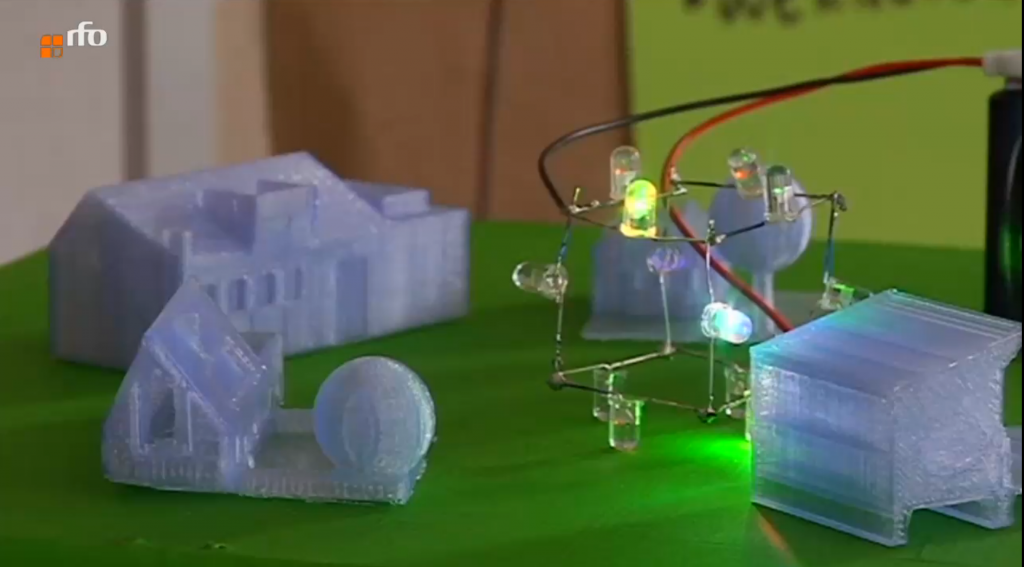
Für das Magazin werkspuren durften wir einen kurzen Beitrag zu „Making macht Schule“ verfassen.

Einleitung:

In einigen Schulen werden bereits digitale Werkzeuge eingesetzt, um kreatives Gestalten zu ermöglichen und zu unterstützen. Diese Aktivitäten werden auch im deutschsprachigen Raum als „Making“ bezeichnet, also vom englischen „to make“ für „machen“. Making sind Aktivitäten, bei denen jede/r selbst aktiv wird und ein Produkt, ggf. auch digital, entwickelt, adaptiert, gestaltet und produziert und dabei (auch) digitale Technologien zum Einsatz kommen. Making-Aktivitäten sind dabei soziale Aktivitäten, die häufig in speziellen Werkstätten, z.B. den Fablabs, Makerspaces, Hackerspaces u.a., und unter Berücksichtigung ökologischer und gesellschaftlicher Gesichtspunkte, z.B. als Upcycling oder im Repair-Café, durchgeführt werden (vgl. Schön, Ebner, Kumar, 2014).

[Vorabversion @ ResearchGate]

Zitation: Schön, S., Ebner, M. (2016) Making macht Schule – Kreatives digitales Gestalten mit Kindern. Werkspuren 3/16, S. 24-25, ISSN 1420-0198, https://www.werkspuren.ch

[CfP] Learning Analytics for Secondary and Higher Education #LearningAnalytics

STELATogether with my colleagues from the STELA project we are organising a parallel session for next year International HCI 2017 conference (9 – 14 July 2017) in Vancouver. Our session is dealing with the topic „Learning Analytics for Secondary and Higher Education“ and we are looking for contributions in this field.
If your are interested in the session we are able to send you a personal invitiation through the submission system. Therefore just send a short email to martin [dot] ebner [at] tugraz [dot] at.


Deadlines for the Call:

  • Deadline for submissions (abstract; 800 words) for review: 25 November 2016
  • Notification of Review Outcome: 23 December 2016
  • Deadline for Camera-ready version (full papers, typically 10 pages, with minimum 8 pages long, maximum 12 pages long): 10 February 2017

Please note that Papers will appear in volumes of the Lecture Notes by Springer.

[publication] Mobile Phones and Learning Perceptions of Austrian Students, aged 11 to 14 Years

Our publication about „Mobile Phones and Learning Perceptions of Austrian Students, aged 11 to 14 Years“ at this year ED-Media conference is now online available. The presentation slides have been published right here.

Abstract:

This article aims to report on the findings of a study of perception for using mobile phones for learning in Austria. Surveys were conducted to examine the ownership and usage of mobile phones of eight to 14 year old pupils. Findings indicate that gathered data show a lack of perceptions for benefits of mobile phones for learning. Issues based on the research in 2013 and 2014 are discussed with regard to demands and challenges for education. Using their own mobile phones for various learning activities could build a bridge between students‘ practice in everyday life and school learning, and developing indispensable 21 st century skills.

[Full publication @ ResearchGate]

Reference: Grimus, M. & Ebner, M. (2016). Mobile Phones and Learning – Perceptions of Austrian Students aged from 11 to 14 Years. In Proceedings of EdMedia: World Conference on Educational Media and Technology 2016 (pp. 106-115). Association for the Advancement of Computing in Education (AACE).

[publication] R.I.P. E-Mail * 1965 – ✝ 2015 #tugraz #edmediaconf

Our publication about „R.I.P. E-Mail * 1965 – ✝ 2015“ at this year ED-Media conference is now online available. The presentation slides have been published right here.

Abstract:

For the ninth time, the Graz University of Technology has carried out a survey amongst its freshmen in order to find out their preferences and habits according to the use of modern IT- and Web- technologies. Besides the remarkable long-term changes in regards to the ownership of technology, the results of this year ́s (2015) survey yielded a sensation. The instant messaging client for smartphones “WhatsApp” has superseded e-mailing from its leading position of being the preferred communication media. E-mailing was displaced on second place for the first time after nine years of survey. A clear trend can be stated in regards to communication media. The influence of WhatsApp on other communication behavior, notably e-mail and SMS, as well as the lasting rise of WhatsApp itself are special focuses of this paper.

[Full publication @ ResearchGate]

Reference: Nagler, W., Ebner, M. & Schön, M. (2016). R.I.P E-Mail * 1965 – ✝ 2015. In Proceedings of EdMedia: World Conference on Educational Media and Technology 2016 (pp. 464-473). Association for the Advancement of Computing in Education (AACE).

[presentation] Maker-MOOC – How to Foster STEM Education with an Open Online Course on Creative Digital Development and Construction with Children #tugraz #imoox #research #maker

Our presentation about „Maker-MOOC – How to Foster STEM Education with an Open Online Course on Creative Digital Development and Construction with Children“ at this year ICL conference in Belfast is online available – enjoy it:

Klicken Sie auf den unteren Button, um den Inhalt von www.slideshare.net zu laden.

Inhalt laden

[presentation] Emerging Technologies – from Past to Future #TEL #SeamlessLearning

Last friday I gave a keynote at „Education in The Digital Age & Multicultural Society” conference about emerging technologies in education. Here are my slides:

Klicken Sie auf den unteren Button, um den Inhalt von www.slideshare.net zu laden.

Inhalt laden

[publication] On Using Learning Analytics to Track the Activity of Interactive MOOC Videos #lak16

As part of the Workshop on Smart Environments and Analytics in Video-Based Learning at this year LAK`16 conference our contribution about „On Using Learning Analytics to Track the Activity of Interactive MOOC Videos“ got published.
Abstract:

It is widely known that interaction, as well as communication, are very important parts of successful online courses. These features are
considered crucial because they help to improve students‘ attention in a very significant way. In this publication, the authors present an innovative application, which adds different forms of interactivity to learning videos within MOOCs such as multiple-choice questions or the possibility to communicate with the teacher. Furthermore, Learning Analytics using exploratory examination and visualizations have been applied to unveil learners‘ patterns and behaviors as well as investigate the effectiveness of the application. Based upon the quantitative and qualitative observations, our study determined common practices behind dropping out using videos indicator and suggested enhancements to increase the performance of the application as well as learners‘ attention.

[Publication @ ResearchGate]

Reference: Wachtler, J., Khalil, M., Taraghi, B. & Ebner, M. (2016). On Using Learning Analytics to Track the Activity of Interactive MOOC Videos. Paper presented at LAK 2016 Workshop on Smart Environments and Analytics in Video-Based Learning, Edinburgh, United Kingdom, 26/04/16 – 26/04/16, pp. 8-17

[publication] How OER Enhances MOOCs—A Perspective from German-Speaking Europe #OER #MOOC #imoox

Our chapter on „How OER Enhances MOOCs—A Perspective from German-Speaking Europe“ got published as part of the book Open Education: from OERs to MOOCs.

Abstract:

In this chapter, we discuss why OER and MOOCs are a necessary and pow- erful combination, especially in German-speaking Europe. We begin with an introduc- tion to open online courses and an overview of copyright law in Germany and Austria. We then describe the evolution of OER MOOCs in Austria and Germany, especially the development of two MOOC platforms. Finally, we present examples of the impact of OER on MOOCs to conclude that an approach combining OER and MOOCs can be very valuable to foster new and innovative didactical approaches as well as future education.

[Full chapter @ Springer]

[Draftversion @ ResearchGate]

Reference: Ebner, M., Lorenz, A., Lackner, E., Kopp, M., Kumar, S., Schön, S., Wittke, A. (2016) How OER enhance MOOCs – A Perspective from German-speaking Europe. In: Open Education: from OERs to MOOCs. Jemni, M., Kinshuk, Khribi, M. K. (Eds.). Springer. Lecture Notes in Educational Technology. pp. 205-220

[publication] Digitales kreatives Selbermachen in der Schule #making

Für das neue OCG-Journal zum Thema „Der Weg zur Bildung 4.0“ haben wir einen kurzen Beitrag rund um unsere Erfahrungen mit den Makerdays geschrieben. Auch haben wir auf unser Handbuch verwiesen, welches alle weiteren Details enthält.

[Link zum Beitrag @ ResearchGate]

Referenz: Schön, S., Ebner, M. (2016) Digitales kreatives Selbermachen in der Schule. OCG-Journal, 02/2016