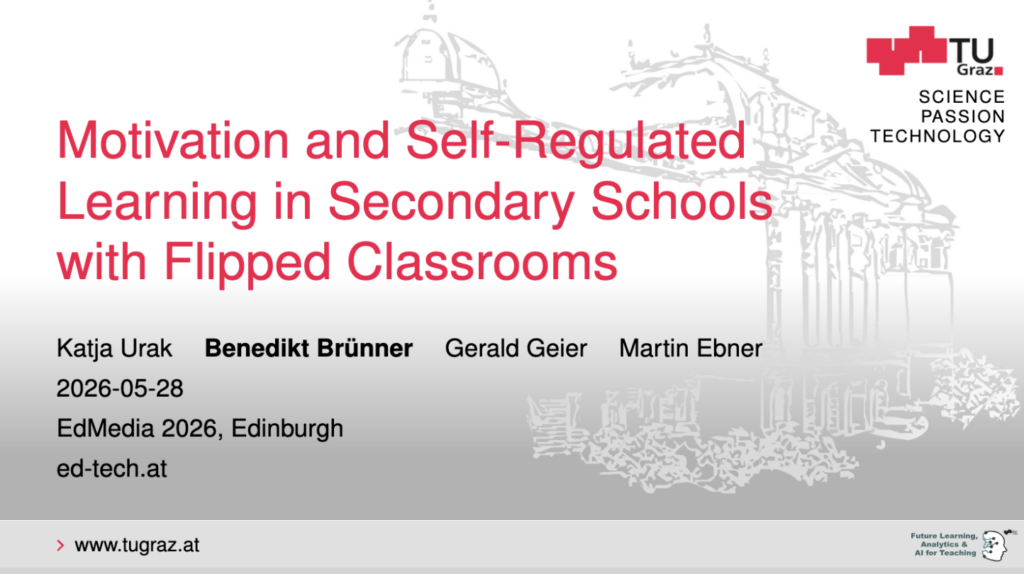
The findings show that FC approaches is promising positive on motivational effects, self efficacy, and participation, particularly among low achieving learners, while emphasizing the importance of effective instructional design and strong teacher support in overcoming technical and organizational challenges.
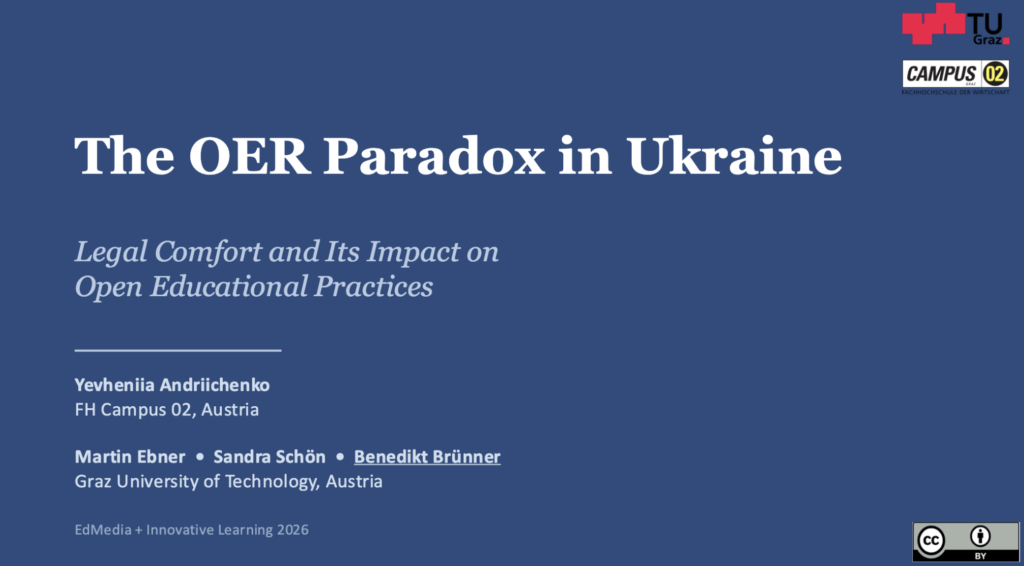
This study analyses the impact of the new Law of Ukraine „On Copyright and Related Rights“ (2811-IX) on the use of educational materials in the context of digital transformation and military crisis. Using the benchmarking methodology „15 cases in 15 countries“ and qualitative interviews with teachers, the work compares Ukrainian norms with the practice of EU countries. The results show that broad educational exceptions (in particular, Articles 22 and 24) create a situation of „legal comfort“ for the academic community, allowing the legal use of protected content in closed digital environments. However, this gives rise to the „OER paradox“: the absence of legal barriers to the use of proprietary resources reduces the motivation to create full-fledged open educational resources under free licenses. The paper highlights the need for institutional incentives to overcome dependence on closed content and integrate Ukraine into the global open education movement.
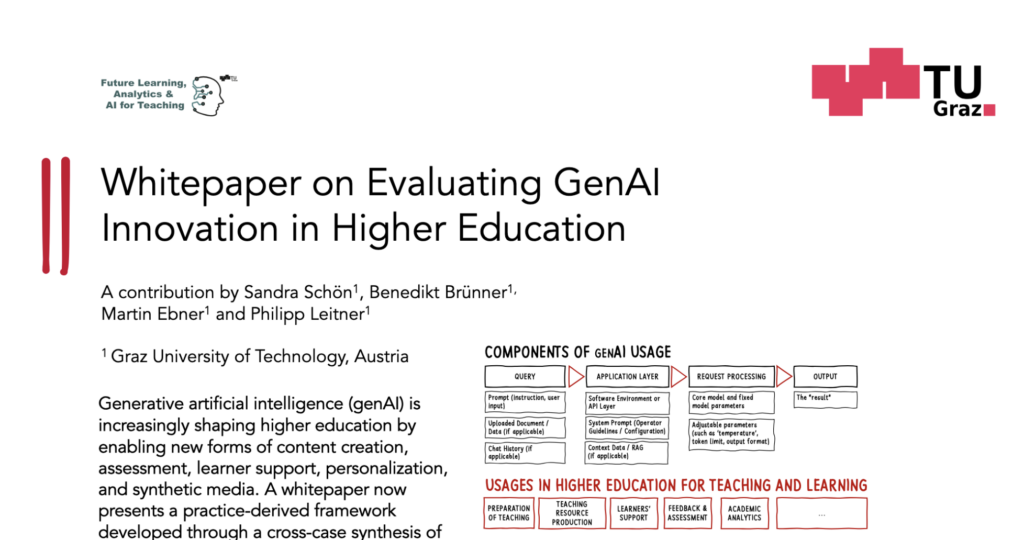
Generative artificial intelligence (genAI) is increasingly shaping higher education by enabling new forms of content creation, assessment, learner support, personalization, and synthetic media. A whitepaper now presents a practice-derived framework developed through a cross-case synthesis of nine diverse GenAI implementations at Graz University of Technology. Analyzing projects ranging from AI-generated content to RAG-based chatbots, recurring decision points and risk patterns were identified to formulate a five-phase, non-linear evaluation model.
Es freut uns ja sehr, dass wir eine der Partnerbühnen des großen University Future Festivals vom 22.6. – 24.6. 2026 sein werden. Und es ist jetzt soweit, das finale Programm ist online. Weiters darf ich verraten, dass es noch wenige Resttickets für unsere Bühne vor Ort geben würde – also schnell sein und diese noch sichern:
Our publication about „Forecasting Education Metrics through Joint Futures Betting – A Study with Austria’s Emerging Scholars“ got published in the conference proceedings of the SITE 2026 conference.
Abstract: Education systems increasingly rely on indicators to guide policy and practice. However, the underlying assumptions of these indicators are rarely discussed collectively. This short article reports on a future-oriented, game-based „future bet“ conducted as part of the „Educational Innovation Needs Educational Research“ (B3) initiative at the eduNexus.at retreat in Austria. Doctoral students, supervisors, and experts placed tokens on measurable hypotheses. We focus on five hypotheses from these funded doctoral programs closely linked to technology policy and practice: teacher training in computer science and digital education; open education resource certificate holders; the school dropout rate; and the number of schools with a STEM quality label.
Reference: Brünner, B., Geier, G., Schön, S. & Ebner, M. (2026). Forecasting Education Metrics through Joint Futures Betting – A Study with Austria’s Emerging Scholars. In Proceedings of Society forInformation Technology & Teacher Education International Conference (pp. 1514-1519). Philadelphia, PA: Association for the Advancement of Computing in Education (AACE). Published at https://www.learntechlib.org/primary/p/2129172/
To mark the 2026 edition of Open Education Week (OEWeek 2026) in Portugal, the Distance Education and eLearning Laboratory (LE@D) at Universidade Aberta (UAb) is hosting an online event to discuss the challenges currently facing Open Education, in a context marked by the impact of AI and other emerging technologies. Entitled „Exploring the Futures of Open Education“, the programme will feature Professor Marisol Ramírez Montoya from the Monterrey Institute of Technology and Higher Education (Tec de Monterrey), Mexico, and Professor Martin Ebner from Graz University of Technology (TU Graz), Austria, who will share their experiences and reflections on this topic.
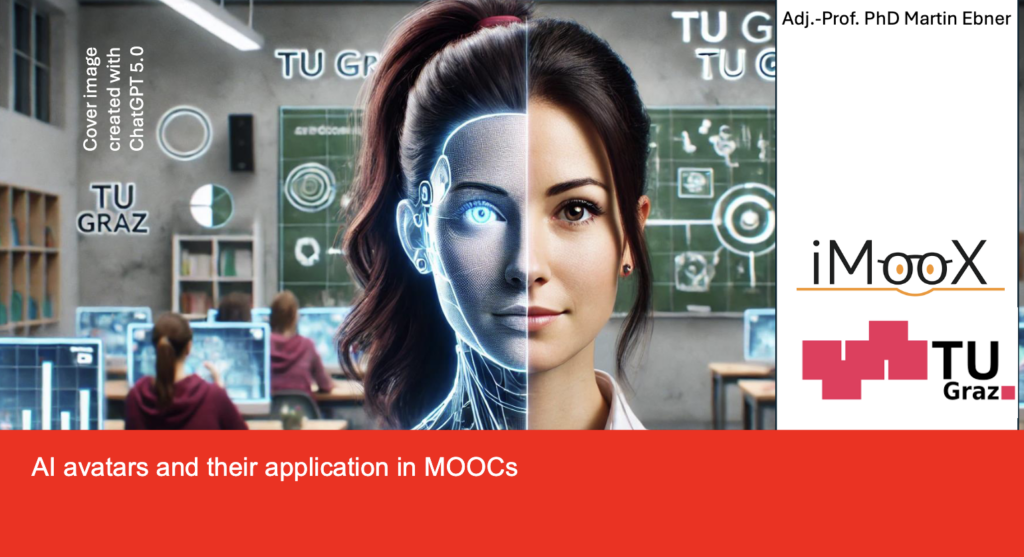
Talk for the Open Education Week at National eLearning Center, Riyadh, Saudi Arabia, titled „From Open Content to Personalized Pathways: OER and AI for Lifelong Learning“. The aim of the online workshop is listed as „to explore how open education and OER, enhanced by AI and digital learning ecosystems, can move beyond static content access toward scalable, personalized, and responsible lifelong learning—while ensuring quality, trust, transparency, and openness in an AI-driven era.“ In this talk, I introduce the use of Open Educational Resources for an AI-based Chatbot within a Massive Open Online Course on the platform iMooX.at
This is an impactful contributions, methodological rigor, and exceptional novelty in the research field of AI in education and Open Educational Resources.
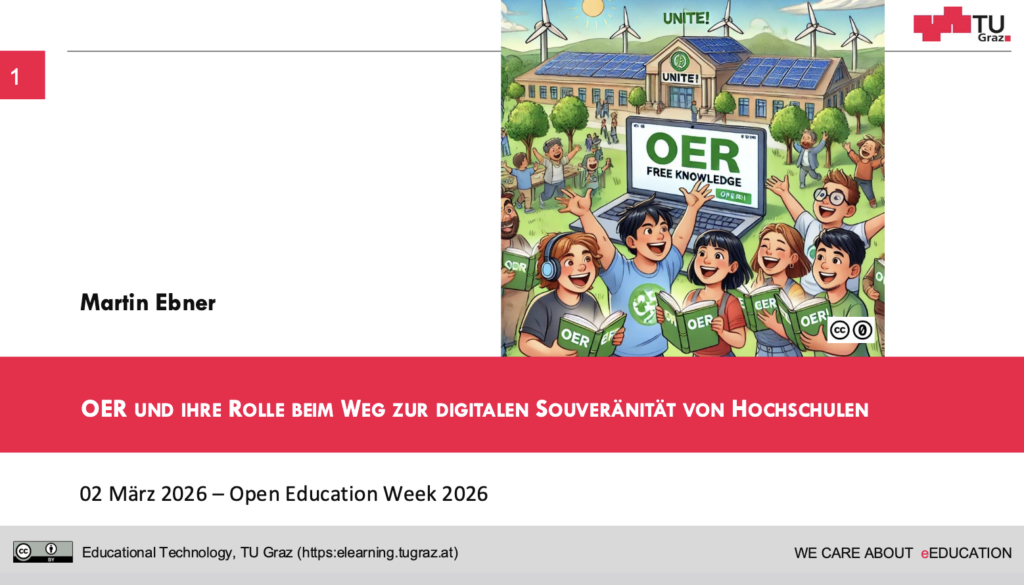
Offene Bildungsressourcen (OER) sind weithin dafür bekannt, dass sie den Zugang zu Bildung verbessern und den Wissensaustausch ermöglichen.In diesem Vortrag werden drei wichtige Aspekte von OER untersucht, die für interuniversitäre Zusammenarbeit von zentraler Bedeutung sind. Erstens ermöglichen OER die rechtssichere Nutzung von Bildungsressourcen über nationale Grenzen hinweg und beseitigen Unsicherheiten hinsichtlich des Urheberrechts, insbesondere bei Übersetzungen und Adaptionen. Dies gewährleistet die Einhaltung unterschiedlicher rechtlicher Rahmenbedingungen und fördert gleichzeitig die Zusammenarbeit. Zweitens unterstützen OER die Nachhaltigkeit, indem sie sicherstellen, dass Investitionen in Bildungsmaterialien nicht durch restriktive Nutzungsrechte eingeschränkt werden.Dies ist besonders wichtig bei Kooperationen, in denen gemeinsame Ressourcen von zentraler Bedeutung für die Förderung einer langfristigen Zusammenarbeit und die Ausrichtung auf Nachhaltigkeitsziele sind.Schliesslich tragen OER zur digitalen Souveränität bei, indem sie Institutionen und Pädagog:innen in die Lage versetzen, Ressourcen zu erstellen, anzupassen und zu teilen, ohne auf proprietäre Plattformen oder Lizenzen angewiesen zu sein. Dies deckt sich mit dem übergeordneten strategischen Ziel europäischer Hochschulen, die Autonomie und Widerstandsfähigkeit ihrer digitalen Ökosysteme zu fördern. Der Vortrag zielt also darauf ab die strategische Bedeutung von OER für die Förderung von Zusammenarbeit, Nachhaltigkeit und Souveränität innerhalb europäischer Hochschulen zu verdeutlichen und auch zu erweitern.
This is an impactful contributions, methodological rigor, and exceptional novelty in the research field of Open Educational Resources and its role for digital sovereignty.
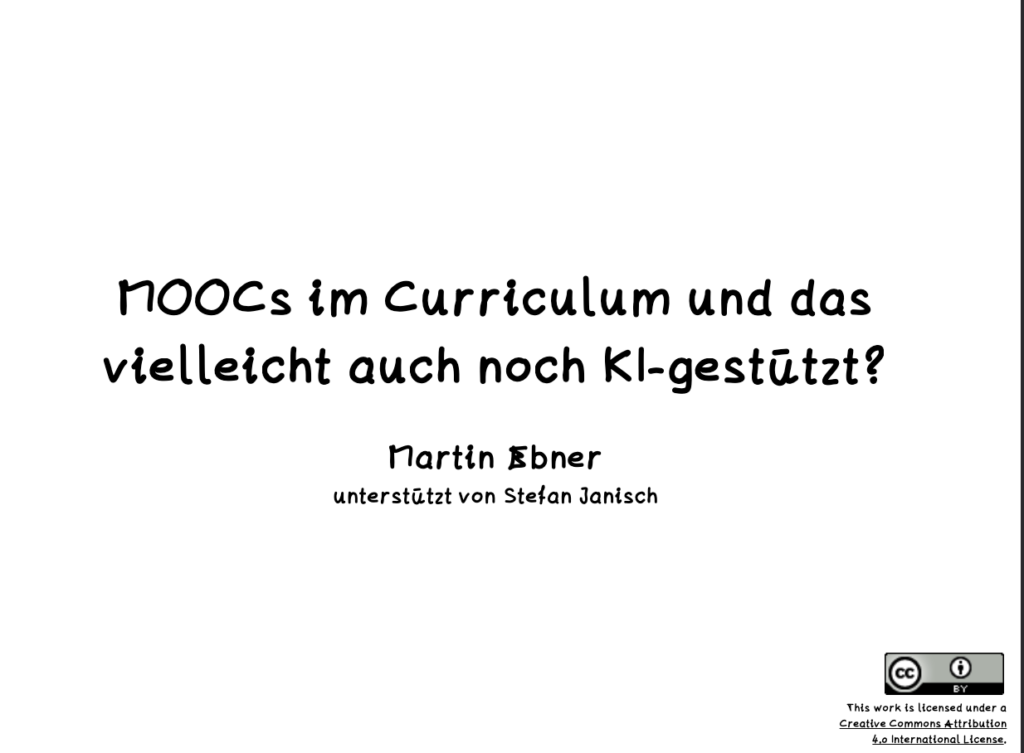
Im Rahmen der Veranstaltung „Curricula entwickeln mit KI und anderen Tools“ von e-Teaching.org durfte ich einen Workshop zu „MOOCs im Curriculum und das vielleicht auch noch KI-gestützt?“ gestalten. Hier gibt es noch meine Folien nachgereicht: