Unser Vortrag im Rahmen der Veranstaltung „Zukunft Basisbildung“ über Lehrtexte von morgen ist jetzt als Aufzeichnung verfügbar. Die Folien sind bereits hier veröffentlicht.
[itug] Möglichkeiten und Gefahren von sozialen Netzwerken, Data-Mining im Netz und Mobile Computing
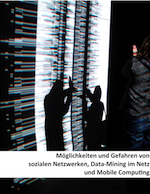 Nach unserer Publikationsreihe O3R „Beiträge zu offenen Bildungsressourcen“ haben wir uns entschlossen eine weitere Reihe zu starten. Das Thema diesesmal ist eine Schriftenreihe zu „Internet-Technologien und Gesellschaft„, kurz ITuG. Der erste Band beschäftigt sich mit „Möglichkeiten und Gefahren von sozialen Netzwerken, Data-Mining im Netz und Mobile Computing“ und wir denken, dass es eine spannende Lektüre ist.
Zusammenfassung:
Facebook, Twitter, Google+ und zahlreiche weitere Plattformen werden immer mehr zu einem Teil unseres Alltags. Ebenso nimmt die Verbreitung von mobilen Endgeräten in Form von Smartphones und Tablets immer mehr zu. Wie schaut es da mit unserer Privatsphäre aus? Ist Datenschutz überhaupt noch zeitgemäß oder macht ihn der technische Fortschritt obsolet? Im Rahmen der vorliegenden Masterarbeit wurde zudem eine iPhone-App entwickelt, die zeigt wie einfach es ist, Daten über Personen im Internet zu finden und was zu beachten ist, wenn man nicht zur Kategorie gläserner Mensch gezählt werden will.
Das Buch ist erschienen im Book-on-Demand Verlag oder hier auf der Webseite zugänglich.
Zitat: Thalhammer, A. (2012) Möglichkeiten und Gefahren von sozialen Netzwerken, Data-Mining im Netz und Mobile Computing, Ebner, M. & Schön, S. (Hrsg.), Internet-Technologie und Gesellschaft, Band 1, Book on Demand, Norderstedt
[video] Web 1.0 vs Web 2.0
Im Rahmen seiner Lehrveranstaltung „E-Learning Anwender Grundlagen und eTutorInnenausbildung“ hat Walther Videos erstellen lassen. Jenes von Verena Kumpusch behandelt den Unterschied von Web 1.0 und Web 2.0 verpackt in einer liebevoll gezeichneten Geschichte – danke für den schönen Beitrag:
[L3T] Konzept für Open Educational Resources im sekundären Bildungsbereich
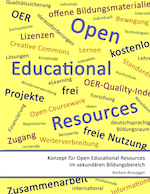 Der 3. Band der Publikationsreihe „Beiträge zu offenen Bildungsressourcen“ ist nun erschienen. Diesesmal beschreibt Barabara Rossegger in ihrer Masterarbeit die Situation im sekundären Bildungsbereich mit Schwerpunkt auf Österreich und entwickelt einen OER-Index zu Beurteilung.
Zusammenfassung:
Open Educational Resources, kurz OER, spielen eine zunehmend wichtige Rolle in der Bildungslandschaft. In diesem Buch, dem eine Diplomarbeit zugrunde liegt, werden deutschsprachige OER-Angebote (Schwerpunkt Österreich) untersucht hinsichtlich ihrer rechtlichen Bestimmungen, ihrer Inhalte und sonstigen Qualitätsansprüchen. Zusammengefasst wird die Untersuchung in einem neu entwickelten OER-Index, der einen Vergleich ermöglichen sollen. Abschließend werden noch die Standards zusammengefasst und ein Ausblick gegeben wie zukünftig OER-Angebote zugänglich sein sollten.
Hier gibt es das Buch zum freien Download oder wer es lieber gedruckt ist, kann es bei Book on Demand auch käuflich erwerben. Wir freuen uns wie immer auch auf Rückmeldungen.
Zitat: Rossegger, B. (2012) Konzept für Open Educational Resources im sekundären Bildungsbereicht, Ebner, M & Schön, S. (Hrsg.), Beiträge zu offenen Bildungsressourcen, Band 3, Book on Demand, Norderstedt, ISBN 978-3-8482-1543-0
[L3T] Just L3T
Es gibt einen kleinen neuen Teaserfilm für das Lehrbuch für Lehren und Lernen mit Technologien – danke fürs Verbreiten:
[presentation] Assessment Test Framework for Collecting and Evaluating Fall – Related Data using Mobile Devices
Our contribution to this year „13th International Conference on Computers Helping People with Special Needs“ deals with fall detection and how mobile devices can support eldery people. Here are the slides of our presentation:
Assessment Test Framework for Collecting and Evaluating Fall – Related Data using Mobile Devices
Klicken Sie auf den unteren Button, um den Inhalt von www.slideshare.net zu laden.
View more presentations from Martin Ebner
[book] L3T – ein innovatives Lehrbuchprojekt im Detail
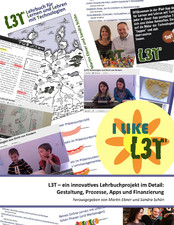 Unser Buch aus der OER-Reihe ist nun auch als E-Book im Apple iTunes-Store verfügbar:
Seit Februar 2011 gibt es mit dem „Lehrbuch für Lernen und Lehren mit Technologien“ (kurz L3T) eine neuartige Sammlung von Lehrtexten für Studierende und Lehrende im Bereich des technologiegestützten Lernens: Alle Kapitel sind kostenlos im Web zugänglich (via https://l3t.eu), aber auch als mobile Varianten, per E-Book-App und ganz traditionell als Printversion. Das crossmediale Lehrbuch wird durch zusätzliche Angebote ergänzt, beispielsweise mit Videos, Linkssammlungen und einem Kapitel, das als animierte iPad-App umgesetzt wurde. Auch bei der Entstehung des Lehrbuchs, dem Marketing oder dem Erlösmodell wurden bekannte Pfade verlassen und Neues erprobt. In diesem Buch tragen die Initiatoren und Herausgeber des inzwischen mehrfach preisgekrönten Projekts sowie weitere Aktive Konzepte, Realisierungen und (Miss-) Erfolge rund um L3T zusammen und stellen damit das Projekt umfassend dar. Das Buch sollte für all diejenigen von Interesse sein, die im Bereich der offenen Bildungsressourcen oder offener Buchprojekte Erfahrungen und Berichte suchen, um sich für eigene Projekte inspirieren zu lassen.
Hier der Link zum iTunes-Store.
[publication] Have They Changed? Five Years of Survey on Academic Net-Generation
Our publication at this year ED-Media Confernece in Denver, USA is now online available. It’s about our surveys with our first year students. The slides of the talk are already published here.
Abstract:
At Graz University of Technology (TU Graz) a questionnaire amongst freshmen is carried out each year since 2007. Aim of this poll is to check IT and Web 2.0 competences and skills of the new students coming to TU Graz in order to adapt the e-learning services for their study at TU Graz. Furthermore the results mirror current trends and changing behaviors of young people said to be the net-generation often postulated to which we and our teachers will face to. After five years of investigations time has come to take a look back and reel up processes and progresses not only because five years match the standard duration of a study at TU Graz. Which trends have been established, which assumptions did not arrive, what happened totally unexpected? This paper targets the main changes within the last five years due to this subject. It compares the five study years and outlines the current study results of 2011 in. One of the main results over five years is that the net-generation did arrive but slowly adapt their study life to what they are already used to do in private.
Have They Changed? Five Years of Survey on Academic Net-Generation
Klicken Sie auf den unteren Button, um den Inhalt von www.scribd.com zu laden.
Reference: Ebner, M., Nagler, W. & Schön, M. (2012). Have They Changed? Five Years of Survey on Academic Net-Generation. In Proceedings of World Conference on Educational Multimedia, Hypermedia and Telecommunications 2012 (pp. 343-353). Chesapeake, VA: AACE.
[publication] Personal Learning Environment – Generation 2.0
Our third publication at this year ED-Media Confernece in Denver, USA is now online available. We described the newest research outcomes of our Personal Learning Environment. The slides of the talk are already published here.
Abstract:
Teaching and learning efforts at universities has been dominated by Learning Management Systems since years now. At the same time the so-called Web 2.0 technologies arise and assist teachers as well as learners through communication or collaborating with each other. Furthermore new web technologies like mashups or new devices like smartphones allow us to work with the World Web Web from anywhere at anytime. In this publication a so-called Personal Learning Environment (PLE) is introduced which was launched at Graz University of Technology for the first time in 2010. After a prototype phase a complete redesign was carried out to improve usability and in that way better fit user ́s needs. With the help of metaphor-like terms such as “spaces” and apps the interface became quite easy to work with and fulfilled the change towards learner-centered framework. This paper outlines the cornerstones of the PLE development and its redesign as well as first evaluation data in relation to the focus that the learning environment of tomorrow has to integrate Web services as well as university wide services in an easy and understandable way to become a real Personal Learning Environment.
Personal Learning Environment – Generation 2.0
Klicken Sie auf den unteren Button, um den Inhalt von www.scribd.com zu laden.
Reference: Targhi, B., Ebner, M. & Kroell, C. (2012). Personal Learning Environment – Generation 2.0. In Proceedings of World Conference on Educational Multimedia, Hypermedia and Telecommunications 2012 (pp. 1828-1835). Chesapeake, VA: AACE.
[publication] Fun – A Prerequisite for Learning Games
Our second publication at this year ED-Media Confernece in Denver, USA is now online available. It ist about the learning game we did to enhance the fun factor during learning. The slides of the talk are already published here. If you like to know more about the game follow this link.
Abstract:
Mobile games are booming. On average, every child in Central Europe aged 15 years has a mobile phone on his/her own today. If a closer look is taken, it can be pointed out that children mainly own a smart phone running on iOS or Android operating systems. With other words, the youth carry very strong and powerful devices in their pockets, which can and should be used for educational purposes too. In this publication we like to introduce a new mobile game basing on the old traditional concept of learning cards but in a new innovative and more collaborating variant. The first prototype is presented that has been tested by a number of students and educators. It can be shown that the game is motivating and engaging. Furthermore an occurring incidental learning effect can be carried out, which leads to the assumption that mobile games can play an important role for the future of education and it makes simply fun.
Fun – A Prerequisite for Learning Games
Klicken Sie auf den unteren Button, um den Inhalt von www.scribd.com zu laden.
Reference: Hannak, C., Pilz, M. & Ebner, M. (2012). Fun – A Prerequisite for Learning Games. In Proceedings of World Conference on Educational Multimedia, Hypermedia and Telecommunications 2012 (pp. 1292-1299). Chesapeake, VA: AACE.