Aufgrund mehrerer Anfragen, ob wir auch Bücher zum Herzeigen zu Konferenzen senden könnten, haben wir uns entschlossen, ein drittes Buch auf Reisen zu schicken – L3T@Konferenz. Gestern haben wir es auf der iUNIg-Tagung in Graz „Hochschule in Print“ gestartet und werden es diese Woche noch auf die Frankfurter Buchmesse mitnehmen. Wer das Buch auch auf einer Konferenz herzeigen möchten (und ev. auch Folder braucht), soll sich bitte einfach bei uns melden – wir freuen uns sehr es auch euch zuschicken zu können 🙂 .
Hier noch unser erfolgreiches OnTour-Video:
[publication] Playing a Game in Civil Engineering
Our this year publication on „Playing a Game in Civil Engineering“ at ICL 2011 conference is now online available as Draft version. The slides were already published here.
Abstract:
The goal of our research work was to find out whether in-depth learning of complex theoretical engineering knowledge at higher education level could be improved by the use of online games. In this context we addressed the research question to what extent online games contribute to the students learnin goutcome. The corresponding online game was used for the first time during a lecture on Structural Analysis at bachelor’s level with 159 students of the third semester. We used a pre-/post-testdesign with questionnaires and an independent online tracking. As a result we can point out that playing the game did not increase the learning outcome per se and the didactical scenario should be reconsidered. Nevertheless, the usage of the game for learning purposes was underlined by the oral feedback given which says that students enjoyed playing the game more than learning in a traditional way.
Playing a Game in Civil Engineering The Internal Force Master for Structural Analysis
Klicken Sie auf den unteren Button, um den Inhalt von www.scribd.com zu laden.
Reference: Zechner, J.; Ebner, M. (2011), Playing a Game in Civil Engineering. – in: 14th International Conference on Interactive Collaborative Learning (ICL2011) ̶ 11th International Conference Virtual University (vu’11). (2011), S. 417 – 422
[l3t] L3T gewinnt den „derneuebuchpreis.de“
Wir sind überwältigt, denn unser aller Projekt L3T (Lehrbuch für Lernen und Lehren mit Technologien) hat in der Kategorie Wissenschaft den neuen Buchpreis gewonnen:
Knapp 1.000 Self-Publishing-Autoren nominierten ihr Werk 2011 für derneuebuchpreis.de (dnbp) und sammelten anschließend über 20.000 Stimmen der Web-Community. Unter den 20 Netz-Favoriten hat nun die dnbp-Jury aus Journalisten, Literaturexperten und Wissenschaftlern die Gewinner gekürt.
…
Lehrbuch für Lernen und Lehren mit Technologien (L3T): Eine Sammlung von Lehrtexten von 115 Autoren zu unterschiedlichen Themen und Perspektiven des Lernens und Lehrens mit Technologien. Die dnbp-Jury: „Es ist nur konsequent, ein Werk zu dem Thema, das als Online-Projekt entstanden ist, auch per Self-Publishing in Buch-Form umzusetzen.“
Die Preisverleihung findet nächste Woche auf der Frankfurter Buchmesse statt. Selbstverständlich werden wir von dort berichten und auch versuchen unseren Gedanken der freien Bildungsressourcen weiter zu verbreiten. Das Preisgeld hilft uns sehr damit wir in 2,5 Jahren die nächste Version anbieten bzw. das Projekt an sich nachhaltig sichern können.
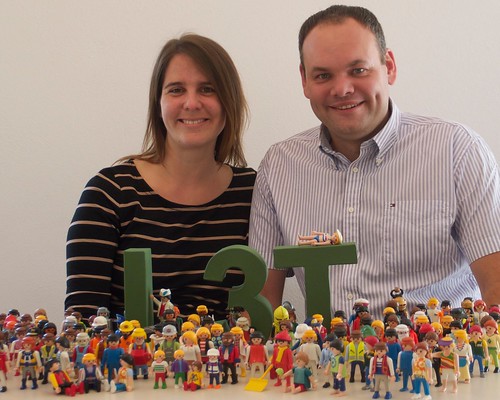
Abschließend haben wir versucht die Community auch am Pressebild zu visualisieren:
[publication] A Qualitative Approach towards Discovering Microblogging Practices of Scientists
Our this year publication on „A Qualitative Approach towards Discovering Microblogging Practices of Scientists“ for ICL 2011 conference is now online avaible as Draft version. The slides were already published here.
Abstract:
Although Microblogging (for instance Twitter) is still rather young compared to other traditional weblogging services there already exists quite a number of studies on itsusage. The majority of scholars dealing with this topic have chosen a quantitative approach focusing on different aspects such as publishing patterns, follower patterns, publishing practices, etc. However, there are less qualitative evidence and case studies on how Twitter is used by adults in their personal working practices. This paper presents a qualitative approach of discovering microblogging practices and obtaining rich descriptions of few cases that give a deeper insight into how Twitter isused by scientists and how this practice shapes their social networks. The methodological approach is based on online ethnographic studies. ThereforeGrabeeter, a tool for collecting all public tweets of a person in various formats, hasbeen adapted in order to obtain the data appropriate for a qualitative analysis following a grounded theory approach. After an analysis of the current state-of-the-art we will outline an approach for a more qualitative analysis that focuses on discovering tacit aspects of microblogging practices such as value or purpose. Finally some initial results from four individual cases will be discussed. This work presentsthe initial phase of a detailed qualitative approach towards exploring microblogging practices of scientists.
A Qualitative Approach towards Discovering Microblogging Practices of Scientists
Klicken Sie auf den unteren Button, um den Inhalt von www.scribd.com zu laden.
Reference: Ebner, M.; Kieslinger, B. (2011), A Qualitative Approach towards Discovering Microblogging Practices of Scientists, – in: 14th International Conference on Interactive Collaborative Learning (ICL2011) ̶ 11th International Conference Virtual University (vu’11). (2011), p. 51 – 57
[AppOfTheWeek] L3T E-Book is nominiert
 Es freut uns sehr, dass die iPad App des L3T Ebooks bei Telefon.de für die Auszeichnung „App der Woche“ nominiert wurde. Nun bitten wir darum, dass ihr die App fleißig bewertet und eure Meinung abgeht. Danke und wir freuen uns sehr auf euer Feedback.
[Zur Bewertung]
Welcome Days 2011 an der TU Graz
 Auch heuer begrüßen wir unseren neuen Studierenden ganz herzlich an der Technischen Universität Graz. Im Rahmen der zweitägigen Welcome Days 2011 gibt es wieder ein interessantes Programm und Vorträge von der Leitungsebene, den Serviceeinrichtungen, den Studiendekanen und der ÖH – viel Spaß und vorallem alles Gute für die kommenden Jahre. Wie immer bin ich mir sicher, dass es eine gute Entscheidung war das Studium hier zu beginnen 🙂 :
Zwei Tage – Alles für den erfolgreichen Start ins Studium. Unter diesem Motto veranstaltet die TU Graz in Zusammenarbeit mit alumniTUGraz 1887 die Welcome Days 2011. Welcome Days (Einführungstage) sind ein Bestreben der TU Graz, innerhalb der ersten Studientage den Studienanfängerinnen und -anfängern die wichtigsten Informationen für einen erfolgreichen Studienbeginn an der Universität zu vermitteln und gleichzeitig einen ersten Einblick in die Arbeitswelten der Ingenieurinnen und Ingenieure zu geben.
[l3t] Die E-Books für iPad und Android-Tablet sind im Store

 Es freut uns sehr, dass es nun gelungen ist auch E-Books für das Lehrbuch L3T zur Verfügung zu stellen. Es gibt dieses E-Book entweder für den iPad oder für Android-Tablets.
Jetzt stellt sich natürlich die Frage, wieso man auf eine kostenpflichtige App zurückgreifen soll, wenn es sowieso alle .pdfs frei im Internet gibt. Die E-Books bieten natürlich ein wenig mehr, neben der Möglichkeit das Gesamtwerk gebündelt auf den Endgeräten zu haben, ist eine Notizfunktion, genauso wie eine zum Markieren und Schreiben eingebaut. Weiters besteht die Möglichkeit das Buch mittels Beamer zu projizieren. Das aus unserer Sicht wohl spannendste ist, dass eine Versionierung eingebaut ist. Dies bedeutet wenn auf dem Server ein Kapitel upgedatet oder erneuert wird, wird das vom E-Book erkannt und gefragt ob man das alte ersetzen will oder behalten.
Wie auch immer, L3T ist so immer dabei und kann jederzeit gelesen werden ohne weitere Internetverbindung. Zum Schluss würden wir uns sehr über Feedback freuen, was in einer neuen Version des E-Books enthalten sein sollte.
[Link zum E-Book für iPad]
[Link zum E-Book für Android-Tablet]
[publication] The Integration of Aspects of Geo-Tagging and Microblogging in m-Learning
Our article on „The Integration of Aspects of Geo-Tagging and Microblogging in m-Learning“ is now published in the book „Media in the Ubiquitous Era: Ambient, Social and Gaming Media„. A draft version of the article is online available:
Abtract:
The recent years have shown the remarkable potential use of Web 2.0 technologies in education, especially within the context of informallearning. The use of Wikis for collaborative work is one example for the application of this theory. Further, the support of learning in fieldsof education, which are strongly based on location-dependent information, may also benefit from Web 2.0 techniques, such as Geo-Tagging and m-Learning, allowing in turn learning in-the-field. This chapter presents first developments on the combination of these threeconcepts into a geospatial Wiki for higher education, TUGeoWiki. Our solution proposal supports mobile scenarios where textual data andimages are managed and retrieved in-the-field
as well as some desktop scenarios in the context of collaborative e-Learning . Within this scope, technical restrictions might arise while adding and updating textual data via the collaborative interface, and this can be cumbersomein mobile scenarios. To solve this bottleneck, we integrated another popular Web 2.0 technique into our solution approach, Microblogging.Thus, the information pushed via short messages from mobile clients or microblogging tools to our m-Learning environment enables thecreation of Wiki-Micropages as basis for subsequent collaborative learning scenarios.
The Integration of Aspects of Geo-Tagging and Microblogging in m-Learning
Klicken Sie auf den unteren Button, um den Inhalt von www.scribd.com zu laden.
Reference: Safran, C., Garcia-Barrios, V. M., & Ebner, M. (2012). The Integration of Aspects of Geo-Tagging and Microblogging in m-Learning. In Lugmayr, A., Franssila, H., Näränen, P., Sotamaa, O., Vanhala, J., & Yu, Z. (Eds.), Media in the Ubiquitous Era: Ambient, Social and Gaming Media. (pp. 95-110). doi:10.4018/978-1-60960-774-6.ch005
[l3t] L3T gewinnt den SuMa Award 2011
 Es freut uns wirklich sehr, dass unser gemeinschaftlich erstelltes Buch L3T zu den Preisträgern des heurigen SuMa-Award gehört. Weiters bedanken wir uns bei Christian (Lehr) und Ilona (Buchem) die in Vertretung aller den Preis entgegen genommen haben und dabei diese Kurzvorstellung des Projekts gegeben haben:
L3T
Klicken Sie auf den unteren Button, um den Inhalt von www.slideshare.net zu laden.
View more presentations from Martin Ebner
[essay] Wikipedia: Ein Vorreiter für die Bildungslandschaft?
 Aufgrund des 10-jährigen Bestehens der Wikipedia, wurde ich eingeladen aufgrund unserer Forschungsarbeiten eine Anekdote, eine kleine Geschichte oder sonstiges zu verfassen. Ich habe mich entschlossen ein paar Gedanken zu „Wikipedia: Ein Vorreiter für die Bildungslandschaft?“ festzuhalten. Der Beitrag ist [hier] frei zugänglich. Das Buch selbst „Alles über Wikipedia“ kann man ab sofort kaufen, aber es sind viele Artikel dort aus Platzgründen nicht abgedruckt.