
Mit dem Laden des Videos akzeptieren Sie die Datenschutzerklärung von YouTube.
Mehr erfahren

Digitale Lehre an und rund um der Technischen Universität Graz
Mit dem Laden des Videos akzeptieren Sie die Datenschutzerklärung von YouTube.
Mehr erfahren
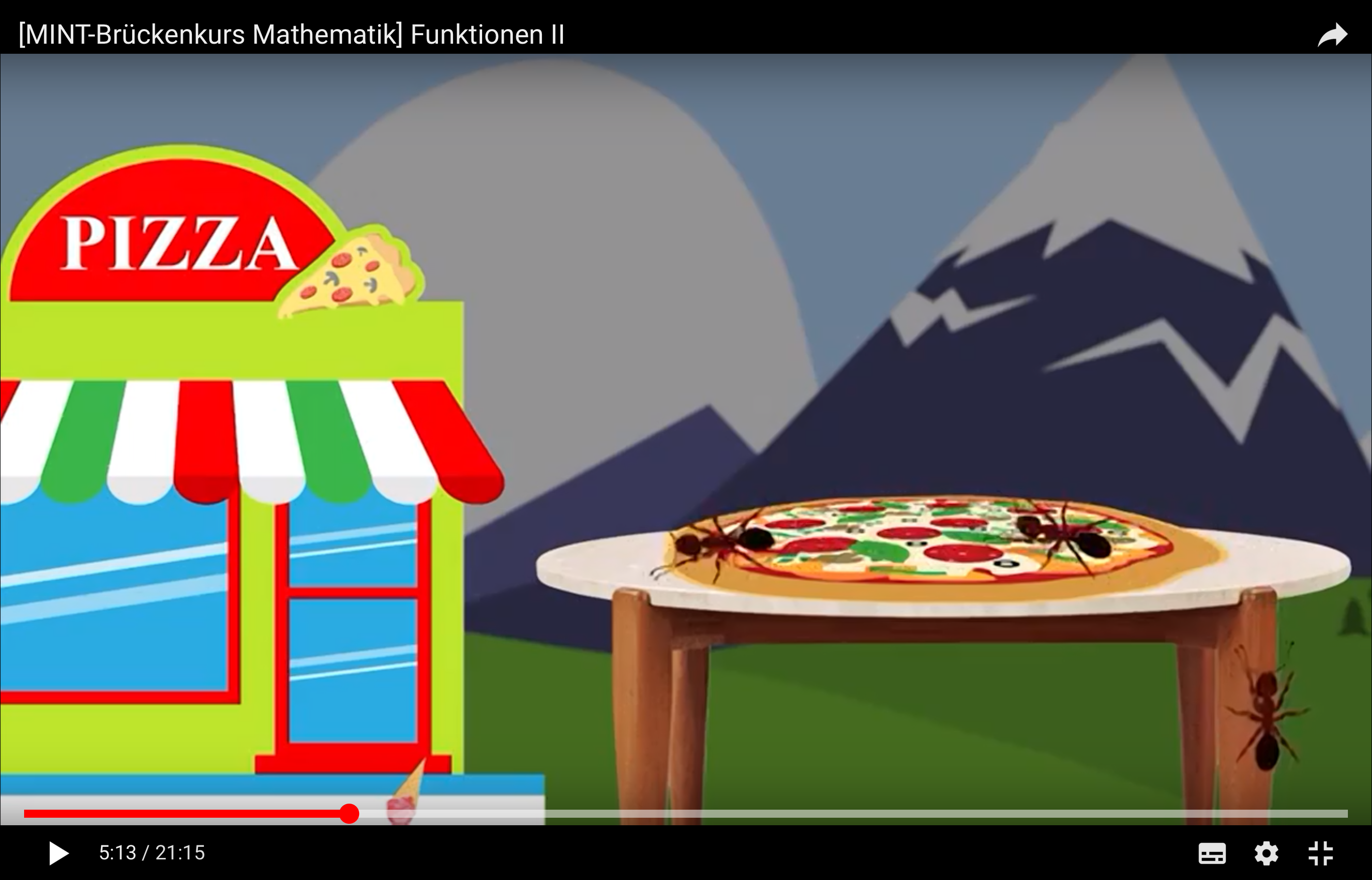
So der Brückenkurs zur Mathematik ist bereits in Woche 4 und es geht damit in die zweite Woche rund um das Thema Funktionen.
Auch haben wir wieder interaktive MATLAB-Übungen hinterlegt, um das Gelernte gleich selbst zu Erproben.
Und natürlich dreht sich auch in Woche 4 alles um die Pizza, diesmal kommen auch Ameisen dazu. Mehr dazu wie immer im Video:
Es geht weiter in Woche 3 mit dem MOOC über „Gesellschaftliche Aspekte der Informationstechnologie„. Wieder zwei spannende Themen: IT-Security und Computerspiele. Beides Ernst zu nehmende Dinge, die die Welt von heute bewegen, ganz egal ob es um Cyperangriffe oder die unglaubliche große Welt der Computerspiele geht. Millardenumsätze führen in beiden Fällen dazu, dass es ungebremst weitergeht und vielleicht müsste man tatsächlich mehr darüber nachdenken um alles in eine bessere Richtung zu lenken. Wie auch immer wir haben Videos dazu gemacht, rein schauen lohnt sich allenfalls.
Mit dem Laden des Videos akzeptieren Sie die Datenschutzerklärung von YouTube.
Mehr erfahren
Die Teilnahme am MOOC ist natürlich kostenlos, hier der Link: [Link zur kostenlosen Teilnahme]
Die KPH Wien/Niederösterreich startet mit dem MOOC „Schulische Persönlichkeitsbildung für psychische Gesundheit„:
Die psychische Gesundheit von Kindern und Jugendlichen steht zunehmend unter Druck. Schulen stehen damit vor der Frage, wie sie junge Menschen nicht nur fachlich, sondern auch persönlich so stärken können, dass sie mit Herausforderungen, Rückschlägen und Leistungsanforderungen gesund umgehen lernen. Hier setzt unser Kurs „Schulische Persönlichkeitsbildung für psychische Gesundheit“ an, der dir hilft, umfassendes Wissen über Persönlichkeitsbildung und Charakterstärken zu erlangen und dir zahlreiche Wege, Methoden und Unterrichtsmaterialien in die Hand gibt, um Persönlichkeitsbildung ganz konkret in deiner Schule, deiner Klasse oder deiner Organisation umzusetzen.
Dabei behandeln wir zentrale Charakterstärken wie Mut, Selbstregulierung, Dankbarkeit, Ehrlichkeit, Höflichkeit, Urteilsvermögen etc. Diese Stärken fördern nachweislich die psychische Gesundheit und ein gelingendes Leben bei jungen Menschen. Zugleich leisten sie einen Beitrag zur Stärkung demokratischer Haltungen, indem sie einen wertschätzenden und respektvollen Umgang miteinander fördern und Kinder und Jugendliche zu kritischem Denken anregen.
Der Kurs richtet sich an Lehrkräfte und Schulleitungen der Primar- und frühen Sekundarstufe, insbesondere an jene, die mit Kindern im Alter zwischen acht und zwölf Jahren arbeiten und Persönlichkeitsbildung systematisch in ihren Unterricht oder in die Schulentwicklung integrieren möchten. Darüber hinaus wendet er sich an Schulsozialarbeiter*innen, Psycholog*innen, Psychotherapeut*innen sowie an alle weiteren Fachkräfte, die mit Kindern und Jugendlichen arbeiten und einen Beitrag zur Förderung von Resilienz und Persönlichkeitsentwicklung leisten möchten. Auch fachlich interessierte Eltern können von den Inhalten des Kurses profitieren.
Die Inhalte sind evidenzbasiert und praxisnah in kurzen Videos aufbereitet und werden durch Reflexionsaufgaben, Quizformate und konkrete Unterrichtsmaterialien ergänzt, die du direkt einsetzen kannst.
Die Teilnahme ist wie immer kostenlos: [Link zur kostenlosen Teilnahme]
Wir freuen uns, dass nun der MOOC „Der EU AI Act im Hochschulkontext: Grundlagen für Lehre, Forschung und Verwaltung“ gestartet ist, erstellt von der Universität Wien mit der Hochschule Campus Wien:
Künstliche Intelligenz hält rasant Einzug in Lehre, Forschung und Verwaltung an Hochschulen. Doch mit den neuen technischen Möglichkeiten wachsen auch die rechtlichen, organisatorischen und ethischen Anforderungen. Dieser Kurs vermittelt einen fundierten Überblick über die rechtlichen Rahmenbedingungen des KI-Einsatzes im Hochschulkontext, mit besonderem Fokus auf den EU AI Act, Datenschutz, Urheberrecht und gute wissenschaftliche Praxis.
Teilnehmende lernen, wie KI-Systeme rechtlich einzuordnen sind, welche Pflichten sich für Hochschulen ergeben und wie rechtssichere Governance-Strukturen aufgebaut werden können. Der Kurs verbindet rechtliche Grundlagen mit praxisnahen Beispielen aus dem Hochschulalltag.
Natürlich ist die Teilnahme kostenlos: [Link zur kostenlosen Anmeldung]
Und wir sind bereits in Woche 3 beim MOOC zu „Lehren und Lernen mit digitalen Medien I„. Diese Woche geht es weiter mit Computational Thinking und dem Einsatz von Medien im Unterricht aus didaktischer Sicht.
Viel Spaß mit den Inhalten – hier z. B. das Video meiner Kollegin Simone Adams zum didaktischen Einsatz von Technologien im Unterricht:
Mit dem Laden des Videos akzeptieren Sie die Datenschutzerklärung von YouTube.
Mehr erfahren
Mitmachen ist natürlich jederzeit noch möglich, einfach hier anmelden: [Link zum Kurs]
So der Brückenkurs zur Mathematik ist bereits in Woche 3. Die Begriffe Injektiv, Surjektiv und Bijektiv sind geläufig? Wenn nicht, zahlt es sich sicher aus vorbeizuschauen 🙂 .
Auch haben wir wieder interaktive MathLab-Übungen hinterlegt, um das Gelernte gleich selbst zu Erproben.
Und natürlich dreht sich auch in Woche 3 alles um die Pizza. Mehr dazu wie immer im Video:

Und schon sind wir in der dritten Woche im MOOC „Gesellschaftliche Aspekte der Informationstechnologie“ mit zwei spannenden Videos. Eines zum Trolley-Problem und das andere zu Green-IT.
Hier mal das Video zum Trolly-Problem:
„Das Trolley-Problem ist eine Frage der Moralphilosophie, die erstmals von der zeitgenössischen britischen Philosophin Philippa Foot als qualifizierte Verteidigung der Doktrin der doppelten Wirkung und als Argument für ihre These gestellt wurde, dass negative Pflichten bei moralischen Entscheidungen deutlich mehr Gewicht haben als positive Pflichten.“
[frei übersetzt nach]
Mit dem Laden des Videos akzeptieren Sie die Datenschutzerklärung von YouTube.
Mehr erfahren
Wer jetzt Lust auf den Kurs bekommen hat – man kann immer noch ganz kostenlos teilnehmen: [Link zur kostenlosen Teilnahme]
Und wir sind bereits in Woche 2 beim MOOC zu „Lehren und Lernen mit digitalen Medien I„. Diese Woche streifen wir gleich 3 Fachbereiche – Bildungsinformatik, Mediendidaktik und Computational Thinking. Dieser Mix ist bewusst, denn wir wollen damit auch zeigen, dass es immer integrativ und zusammenhängend gedacht werden muss – niemals voneinander losgelöst.
Viel Spaß mit den Inhalten – hier meines zum Thema Lernvideos, mehr dann im MOOC:
Mit dem Laden des Videos akzeptieren Sie die Datenschutzerklärung von YouTube.
Mehr erfahren
Mitmachen ist natürlich jederzeit noch möglich, einfach hier anmelden: [Link zum Kurs]
So der Brückenkurs zur Mathematik ist bereits in Woche 2. Ein MOOC der dazu dienen sollen, dass Schülerinnen und Schüler nochmals üben können, was für den guten Start ins Studium an den Technischen Universtitäten notwendig ist.
Diese Woche ist das Thema linaeare & quadratische Gleichungen, die man dann wiederum mit interaktiven MATLAB-Übungen üben kann.
[Anmeldung ist jederzeit hier noch kostenlos möglich]
Uns als Vorgeschmack gibt es hier das Bild des zweiten Videos – der Rest dann im Online-Kurs 🙂