TELucation #tugraz #sammelmappe

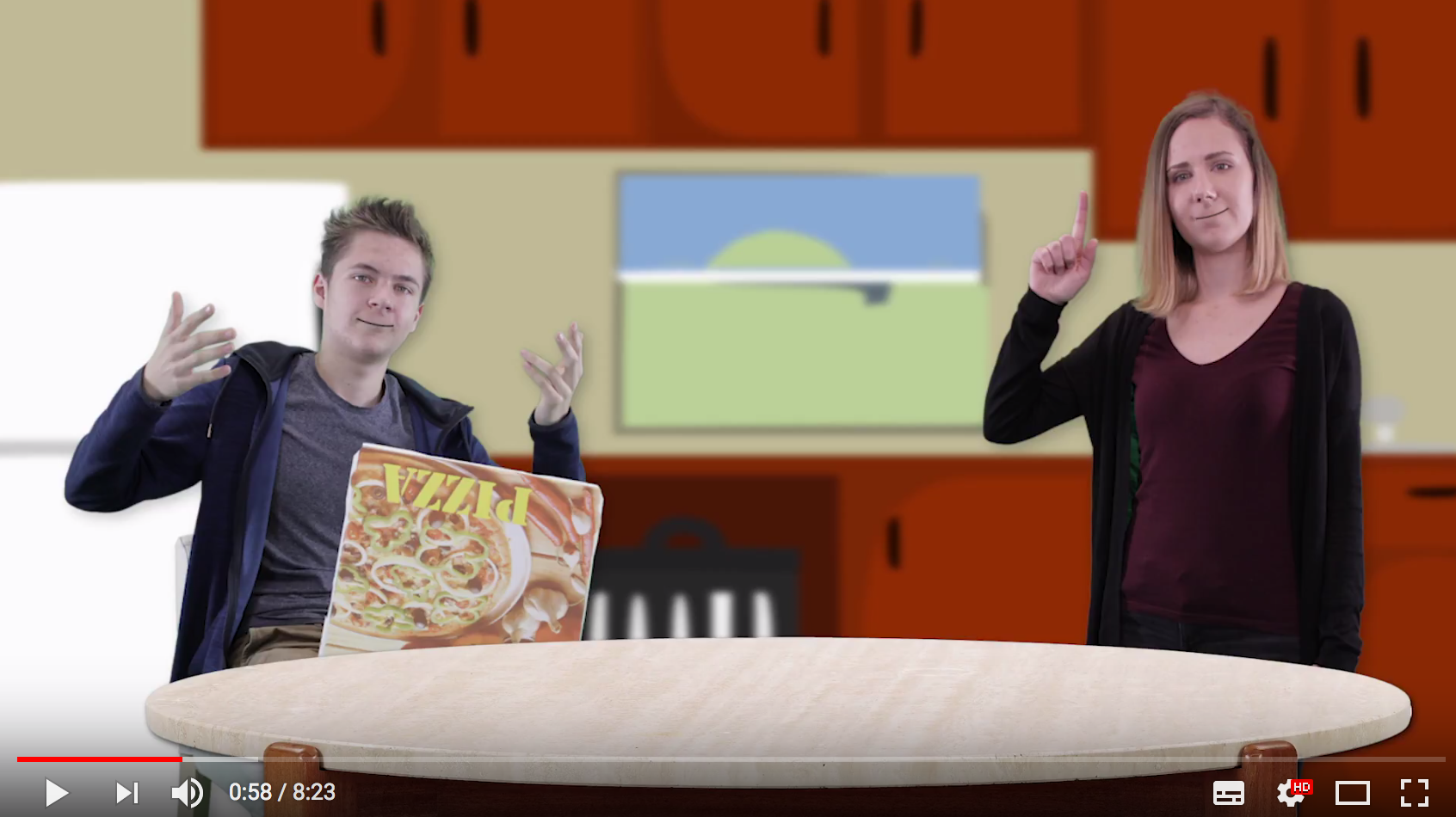
Wir haben an der TU Graz ein neues Projekt gestartet – eine Sammelmappe mit allen wichtigen Infos für unsere Lehrenden rund um das Thema Technology Enhanced Learning. Wir wollen hiermit den Einstieg in die digtal gestützte Lehre erleichtern und unterstützen wo wir nur können. Als Teaser ist auch ein kleines Video entstanden, welches wir natürlich niemand vorenhalten wollen:

YouTube

Mit dem Laden des Videos akzeptieren Sie die Datenschutzerklärung von YouTube.
Mehr erfahren

Video laden


Sind Sie Bediensteter der TU Graz?

Der TeachCenter Kurs TELucation befindet sich bei allen Bediensteten der TU Graz am Dashboard des TeachCenters – alle Bediensteten sind bereits automatisch eingeschrieben.
Bitte loggen Sie sich ein (https://tc.tugraz.at ) und klicken links im Hauptmenü auf Dashboard. Nun sollten Sie unterhalb die Überschrift „Kurse für Mitarbeiter/innen“ sehen. Da befinden sich Kurse wie die Arbeitsplatzsicherheit und eben auch der Kurs „TELucation„.

[master] Development of a Quiz model for Moodle #master #tugraz #moodle #lms

Jakob hat im Rahmen seiner Masterarbeit ein Quizmodul für dynamisch erstellbare physikalische Aufgaben erstellt inl. einer LTI-Anbindung an das Learningmanagementsystem Moodle. Hier findet man die Folien seiner erfolgreichen Verteidigung:

Klicken Sie auf den unteren Button, um den Inhalt von www.slideshare.net zu laden.

Inhalt laden

[publication] Insights into Learning Competence Through Probabilistic Graphical Models #tugraz #research

We contributed to this year „Third IFIP TC 5, TC 12, WG 8.4, WG 8.9, WG 12.9 International Cross-Domain Conference (CD-MAKE 2019)“ with a publication titled „Insights into Learning Competence Through Probabilistic Graphical Models„.

Abstract:

One-digit multiplication problems is one of the major fields in learning mathematics at the level of primary school that has been studied over and over. However, the majority of related work is focusing on descriptive statistics on data from multiple surveys. The goal of our research is to gain insights into multiplication misconceptions by applying machine learning techniques. To reach this goal, we trained a probabilistic graphical model of the students’ misconceptions from data of an application for learning multiplication. The use of this model facilitates the exploration of insights into human learning competence and the personalization of tutoring according to individual learner’s knowledge states. The detection of all relevant causal factors of the erroneous students answers as well as their corresponding relative weight is a valuable insight for teachers. Furthermore, the similarity between different multiplication problems – according to the students behavior – is quantified and used for their grouping into clusters. Overall, the proposed model facilitates real-time learning insights that lead to more informed decisions.

[Proceedings online @ Springer]

[Draft @ ResearchGate]

Reference: Saranti, A., Taraghi, B., Ebner, M., Holzinger, A. (2019) Insights into Learning Competence Through Probabilistic Graphical Models. In: Machine Learning and Knowledge Extraction. Third IFIP TC 5, TC 12, WG 8.4, WG 8.9, WG 12.9 International Cross-Domain Conference, CD-MAKE 2019, Canterbury, UK, August 26–29, 2019, Proceedings. pp. 250-271

Welcome Days der TU Graz 2019 – ein herzliches Willkommen #tugraz #wd19 #welcome

Es freut mich, dass wir wieder alle Studienanfängerinnen und Studienanfänger 2019 an der TU Graz am Donnerstag und Freitag, den 26. und 27.9.2019, bei den Welcome Days begrüßen zu können. In diesen beiden Tagen haben wir ein sehr umfassendes Programm gestaltet, welches helfen soll den Einstieg ins Studium so angenehm wie nur möglich zu gestalten.

Alle Informationen findet man auf der Webseite welcome.tugraz.at

Eine Übersicht gibt es auch auf der News-Seite der TU Graz.

[ijet, journal] Journal of Emerging Technologies in Learning Vol. 14 / No. 17 #ijet #research

Issue 14(17) of our journal on emerging technologies for learning got published. Enjoy the readings as usual for free :-).

Table of Contents:

  • Students’ Continuance Intention to Experience Virtual and Remote Labs in Engineering and Scientific Education
  • Inquiry Based Teaching in an Animation Multimedia Course
  • Integrating ICT in English for Academic Purposes Materials through Task-Based Approach
  • A Inquiry Teaching Mode Based on STEM Education
  • A Network Digital Teaching Mode of Basketball Based on Ecological Learning Space
  • A Study on the Construction of a Culture Pedagogical Network Learning Space – The CASH Curriculum Idea
  • Analysis on WeChat-Based Blended Learning in Network Marketing Course
  • Storage and Allocation of English Teaching Resources Based on k-Nearest Neighbor Algorithm
  • The Implementation of Blended Learning with Kelase Platform in the Learning of Assessment and Evaluation Course
  • Problematic of the Assessment Activity within Adaptive E-Learning Systems
  • Method of Text Content Development in Creation of Professionally Oriented Online Courses for Oil and Gas Specialists
  • Partnership of University and Schools Within the Preparation of Future Teachers
  • Re-conceptualizing Techno-Linguistics: Using Technology for English Language Teaching?
  • A Interactive Teaching Mode Based on Educational Games – Case Study of Acupuncture Course
  • A SPOC Teaching Mode of College English Translation Based on „Rain Classroom“

[Link to Issue 14/17]

Nevertheless, if you are interested to become a reviewer for the journal, please just contact me :-).

[presentation] Mehr als ein MOOC #mooc #tugraz # #delfigmw2019 #imoox

Wir haben bei der heurigen GMW-Tagung einen Beitrag zu verschiedenen didaktisch MOOC-Szenarien eingereicht. Sozusagen die Erfahrungen die wir in den letzten Jahren mit der MOOC-Plattform iMooX sammeln können. Hier gibt es die Folien zur heutigen Präsentation:

Klicken Sie auf den unteren Button, um den Inhalt von www.slideshare.net zu laden.

Inhalt laden

[presentation] Was lernen wir von Learning Analytics #tugraz #research #LearningAnalytics

Im Rahmen des ÖFEB-Kongress darf ich heute über Learning Analytics reden – die Folien findet man hier:

Klicken Sie auf den unteren Button, um den Inhalt von www.slideshare.net zu laden.

Inhalt laden

[publication] Making – eine Bewegung mit Potenzial (merz 2019) #makereducation #making

Die aktuelle merz medien + erziehung hat den Schwerpunkt Making und Medienpädagogik, herausgegeben von Kristin Narr und Björn Maurer. Mit Martin Ebner durfte ich einen Beitrag zusteuern, der eine Einführung zum Thema gibt:

Making ist en vogue – medienpädagogische Projekte mit dem Fokus auf die kreative digitale Arbeit erhalten aktuell große Aufmerksamkeit. Doch was passiert eigentlich in einem Makerspace? Welche Werkzeuge kommen zum Einsatz? Was kann man sich unter Maker Education vorstellen? In diesem Beitrag werden
zunächst Besonderheiten des Making genannt und Meilensteine der Maker-Bewegung skizziert. Darauf aufbauend werden Merkmale der Maker Education und deren Potenzial beschrieben.

Das Heft ist beim Verlag zu bestellen, einen Vorabdruck haben wir bei Researchgate online gestellt.

  • Sandra Schön und Martin Ebner (2019). Making – eine Bewegung mit Potenzial. In: merz medien + erziehung. Zeitschrift für Medienpädagogik, 63 Jg., Nr. 4, August 2019, S. 9-16. https://www.merz-zeitschrift.de/

[publication] Potentials of Chatbots for Spell Check among Youngsters #tugraz #chatbot #research #LearningAnalytic

We did an article about „Potentials of Chatbots for Spell Check among Youngsters“ for the first issue of the „International Journal of Learning Analytics and Artificial Intelligence for Education (iJAI)„.

Abstract:

Chatbots are already being used successfully in many areas. This publication deals with the development and programming of a chatbot prototype to support learning processes. This Chatbot prototype is designed to help pupils in order to correct their spelling mistakes by providing correction proposals to them. Especially orthographic spelling mistake should be recognized by the chatbot and should be replaced by correction suggestions stored in test data.

[article @ journal’s homepage]

[article @ ResearchGate]

Reference: Arifi, J., Ebner, M., Ebner, M. (2019) Potentials of Chatbots for Spell Check among Youngsters. IN: International Journal of Learning Analytics and Artificial Intelligence for Education (iJAI). 2019(1). pp. 77-88

[publication] „Computer Science for all“: Concepts to engage teenagers and non-CS students in technology #research #tugraz

Our conference contribution to this year 13th European Conference on Games Based Learning about „„Computer Science for all“: Concepts to engage teenagers and non-CS students in technology“ is now online available – enjoy reading 🙂

Abstract:

Knowledge in Computer Science (CS) is essential, and companies have increased their demands for CS professionals. Despite this, many jobs remain unfilled. Furthermore, employees with computational thinking (CT) skills are required, even if they are not actual technicians. Moreover, the gender disparity in technology related fields is a serious problem. Even if companies want to hire women in technology, the number of women who enter these fields is remarkably low. In high schools, most teenagers acquire only low-level skills in CS. Thus, they may never understand the fundamental concepts of CS, have unrealistic expectations or preconceptions, and are influenced by stereotype-based expectations. Consequently, many teenagers exclude computing as a career path. In this research study, we present two promising concepts to overcome these challenges. First, we consider alternative paths to enter the field of CS. In 2018, a voluntary lecture „Design your own app“ at the University of Graz for students of all degree programs was introduced. In total, 202 students participated. We applied a Game Development-Based Learning (GDBL) approach with the visual coding tool Pocket Code, a mobile app developed at Graz University of Technology. The students were supposed to create simple games directly on smartphones. The course received positive evaluations and led to our second concept; In January 2019, we started to design a MOOC (Massive Open Online Course) with the title „Get FIT in Computer Science“. First, this course can be used to encourage young women who have little to no previous knowledge in CS. Second, it should help all teenagers to get a more realistic picture of CS to its basic concepts. Third, teachers can use the course materials to lead high school classes (Open Educational Resources). Finally, the MOOC can be accessed by everyone interested in this topic.

[Article @ ResearchGate]

Reference: Spieler, B., Grandl, M., Ebner, M., Slany, W. (2019) „Computer Science for all“: Concepts to engage teenagers and non-CS students in technology. In: Conference Proceedings ECGBL 2019, Odense, Denmark