Nach 2 Jahren Projektlaufzeit und viel Arbeit ist die Studie „Alle(s) digital im Studium?! : Projektbericht der Steirischen Hochschulkonferenz zur Analyse digitaler Kompetenzen von Studienanfänger*inne*n“. Dazu gab und gibt es auch eine kleine Projekthomepage – DIKOS (Digitale Kompetenzen für Studienanfänger:innen), wo man nochmal alles nachlesen kann.
Zusammenfassung:
Studierende werden vermehrt als „Digital Natives“ bezeichnet, bei denen ein kompetenter Umgang mit digitalen Technologien vorausgesetzt wird. Die wissenschaftliche Auseinandersetzung im Hochschulsektor hat sich deshalb bisher hauptsächlich auf die Erforschung digitaler Kompetenzen der Lehrenden, der sogenannten „Digital Immigrants“, konzentriert (vgl. Prensky2001). Dass auch Lernende ihre digitalen Kompetenzen nicht zwangsläufig auf den Studienalltag übertragen können, hat sich nicht zuletzt während der COVID19 Pandemie im Sommersemester 2020 gezeigt: Viele der Studierenden hörten erstmals von VPN Zugängen, wurden mit Distance und Blended Learning Szenarien konfrontiert und fühlten sich ob der steigenden Anzahl an erforderlichen Applikationen und Anwendungen, die für die Teilnahme an Online Lehrveranstaltungen vorausgesetzt wurden, überfordert. Die Notwendigkeit zur Improvisation im Rahmen der Online Lehre, die im Zuge der COVID19 bedingten Einstellung des Präsenzlehrbetriebes im März 2020 sowohl von den Lehrenden als auch den Lernenden gefordert wurde, führte zu einer Beschleunigung des Digitalisierungsprozesses an Hochschulen. Diese neue Situation brachte und bringt nach wie vor viele Herausforderungen für alle Beteiligten mit sich, birgt jedoch gleichzeitig das Potenzial, aus der Krise zu lernen und eine nachhaltige Veränderung der Hochschullehre anzustoßen, die auf einen didaktisch motivierten Einsatz von neuen Medien und Technologien setzt. Die Frage nach einem zielgruppenadäquaten Bildungsangebot, das die österreichische Gesellschaft nachhaltig auf die Chancen und Herausforderungen der digitalen Transformation vorbereitet, scheint ob COVID19 aktueller denn je. Um jedoch Inhalt und Form dieser Bildungsangebote auf die jeweilige Zielgruppe und den spezifischen Kontext, in dem digitale Kompetenzen erforderlich sind, abstimmen zu können, ist es notwendig, einen Überblick über den vorhandenen Digitalisierungsgrad der Zielgruppe zu haben. So können auch etwaige Kompetenzdefizite aufgedeckt werden. Das von der Steirischen Hochschulkonferenz koordinierte Projekt „Analyse und Förderung des Erwerbs digitaler Kompetenzen von Studierenden“ (kurz: DiKoS – Digitale Kompetenzen von Studierenden) setzt dieses Vorhaben für die Gruppe der Studienanfängerinnen im steirischen Hochschulraum um. Durch die Erhebung der Selbsteinschätzung digitaler Kompetenzen sowie unterschiedlicher Kompetenzfacetten wird ein umfassendes Bild zum Digitalisierungsgrad der Studienanfängerinnen aller neun steirischen Hochschulen gezeichnet. Im Zuge des Projektvorhabens wurde eine Datenbasis geschaffen, welche die Erwartungen an die Hochschullehre sowie die Selbsteinschätzung digitaler Kompetenzen von Studienanfängerinnen aller neun steirischen Hochschulen abbildet. Mithilfe der Daten kann festgestellt werden, welche Voraussetzungen die Studierenden zu Studienbeginn mitbringen und wie das digitale Bildungsangebot der Hochschulen bestmöglich auf diese Eingangsvoraussetzung abgestimmt werden kann. Zudem können mögliche Kompetenzdefizite aufgedeckt und basierend darauf Handlungsempfehlungen zur Ausgestaltung des zukünftigen didaktisch motivierten Einsatzes von Technologien an Hochschulen abgeleitet werden. Die gewonnene Datenbasis wird genutzt, um digitale Lehr und Lernsettings zu entwickeln, die Studierende nicht nur in ihrem Studium bestmöglich unterstützen, sondern sie auch auf die digitalen Herausforderungen ihres zukünftigen Berufslebens vorbereiten.
[Vollzugriff auf die Studie]
[Studie bei ResearchGate]
[Offen zugänglicher anonymisierter Datensatz]
Zitation: Janschitz, Gerlinde ; Monitzer, Sonja ; Archan, Dagmar ; Dreisiebner, Gernot ; Ebner, Martin ; Hye, Florian ; Kopp, Michael ; Mossböck, Christina ; Nagler, Walther ; Orthaber, Markus ; Rechberger, Manfred ; Rehatschek, Herwig ; Slepcevic-Zach, Peter ; Michaela, Stock ; Swoboda, Birgit ; Teufel, Martin (2021) Alle(s) digital im Studium?! : Projektbericht der Steirischen Hochschulkonferenz zur Analyse digitaler Kompetenzen von Studienanfänger*inne*n. Graz University Library Publishing Graz, 2021 https://doi.org/10.25364/978-3-903374-00-3

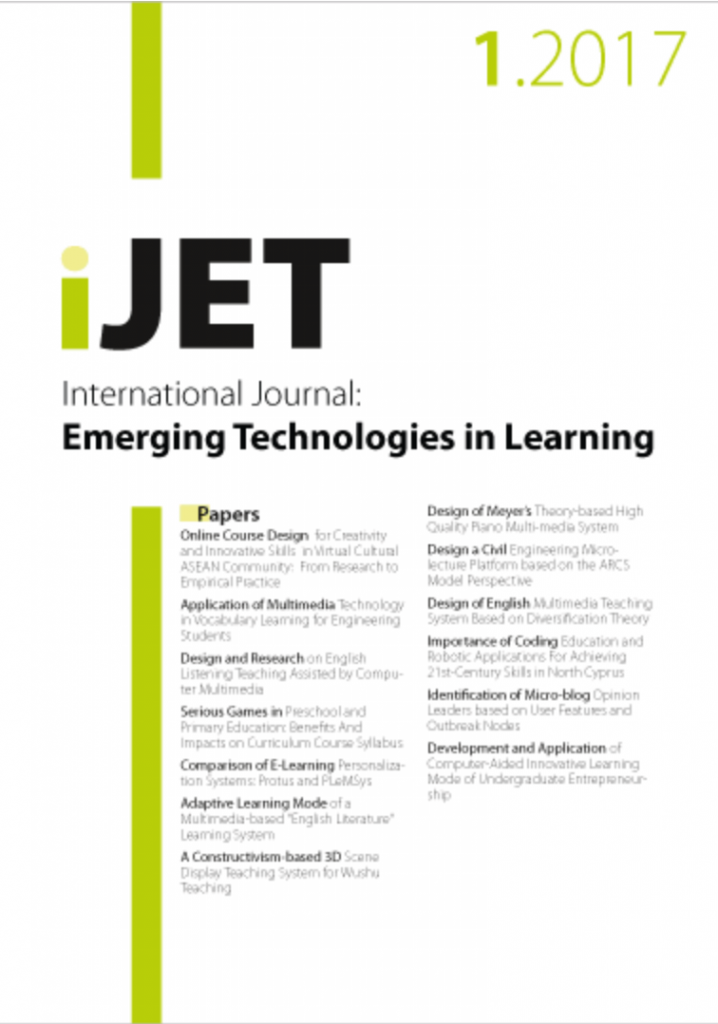 Issue 16(11) of our journal on emerging technologies for learning got published. Enjoy the readings as usual for free :-).