Und wir sind bereits in Woche 4 beim MOOC zu „Lehren und Lernen mit digitalen Medien I„. Diese Woche streifen wir die Themen Medienrecht (insbesondere Urheberrecht), Open Educational Resources und Medienwirkung bzw. -nutzung.
Viel Spaß mit den Inhalten – hier z. B. das Video meines Kollegen Michael Lanzinger rund um das Urheberrecht:
Mit dem Laden des Videos akzeptieren Sie die Datenschutzerklärung von YouTube. Mehr erfahren
Unser MOOC zum Thema „Open Educational Resources“ geht in die dritte Woche. Dieses Mal geht es um die Frage, wie OER produziert und veröffentlicht werden können, und man kann mehr über den OER-Canvas erfahren. Gerne, kostenlos teilnehmen 🙂
Mit dem Laden des Videos akzeptieren Sie die Datenschutzerklärung von YouTube. Mehr erfahren
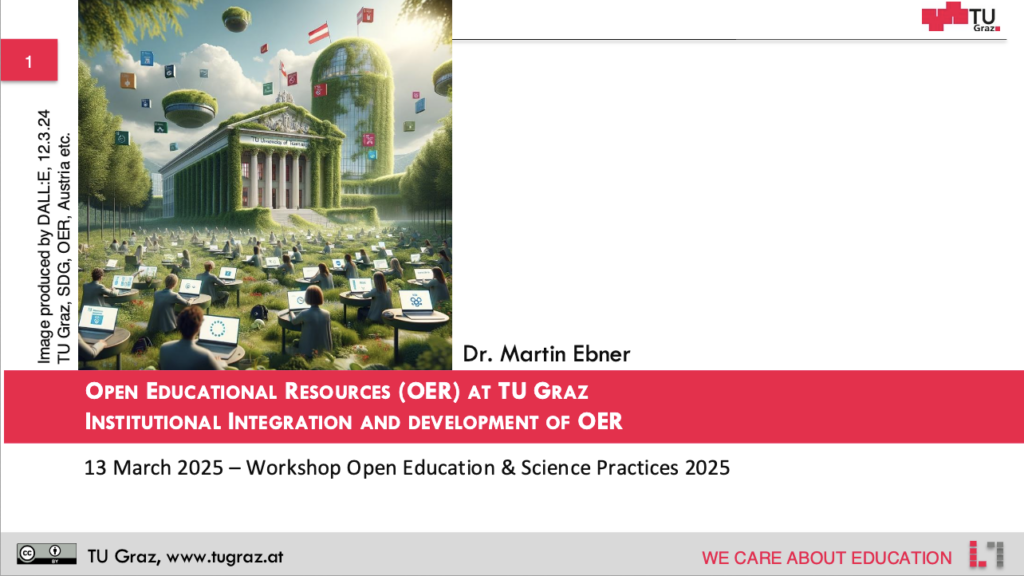
I was invited for a talk at the „Workshop Open Education & Science Practices 2025“ and gave a presentation titled „Open Educational Resources (OER) at TU Graz / Institutional Integration and development of OER„
Unser MOOC zum Thema „Open Educational Resources 2025“ fgeht in die zweite Woche. Dieses Mal geht es darum, wie man OER findet und nutzt. Es gibt einige nützliche Tipps – also gerne mitmachen, kostenlos 🙂
Und wir sind bereits in Woche 2 beim MOOC zu „Lehren und Lernen mit digitalen Medien I„. Diese Woche streifen wir gleich 3 Fachbereiche – Bildungsinformatik, Mediendidaktik und Computational Thinking. Dieser Mix ist bewusst, denn wir wollen damit auch zeigen, dass es immer integrativ und zusammenhängend gedacht werden muss – niemals voneinander losgelöst.
Viel Spaß mit den Inhalten – hier meines zum Thema Lernvideos, mehr dann im MOOC:
Mit dem Laden des Videos akzeptieren Sie die Datenschutzerklärung von YouTube. Mehr erfahren
Heute startet der MOOC über „Offene Bildungsressourcen 2025“ – zusammen mit der Universität Wien, der Universität für Weiterbildung Krems und der Universität für Bodenkultur haben wir diesen MOOC entwickelt, welcher nun im Rahmen der OER-Zertifizierung verwendet werden kann. Gerne können diese auch andere Hochschulen für ihre Weiterbildung verwenden – wenn eine Kooperation gewünscht ist bitte einfach unkompliziert bei uns melden. Ebenso wenn man an einer nationalen Zertifizierung interessiert ist, einfach ein E-Mail an martin.ebner [at] tugraz.at schreiben.
Open Educational Resources (kurz OER) sind Bildungsmaterialien, die frei zugänglich sind und bearbeitet, angepasst und weitergegeben werden können, ohne gegen Urheberrechte zu verstoßen. Das gelingt, weil dazu sog. „offene Lizenzen“ oder gemeinfreie Materialien genutzt werden. In diesem Kurs wird in das Konzept von Open Educational Resources für Studierende und Lehrende an Hochschulen eingeführt. OER sind nicht nur für internationale Vereinigungen wie UNESCO ein wichtiges bildungspolitisches Thema, OER sind auch ein Bestandteil der Forderung nach „Open Science“. Im Kurs wird zudem gezeigt, wie und wo OER gesucht und veröffentlicht werden können. Und natürlich werden auch offene Lizenzen wie CC-0, CC BY und CC BY-SA erklärt.
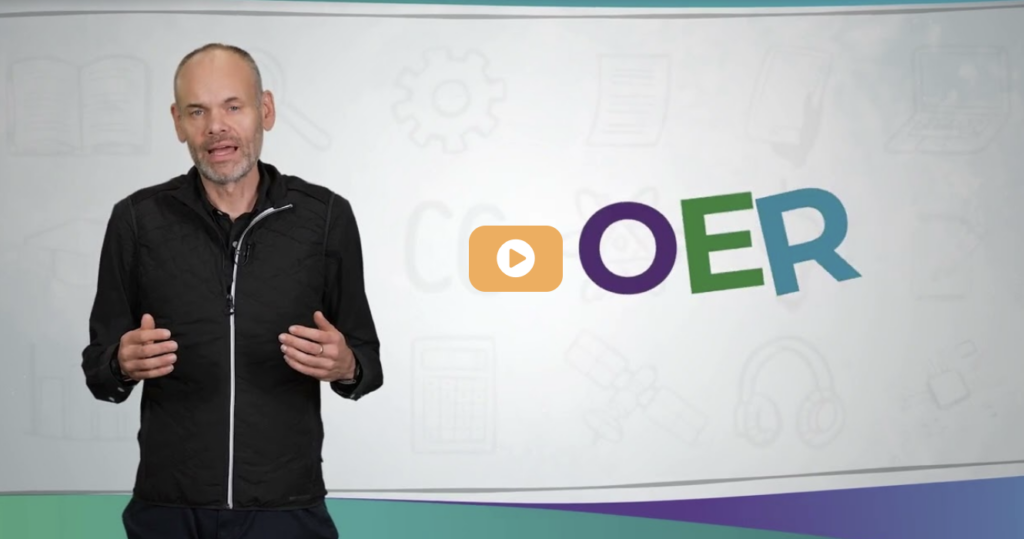
Hier gibt es auch das erste Einführungsvideo:
Mit dem Laden des Videos akzeptieren Sie die Datenschutzerklärung von YouTube. Mehr erfahren
Die Universität Wien, Krems, sowie die Universität für Bodenkultur Wien und die TU Graz bieten ab 1.3.25 nun gemeinsam einen MOOC zu „Open Educational Resources„, welcher auch für das Training zum nationalen OER-Zertifikat eingesetzt wird.
Open Educational Resources (kurz OER) sind Bildungsmaterialien, die frei zugänglich sind und bearbeitet, angepasst und weitergegeben werden können, ohne gegen Urheberrechte zu verstoßen. Das gelingt, weil dazu sog. „offene Lizenzen“ oder gemeinfreie Materialien genutzt werden. In diesem Kurs wird in das Konzept von Open Educational Resources für Studierende und Lehrende an Hochschulen eingeführt. OER sind nicht nur für internationale Vereinigungen wie UNESCO ein wichtiges bildungspolitisches Thema, OER sind auch ein Bestandteil der Forderung nach „Open Science“. Im Kurs wird zudem gezeigt, wie und wo OER gesucht und veröffentlicht werden können. Und natürlich werden auch offene Lizenzen wie CC-0, CC BY und CC BY-SA erklärt.
Für die Tagung „Innovative Ansätze für die Nachhaltigkeitslehre in der Hochschulbildung“ am 17.1.2025 an der HAW Hamburg durften wir ein Poster gestalten rund um das Thema Open Educational Resources und Nachhaltigkeit:
Referenz: Jakob, J., Schön, S., Ebner, M., Gabriel, S., Liebhart-Gundacker, M., & Ruffeis, D. (2025). Offene Bildungsressourcen (OER) und Bildung für Nachhaltige Entwicklung (BNE) an österreichischen Hochschulen. Graz University of Technology. https://doi.org/10.3217/6nk2h-3js28
Wir haben uns aufgrund vieler Anfragen entschlossen, dass wir die Ausbildung zur:m “OER Practitioner | OER-Praktiker:in” im Rahmen der nationalen OER-Zertifizierung auch für externe – also nicht TU Graz Angehörige – Personen öffnen. Wir wollen damit auch anderen die Möglichkeit geben, das Personenzertifikat zu erwerben um damit an der eigenen Hochschule ebenfalls OER kundig zu werden.
Dazu wurde an der TU Graz nun eine universitäre Weiterbildung als LifeLongLearning-Programm eingerichtet und man kann sich hierzu ab sofort gerne anmelden. Bei Fragen kann man sich unkompliziert auch gerne an uns wenden unter martin.ebner[AT]tugraz.at
 Und wir sind bereits in Woche 4 beim MOOC zu „Lehren und Lernen mit digitalen Medien I„. Diese Woche streifen wir die Themen Medienrecht (insbesondere Urheberrecht), Open Educational Resources und Medienwirkung bzw. -nutzung.