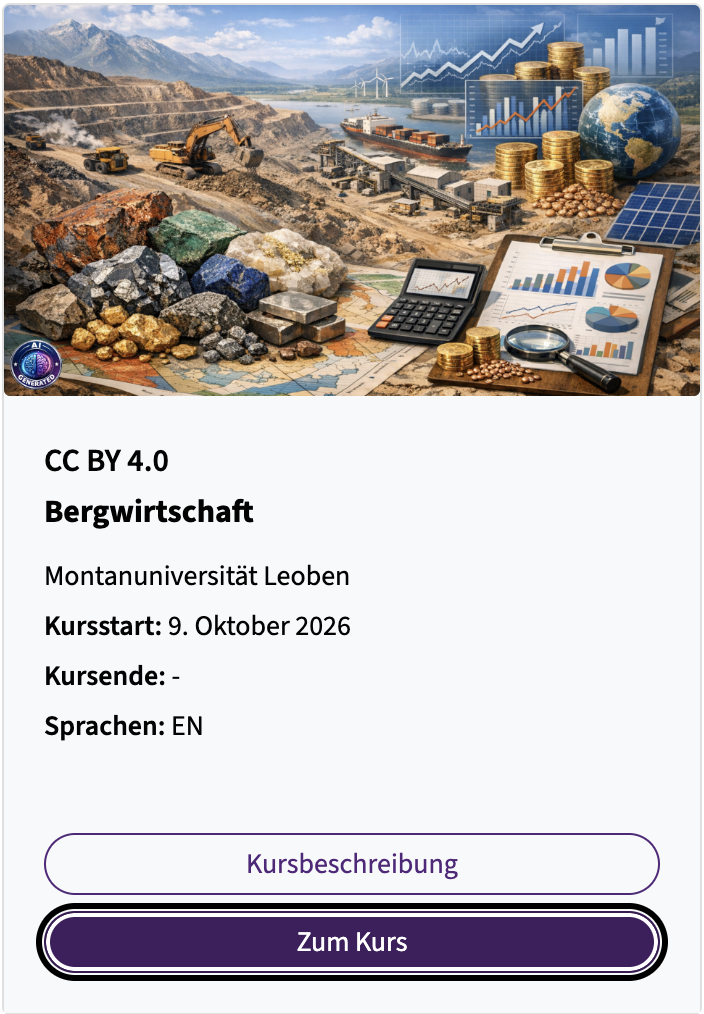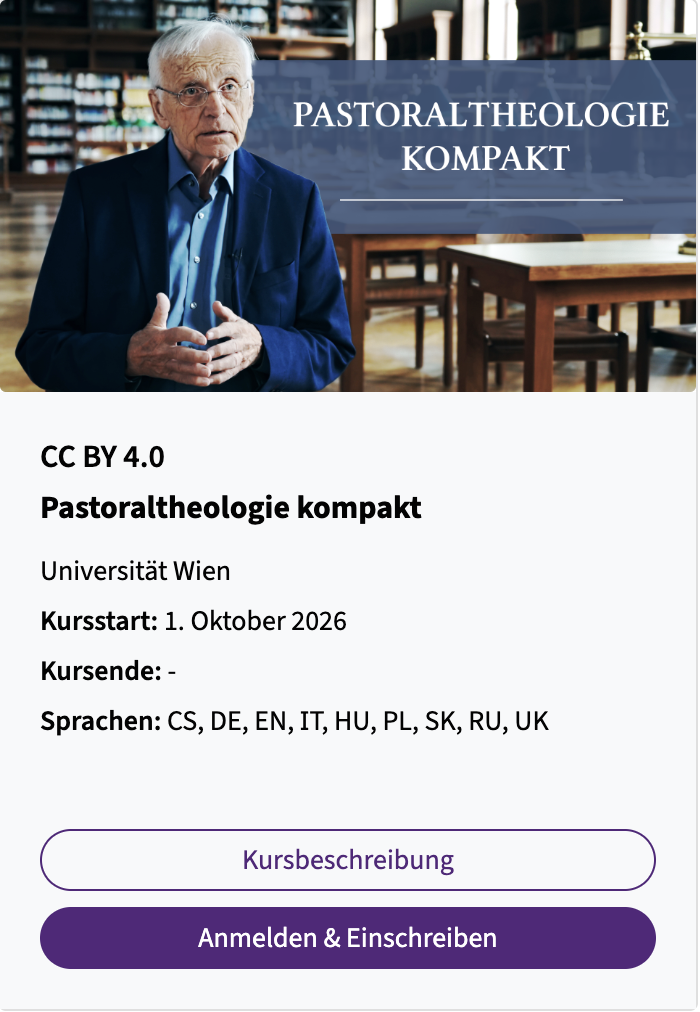
Wir sind wieder einmal auf der Suche nach einer Person, die ihr Können in der Mediendidaktik, Medienberatung in der Hochschullehre und im direkten Support, einbringen möchte. Wenn das gut klingt, dann bitte bis 17.12.2025 bei uns bewerben. Eines können wir versprechen, wir haben ein tolles Team, das bis dato noch alle Herausforderungen gut gemeinsam gemeistert hat.
[publication] Empowering Non-specialist Teachers and Students in Coding: A Case Study of a Python MOOC in an Austrian High School
Our publication titled „Empowering Non-specialist Teachers and Students in Coding: A Case Study of a Python MOOC in an Austrian High School“ was published.
Abstract:
This paper explores the integration of a Massive Open Online Course (MOOC) into the computer science curriculum of fifth-grade classes at an Austrian high school (so called “Gymnasium”) to introduce students to Python programming. A total of 42 students were surveyed, and two non-specialist teachers with no to little programming experience were interviewed to assess the MOOC’s impact and practical feasibility. While the MOOC provided a valuable entry point for many students in programming and online learning, the results also highlighted several challenges. Although over half of the students (57%) rated the MOOC as ‘very useful’ or ‘useful’, motivation for further self-learning was moderate, and only a subset expressed interest in continuing coding independently. Teachers appreciated the structured content and expert-led videos, which enabled them to facilitate programming instruction despite their limited technical background. However, they also reported difficulties in meeting the diverse pacing needs of students. These findings indicate that while MOOCs can offer accessible resources for both students and non-specialist teachers, their effectiveness depends on thoughtful integration and scaffolding. The study offers insights into the conditions under which MOOCs may support secondary level coding education, particularly in contexts with limited access to qualified computer science educators.
[full paper @ publisher’s homepage]
[full paper @ ResearchGate]
Reference: Wolf, D., Ebner, M. (2026). Empowering Non-specialist Teachers and Students in Coding: A Case Study of a Python MOOC in an Austrian High School. In: Hamonic, E., Sharrock, R. (eds) Digital Education: Shaping Sustainable Lifelong Learning for All in the Era of AI. EMOOCS 2025. Lecture Notes in Computer Science, vol 15733. Springer, Cham. https://doi.org/10.1007/978-3-032-00056-9_7
This is an impactful contributions, methodological rigor, and exceptional novelty in the research field of MOOCS and secondary education.
[publication] Open Educational Resources for Legal Clarity, Sustainability, and Digital Sovereignty in European University Alliances #tugraz
We summarized the importance of Open Education Resources, especially for Digital Sovereignty. Our paper titled „Open Educational Resources for Legal Clarity, Sustainability, and Digital Sovereignty in European University Alliances“ is now available online.
Abstract:
Open educational resources (OER) are widely recognized for improving access to education and enabling the sharing of knowledge. However, in the context of European university alliances such as Unite!, OER offer additional, often underappreciated benefits that are crucial for cross-border collaboration and sustainable development in higher education. This paper explores three key aspects of OER that are particularly relevant to European alliances. First, OER enable the legally secure use of educational resources across national borders, addressing uncertainties about copyright laws, particularly for translations and adaptations. This ensures compliance with different legal frameworks while fostering collaboration. Second, OER support sustainability by ensuring that investments in educational materials are not limited by restrictive usage rights. This is especially critical in alliances where shared resources are central to fostering long-term cooperation and aligning with sustainability goals, a priority for Unite!. Finally, OER contribute to digital sovereignty by empowering institutions and educators to create, adapt, and share resources without relying on proprietary platforms or licenses. This coincides with European alliances’ broader strategic objective of promoting autonomy and resilience in their digital ecosystems. By highlighting these often-overlooked benefits of OER, the present research aims to broaden the perspective on their strategic importance in fostering collaboration, sustainability, and sovereignty within European university alliances.
[full paper @ publisher’s homepage]
[full paper @ ResearchGate]
Reference: Schön, S., & Ebner, M. (2025). Beyond Open Access: Open Educational Resources for Legal Clarity, Sustainability, and Digital Sovereignty in European University Alliances. Weizenbaum Journal of the Digital Society, 5(4). https://doi.org/10.34669/wi.wjds/5.4.2
This is an impactful contributions, methodological rigor, and exceptional novelty in the research field of Open Educational Resources (OER) and Digital Sovereignty.
[publication] Implementing Multilingual MOOCs in European University Alliances with the Help of AI Usage, LTI and Open Licenses: Technical and Organizational Challenges #mooc #research #tugraz
Our publication about „Implementing Multilingual MOOCs in European University Alliances with the Help of AI Usage, LTI and Open Licenses: Technical and Organizational Challenges“ is now online available.
Abstract:
Producing and delivering MOOCs within European university alliances presents technical, organizational, and licensing challenges, particularly regarding multilingual accessibility, interoperability, and platform integration. This paper examines these challenges through a case study of the “Open Educational Resources in Higher Education” MOOC, developed with all partner institutions of the Unite! university alliance. The course was produced in all official alliance languages and used AI-driven tools (HeyGen) to generate multilingual instructor avatars for efficient localization. A key aspect of this MOOC was its open licensing approach. By adopting a Creative Commons (CC BY 4.0) license, the course materials were designed for reuse and dissemination across different educational contexts. To ensure broad accessibility, the MOOC was made available on the Austrian national MOOC platform iMooX.at and embedded within Unite! Metacampus, the alliance’s federated LMS. For this, Learning Tools Interoperability (LTI) for cross-platform interactions was used. Through LTI, course activities and materials on iMooX.at were linked to Metacampus, allowing users to access materials, track progress, and interact within a unified learning environment. This strategy supported federated access and engagement across institutional systems. This paper outlines the technical and organizational strategies used in developing the MOOC, discussing key challenges and providing recommendations for openly licensed, AI-supported, and LTI-integrated MOOCs within European university alliances. The findings contribute to a deeper understanding of structuring cross-institutional MOOCs that are pedagogically, technologically, and organizationally sustainable while advancing open education principles in higher education.
[full article @ publisher’s homepage]
[full article @ ResearchGate]
Reference: Ebner, M., Schön, S., Gasplmayr, K., Taraghi, B. (2026). Implementing Multilingual MOOCs in European University Alliances with the Help of AI Usage, LTI and Open Licenses: Technical and Organizational Challenges. In: Hamonic, E., Sharrock, R. (eds) Digital Education: Shaping Sustainable Lifelong Learning for All in the Era of AI. EMOOCS 2025. Lecture Notes in Computer Science, vol 15733. Springer, Cham. https://doi.org/10.1007/978-3-032-00056-9_15
This is an impactful contributions, methodological rigor, and exceptional novelty in the research field of AI in education.
iMooX Fellowships #mooc #OER
Ich freu mich, dass es wiederum gelungen ist eine iMooX-Fellowship-Ausschreibung zu veröffentlichen. Wir wollen hiermit die Wiederverwendung von OER sichtbarer machen und auch gleichzeitig sehr wertschätzen. Was ist das aber genau?
Wir bei iMooX.at möchten die Nutzung unserer offen lizenzierten und kostenfreien MOOCs in der Hochschullehre aktiv fördern und unterstützen.
Als „Fellow“ bei iMooX.at integrieren Sie eines unserer MOOC-Angebote Ihrer Wahl, von dem Sie nicht selbst der:die Ersteller:in sind, didaktisch effektiv in die eigene Hochschullehre. Ziel ist dabei, die OER-Lernangebote von iMooX.at aktiv in der (Hochschul-)Community einzusetzen und weiterzuverwenden.
Wir garantieren Ihnen, dass der MOOC während Ihres Fellowships immer zur Verfügung steht und gewartet wird und stehen für technische und didaktische Fragen zur Verfügung. Sie bekommen also aktive Unterstützung unsererseits für einen möglichst reibungslosen Einsatz des MOOCs bei Ihren Studierenden.
Im Gegenzug dazu erhalten Sie von uns ein Zertifikat als „Fellow“ für die erfolgreiche Durchführung Ihres Bildungsangebotes unter Einbeziehung eines MOOCs. Zusätzlich werden Sie als Fellow auf iMooX.at namentlich genannt.
Die Bewerbungsfrist endet am 31.3.2026 und am 10.4.26 freuen wir uns dann die nächsten Fellows bekannt geben zu dürfen. Hier gibt es mehr Informationen und auch den Link zum Bewerbungsformular: https://imoox.at/page/fellowship
[ijet, journal] Journal of Emerging Technologies in Learning Vol. 20 / No.04 #ijet #research
Issue 20/04 of our journal on emerging technologies for learning got published. Enjoy the readings as usual for free :-).
Table of Contents:
- Designing Effective Online Learning Paths in Cloud Computing Education: Bridging Pedagogical Theory and Practice in Higher Education
- Aligning Educational Stakeholder Perceptions of Learner Profiling with Explainable AI
- Empowering Digital Teaching Skills: Teachers‘ Perceptions of Web Tools Use in Online Education
- Empowering Rural Education: Teachers’ Adoption of Emerging Technologies Amidst Digital Challenges
- Explainable Artificial Intelligence with MicroPython
- Evaluating an AI-Powered Moodle Plugin for Enhancing Conceptual Understanding in Secondary Physics
Nevertheless, if you are interested to become a reviewer for the journal, please just contact me 🙂 .
[CfP] Europäische Hochschulallianzen in Aktion #zfhe #call #allianz
Zusammen mit meinen lieben Kolleginnen darf ich eine Ausgabe der ZFHE zu „Europäische Hochschulallianzen in Aktion“ betreuuen. Der Call for Papers ist fertig und wir suchen Beiträge im Themenfeld bis zum 15.2.2026.
Die geplante Ausgabe der Zeitschrift für Hochschulentwicklung lädt dazu ein, europäische Hochschulallianzen nicht primär als politische oder administrative Programme, sondern als institutionelle, soziale und kulturelle Phänomene zu untersuchen. Im Zentrum stehen Beiträge, die die vielfältigen Dynamiken der Allianzbildung zwischen Integration und Differenz kritisch reflektieren und sowohl empirisch als auch theoretisch fundierte Perspektiven eröffnen.
Dabei sollen nicht nur organisatorische und rechtliche Herausforderungen beleuchtet, sondern auch die epistemischen, normativen und symbolischen Dimensionen dieser neuen Kooperationsformen in den Blick genommen werden. Ziel ist es, den Diskurs über europäische Hochschulzusammenarbeit um analytische, diskursive und macht-kritische Perspektiven zu erweitern – und damit einen Beitrag zu einem differenzierten Verständnis europäischer Hochschulgovernance im 21. Jahrhundert zu leisten.
Ebenso sollen auch die Perspektiven der einzelnen Hochschulen hinsichtlich ihrer Positionierung, ihrer Verantwortlichkeit und Rolle, sowie den neuen Chancen und Herausforderungen Raum gegeben werden.
Erwünscht sind insbesondere Beiträge, die Verbindungen zwischen Theorie und Praxis herstellen:
- Analysen, die das institutionelle Handeln in Allianzen in den Kontext europäischer Wissenschaftspolitik stellen.
- Fallstudien, die Einblicke in konkrete Erfahrungen, Aushandlungsprozesse oder Konflikte bieten.
- Theoretisch-konzeptionelle Arbeiten, die europäische Allianzbildung als Ausdruck tiefer liegender Transformationen von Hochschulorganisation und akademischer Kultur deuten.
Der gesamte Call ist hier: [Link zum CallForPapers ZFHE 21/2]
Bitte gerne weiterleiten.
[recording] Online-Fachtagung: OER im Zeitalter von KI #OER #tugraz
[publication] Exploring genAI Chatbots in MOOCs: Analyzing Student Interactions and Self-Regulated Learning Behaviors #imoox #tugraz #research
Our publication about „Exploring genAI Chatbots in MOOCs: Analyzing Student Interactions and Self-Regulated Learning Behaviors“ got published.
Abstract:
The integration of generative AI (genAI) chatbots into Massive Open Online Courses (MOOCs) presents new opportunities for supporting self-regulated learning (SRL). This study examines 1,302 chat-bot interactions from two Austrian blended MOOCs, where a retrieval-augmented generation (RAG) chatbot based on GPT 4o-mini was deployed to assist students. Using the process-action framework by Lai (2024), we categorize chatbot interactions into key SRL processes: defining , seeking, engaging, and reflecting. Results show that students predominantly use the chatbot for information retrieval, content summarization, and quiz-based reinforcement, with 41% of interactions classified as information search queries and 17% as rehearsal. However, engagement with metacognitive SRL strategies, such as goal setting and self-evaluation, remains low. Additionally, non-learning interactions, including humor-driven conversations, functional queries, and prompt injection attempts, showcase ways students interact with AI in educational settings. Based on our findings, we propose refinements to the existing SRL process-action framework, incorporating new categories to better account for genAI chatbot-specific interactions, such as Evaluation of Information Quality and Reformatting. We discuss implications for chat-bot integration in MOOCs, emphasizing AI-generated quizzes, structured feedback, and safeguards against misuse.
[article @ book’s homepage]
[draft @ ResearchGate]
Rerence: Brünner, B., Ebner, M., Schön, S. (2025). Exploring GenAI Chatbots in MOOCs: Analyzing Student Interactions and Self-regulated Learning Behaviors. In: Hamonic, E., Sharrock, R. (eds) Digital Education: Shaping Sustainable Lifelong Learning for All in the Era of AI. EMOOCS 2025. Lecture Notes in Computer Science, vol 15733. Springer, Cham. https://doi.org/10.1007/978-3-032-00056-9_2
This is an impactful contributions, methodological rigor, and exceptional novelty in the research field of AI in education using a Chatbot within a MOOC-platform (iMooX.at)
[conference] MOOCs in the era of AI #tugraz #AiinEducation
I was invited to the „10th European Open and Digital Learning Week (EODLW) 2025“ to give a talk within the workshop „MOOCs in the era of AI“, which will take place on Thursday, November 27, 2025.
So, I will be thrilled if you attend our talks. Mine will be about „AI avatars and their application in MOOCs„.