
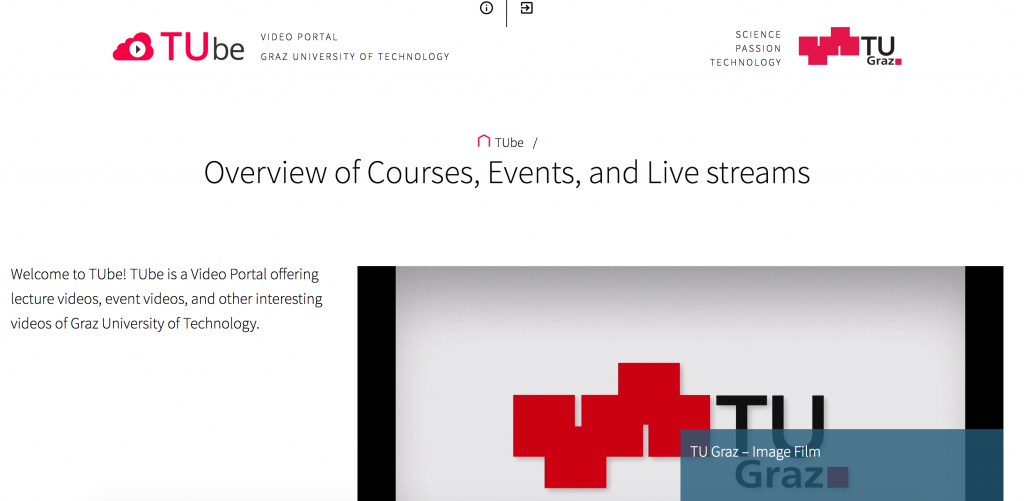
 … erstrahlt seit dieser Woche ebenfalls in neuem Gewand. Wir haben zusammen mit der Umstellung des TeachCenter auf die Videoplattform auch die neue Version von Opencast Matterhorn portiert und grafisch an das Cooperate Design der TU Graz angepasst. Ab sofort findet man unter anderem auch öffentliche Videos unter http://tube.tugraz.at
[video] TeachCenter 2.0 #tugraz
Zum Start des TeachCenter gibt es auch ein kleines Video von uns, mit einer klaren Botschaft: tc@tugraz.at wenn es brennt 🙂

Mit dem Laden des Videos akzeptieren Sie die Datenschutzerklärung von YouTube.
Mehr erfahren
TeachCenter neu an der TU Graz #tugraz #teachcenter #moodle
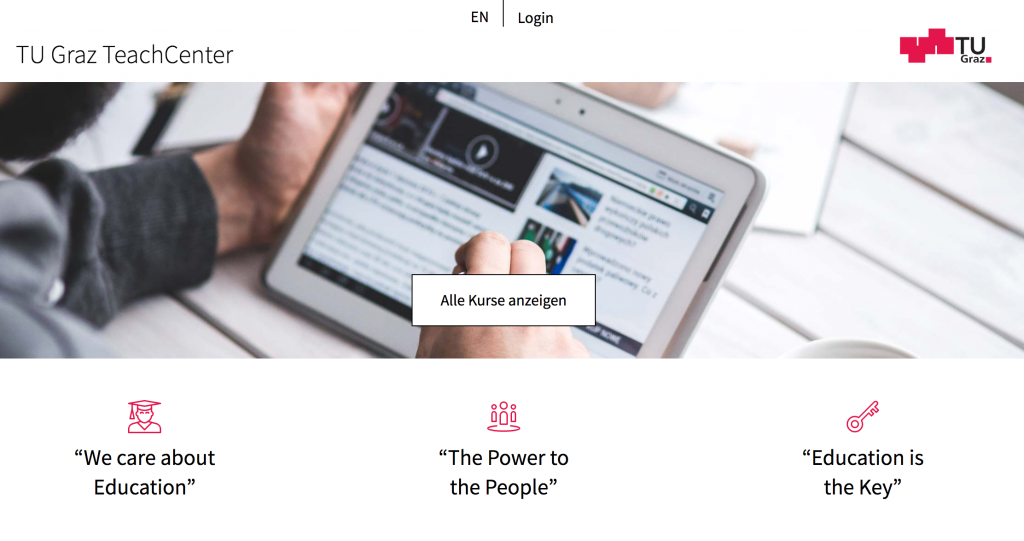 Heute ist es soweit, nach ca. einem Jahr geben wir heute das TeachCenter 2.0 frei und haben damit den Wechsel von der alten Plattform auf eine Moodle-Instanz vollzogen. Einerseits ein wenig wehmütig, denn immerhin haben wir nun 10 Jahre ein System gehabt, welches mehr als gute Dienste geleistet hat. Daher darf ich an dieser Stelle nochmals Prof. Scerbakov und seinen Team herzlich danken, die hier mit viel Arbeit eine unbezahlbare Aufbauarbeit an der TU Graz geleistet haben.
Ab sofort ist das Learning-Managmentsystem der TU Graz also nun auch vollkommen auf Moodle aufgesetzt und steht den Studierenden und Lehrenden zur Verfügung. Sehr viel Arbeit haben wir auch ins Design gesteckt, damit die Oberfläche nicht nur mobil ansprechend ist.
Nun aber uns allen alles Gute mit dem neuen System und wir hoffen, dass wir damit unserem Leitspruch We care about education gerecht werden 🙂 .
[video] Lernvideos zur Mathematik
Im Rahmen einer Bachelorarbeit haben wir uns mit der Möglichkeit Videos interaktiv zu machen beschäftigt. Dabei sind als „Nebenprodukt“ ein paar Videos entstanden, die wir auf YouTube als Playliste veröffentlicht haben. Die Interaktivität haben wir z.B. mit unserem LIVE-System dann getestet.
Themenliste:
- Quadratische Gleichungen
- Bruchgleichungen
- Lineare Gleichungssysteme mit 2 Variablen
- Prozentrechnung
- Zinsrechnung
- Schlussrechnungen
- Zahlensysteme
- Satz von Pythagoras
[Broschüre] Ausgewählte Konzepte und Initiativen im europäischen Wissenstransfer #OpenEducation
In einer neuen Broschüre des FFG zum Thema „Ausgewählte Konzepte und Initiativen im europäischen Wissenstransfer“ wird auch die Open Culture mit alle ihren Ausprägungen angesprochen. Von Open Access über Open Innovation bis hin zu Open Education ist da alles vertreten. Es freut dann sehr, dass man dann auch auf unsere Arbeiten zurückgreift:
Martin Ebner, einer der leitenden Betreiber der Konferenz, der auch auf EPALE aktiv ist, gibt verschiedene Gründe an, die für OER sprechen:
- Selbstbestimmtes und selbstgesteuertes, lebenslanges Lernen durch freien Zugang für Lernende,
- Nutzung der OER durch Lehrende für die eigene Lehre,
- Lehrende erhalten Anerkennung und Aufmerksamkeit durch Lehrleistungen,
- es entsteht ein Pool mit mehr und besseren Lehrmaterialien – das hilft Institutionen, sich besser zu profilieren,
- Nutzung der OER wahrt gleichzeitig Urheberpersönlichkeitsrecht
[workshop] Social Media & Mobile Learning #tugraz
Im Rahmen des CAS eLearning Zertifikatkurses darf ich das Modul „Social Media Learning & Mobile Learning“ abhalten. Die dafür notwendigen Unterlagen sind hier nochmals übersichtlich dargestellt.
VORMITTAG: Social Media Learning
Klicken Sie auf den unteren Button, um den Inhalt von www.slideshare.net zu laden.
NACHMITTAG: Mobile Learning
Klicken Sie auf den unteren Button, um den Inhalt von www.slideshare.net zu laden.
[video] Microsoft Word Formatvorlagen How To #tugraz #tel #HowTo
Im Rahmen meines Seminars „Technology Enhanced Learning“ wurden als Seminararbeit wieder Lernvideos erstellt. Dieses hier geht über die Verwendung von Formatvorlagen am Beispiel von Word. Viel Spaß 🙂
Mit dem Laden des Videos akzeptieren Sie die Datenschutzerklärung von YouTube.
Mehr erfahren
[video] Privatsphäre Einstellungen im Sozialen Netzwerk Facebook #tel #tugraz
Im Rahmen meines Seminars „Technology Enhanced Learning“ wurden als Seminararbeit wieder Lernvideos erstellt. Dieses hier geht um die Einstellungen bzgl. Privatssphäre in Facebook. Viel Spaß 🙂
Mit dem Laden des Videos akzeptieren Sie die Datenschutzerklärung von YouTube.
Mehr erfahren
[imoox] Trailer zu „Gesellschaftliche Aspekte der Informationstechnologie“ #gadi17 #imoox
Der iMooX – MOOC zu „Gesellschaftliche Aspekte der Informationstechnologie“ geht nun bereits in seine dritte Runde. Natürlich wieder mit neuen und altbewährten Videos, sodass wir das Thema intensiv und ausgiebig disktuieren können.
Wer Lust & Laune hat mit uns über die Themen unserer Zeit zu reflektieren, ist herzlichst eingeladen ab 13.3.2017 dabei zu sein. Anmelden kann man sich aber bereits jetzt, direkt hier: [Link zur Anmeldeseite]
Damit die Wartezeit nicht allzulang wird, gibt es bereits einen Vorgeschmack mit dem Trailer:
Mit dem Laden des Videos akzeptieren Sie die Datenschutzerklärung von YouTube.
Mehr erfahren
[press] Kurse für Unis und Unternehmen
In einem Kurzbeitrag zu „Kurse für Unis und Unternehmen“ rund um MOOCs & Co, durfte ich auch kurz zu Wort kommen:
… im Spannungsfeld der Lehre und Technologien die Herausforderungen der Universität von morgen liegen, der Anteil der Onlinelehre wird wachsen …