Im Rahmen der Vorlesung „Gesellschaftliche Aspekte der Informationstechnologie“ habe ich meinen ersten Vortrag rund um das Thema Digital Natives gehalten.
Hier einmal die Folien – der Livestream folgt noch:
[podcast] Technology Enhanced Learning
Mein Vortrag „Technology Enhanced Learning“ ist nun als Podcast verfügbar. Die Folien findet man bereits hier.
„Dr. Wolfgang Houska Preis“ für Betonforschung
Nachdem ich meine wissenschaftliche Karriere am Institut für Betonbau begann, freut es mich besonders, dass es meine ehemaligen Kollegen geschafft haben den höchst dotieren Wissenschaftspreis in Österreich zu erhalten. Nach vielen Jahren harter Arbeit ist es schön eine solche Anerkennung zu erhalten.
Hier Links die ich diesbezüglich schon gesammelt habe:
- Standard.at
- Kleine Zeitung
- Pressemitteilung der TU Graz
OLPC Artikel bei futurezone.orf
Gestern gab es keinen kurzen Artikel auf futurezone.orf wo man über unsere Mitarbeit am Grazer OLPC Projekt berichtete. Und es freut mich, dass man meinen wesentlichsten Ansatz so schön festhält:
Auch werde nicht immer der eigentliche Bedarf und natürliche Zugang der Anwender – nämlich der Kinder – berücksichtigt. „Wir schauen uns an, wie die Dinge auf die Kinder wirken, wie sie damit umgehen – und was sie noch brauchen.“
[presentation] Research in Technology Enhanced Learning
Im Rahmen eines Kolloquiumsvortrages darf ich heute die Forschungsarbeiten der letzten Jahre rund um das Thema „Technology Enhanced Learning“ vorstellen. Und ja klar, die Aufzeichnung wird folgen.
u:book – Laptops für Studierende wieder gestartet
 Die u:book Aktion – Laptops für Studierende – ist soeben wieder gestartet. Ähnlich dem Wintersemester gibt es wieder ein begrenztes Zeitfenster wo dieses sehr gute Preis/Leistung Verhältnis angeboten werden kann:
Seit 2008 gibt es u:books – Notebooks von hoher Qualität und mit einem umfangreichen Serviceangebot, die von Studierenden, MitarbeiterInnen und Organisationseinheiten zahlreicher österreichischer Universitäten zweimal jährlich zu Semesterbeginn günstig erworben werden können.
Hier gibt es alle Informationen hierzu.
[publication] Digital native students? Web 2.0-Nutzung von Studierenden.
 Ich habe zusammen mit Mandy Schiefner einen Beitrag für e-teaching.org zum Themenspecial Medienkompetenz verfasst. Ziel ist die von uns erhobenen Daten von StudienanfängerInnen darzulegen und zu interpretieren, um zu sehen sich derzeit bereits eine Veränderung der Medienkompetenz in Hinblick auf Web 2.0 Nutzung zeigt:
In einem Langtext gehen Martin Ebner und Mandy Schiefner der Frage nach, inwieweit Studierende „Web 2.0 –Kompetenz“ mitbringen.
In einem ersten Schritt versuchen sie diese Frage anhand der Nutzung von Social Software-Applikationen zu beantworten. Gerade im Bereich Web 2.0 spielt vor allem die interaktive bzw. die partizipative Komponente eine große Rolle. Die Nutzung stellt dabei einen allerersten Zugang zur Beantwortung der Kompetenzfrage dar. Es werden dazu Umfragedaten von der TU Graz und der Universität Zürich vorgelegt und interpretiert.
Hier gibt es die Veröffentlichung.
[publication] EduPunk – das kreative Chaos als Strategie
Der Tagungsband zum 12. Workshop „Multimedia in Bildung und Wirtschaft“ an der TU Ilmenau ist nun erschienen. Ich habe hier einen Kurzbericht zu meinem Vortrag über „EduPunk – das kreative Chaos als Strategie“ beigesteuert.
Abstract:
Web 2.0 und in konsequenter Weiterführung e-Learning 2.0 verändern langfristig die Lehre an traditionellen Bildungseinrichtungen. Auch wenn die Potentiale und Möglichkeiten noch lange nicht ausgeschöpft sind und viele Maßnahmen erst entstehen zeigen viele Untersuchungen wie Lehren und Lernen zukünftig stattfinden kann. EduPunk ist ein aus dieser Entwicklung entstandenes
Schlagwort und umschreibt einen „Do-it-yourself“ Ansatz sowohl von Unterrichtenden als auch Studierenden. Um diesen letztendlich gerecht werden zu können, sind aber auch Überlegungen seitens der IT-Infrastruktur sowie von
zentralen Einrichtungen, wie dem e-Learning Service nötig. Dieser Artikel beschreibt einen ersten Ansatz wie eine Integration verschiedensteter Webapplikation zur Unterstützung unterschiedlichster didaktischer Möglichkeiten durchgeführt werden
kann.
Hier der gesamte Tagungsband.
Using Nintendo Wii Remote Controller for Finger Tracking,Gesture Detection
We did a project about the use of the WII-Remote Controller for presenting with Microsoft Powerpoint.
Abstract:
The number of sold Nintendo’s Wiimotes (Wii Remote Controllers) exceeded in the first half of 2008 the number of sold Tablet PC.
This success made it very fast to the most spread computer input device worldwide. Considering the fact that Nintendo also offers an API for Windows platform which allows accessing the Wiimote inner states through the integrated on-board Bluetooth module made the Wiimote
more interesting for HCI experiments. Besides the Bluetooth technology every Wiimote is equipped with a single IR (infra-red) camera sensor. Based on the experiments and resources of John Chung Lee this work aims at investigating the potential of Wiimote as standard input
device like mouse or presenter on the one hand and as gesture and finger tracking sensor on the other hand. It should be shown how everyday gestures can be interpreted utilizing Wiimotes and their hardware modules for command patterns in regular computer applications. All investigations will be focused on E-learning as special domain of appliance.
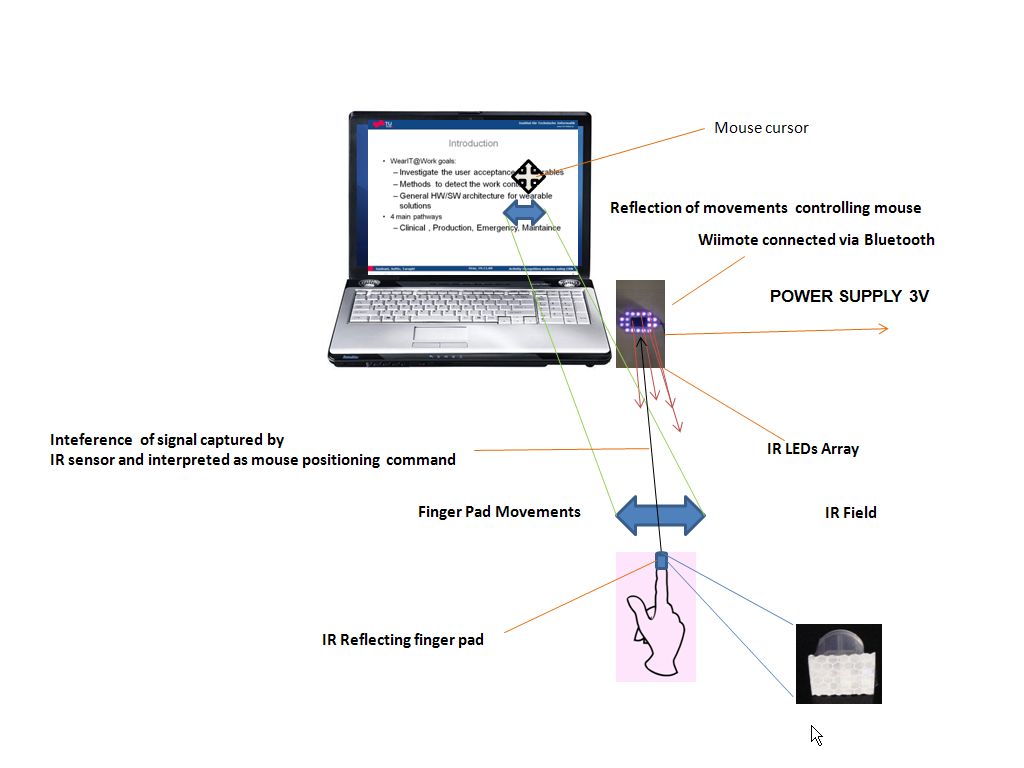
Here you will find the description of the project as well as all source codes.
TU Graz LearnLand ist mobil
Das TU Graz LearnLand (welches auf ELGG basiert) hat ab sofort einen Mobile Viewer, d.h es wird automatisch erkannt, dass einer der Weblogs mit einem mobilen Browser aufgerufen wird.
Als Ergebnis erhält man eine für mobile Browser gerechte Aufbereitung:
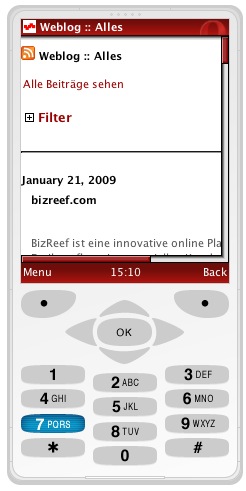
Wer es gerne testen möchte bitte einfach diese URL mit dem mobilen Endgerät aufrufen:
https://tugll.tugraz.at/91090/weblog
Oder als QR Code: