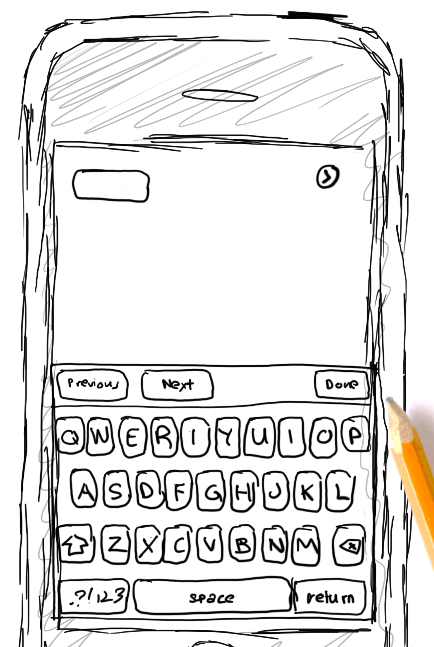
 Eine sehr nette Möglichkeit ein Mockup für das iPhone zu erstellen bietet diese Webseite.
Zwei verschiedene Styles werden angeboten, danach kann man die wichtigsten Bedienelemente einfach via Drag&Drop auswählen. Auch das Hochladen eines eigenen Bildes wird unterstützt.
Na dann, alles gute den Usability Ingenieuren, damit die Programme einfach bedienbar werden.
Final program of Special Track at ICL2009 online
Mashups for Learning
A track organised by:
Dr. Sandra Schaffert, Salzburg Research, Austria
Dr. Martin Ebner, Graz University of Technology, Austria
The special track “Mashups for Learning” (MASHL2009) takes place within the “International Conference on Interactive Computer Aided Learning” (ICL) in Villach, Austria.
Here you can find again the CALL for Paper.
Now we can announce the final program (including 4 Full Papers and 3 Short Papers) of the two sessios which will take place on Thursday, 24/09/2009 – we are looking forward to great discussions about the topics:
Interessanter m-Learning Ansatz
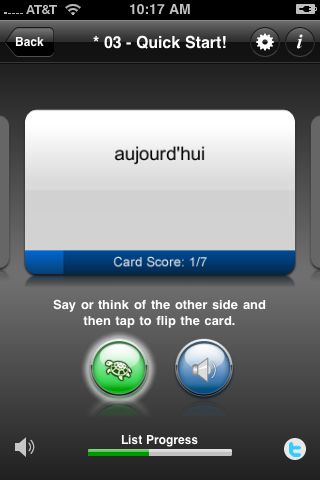 Dank Judy bin ich auf diese iPhone Applikation gestoßen: Byki Global for iPhone
Auf den ersten Blick sieht es nach einer nicht spektakulären Möglichkeit aus Sprachen zu erlernen. Es werden einem Lernkarten angeboten (mit Ton) die man durcharbeiten und danach sich mittels Quiz selbst überprüfen kann. Nun gut, dann gibt es aber rechts unten noch einen kleinen Knopf – Twitter (!). Völlig erstaunt habe ich diesen gedrückt und dann wird wirklich nach der gerade am Bildschirm gezeigten Phrase in Twitter gesucht – also man kann sich dann anschauen wie die jeweilige Phrase im Kontext verwendet wird.
Selbstverständlich ist es problematisch, dass in 140 Zeigen ein wirklich guter sprachlicher Gebrauch vorliegt, aber die Idee an sich ist einfach gut – sehr gut. Und ja das ist eigentlich was ich mir unter „Learning-on-demand“ vorstelle. Btw, die iPhone Applikation ist übrigens in der Basisversion gratis – anschauen, lohnt sich.
[video] Nokia Mixed Reality
Nun das Konzept der Brille ist ja nicht wirklich neu, aber nun nimmt sich auch Nokia darum an mit einem kurzen Video aus dem Research Lab, das schon etwas die Neugierde weckt:
This concept allows to you to experience immersion and effortless navigation in an Augmented Reality environment. New types of interactions involving near-to-eye displays, gaze direction tracking, …
Es hat zwar mit Augmented Reality wenig zu tun, aber interessant ist es allemal:
[video] Multitouch on Firefox
Nun, dass der Trend in Richtung Multitouch / Surface Computing nicht aufzuhalten ist, erscheint mir logisch. Auch bin ich schon enorm gespannt wie groß die Auswirkungen auf unser Forschungsgebiet (Technology Enhanced Learning) sein wird.
Hier ein Video wo gezeigt wird, dass auch der Browser in Zukunft wohl ohne weiteres mit Fingern bedienbar sein wird:
Multitouch on Firefox from Felipe on Vimeo.
Online Round Table on „Open Content“
 I am happy that we can invite to the first Online Round Table on „Open Content“ which will lead to the upcoming EduCamp Event in Graz, Austria (November, 6-7):
The first online event is already next Monday (September 14). Martin Weller and Martin Lindner will be our guest speakers. They will guide us through an informal discussion around ‘Open Content’, a topic that will certainly generate a lively debate. Make sure to contribute to it too. 😉 We look forward to ‘seeing’ you there.
The details about the speakers, their talks as well as how you will be able to contribute you will find here.
[video/song] I need my Teachers to Learn
Ich würde sagen ein Song der unsereins doch zum Nachdenken bringt und motiviert weiter daran zu arbeiten die Bildung mit der Technologie zu vereinen:
(via dangerously irrelevant)
[article] Weaving Social E-learning Platforms Into The Web of Linked Data
My colleague Behnam Taraghi and his friend also contributed to this year i-Know Conference and presented a publication on „Weaving Social E-learning Platforms Into the Web of Linked Data„. I think who is interested in this topic it’s worth to take a look.
Abstract:
In this paper we present an approach for interlinking and RDFising social e-Learning Web 2.0 platforms like ELGG based on semantic tagging and Linked Data principles. A special module called SID (Semantically Interlinked Data) was developed to allow existing tagged and published user generated content an easy entrance into the Web of Data and to enrich it semantically on the other hand. Our approach uses commonly known vocabularies (FOAF, SIOC, MOAT and Tag Ontology) for modelling and generation tasks along with DBPedia as reference dataset for interlinking.
[presentation] Will PLEs Become Ubiquitous through the Use of Widgets?
[publication] Will Personal Learning Environments Become Ubiquitous through the Use of Widgets?
Our publication „Will Personal Learning Environments Become Ubiquitous through the Use of Widgets?“ for this year i-Know Conference is now online available.
Abstract:
Nowadays Personal Learning Environments (PLEs) are described as the use of different social software tools for learning and teaching. The use of common web browsers often is a precondition to fulfil the requirements of social software tools. In this publication a new perspective as well as a couple of prototypes is presented to allow a more independent solution in this context. Using the new JavaFX technology so called widgets are implemented which can be used on different devices as well as different operating systems. Furthermore also the web browser can be replaced by a browser instance. It can be summarized that through the use of widgets the learning environment of the future can be more individualized and personalized.
Reference: Taraghi, B., Mühlburger, H.; Ebner, M.; Nagler, W. (2009) Will Personal Learning Environments Become Ubiquitous through the Use of Widgets?, Tochtermann, K. and Maurer, H. (ed.), Proceedings of I-KNOW ’09 and I-SEMANTICS ’09, Graz, Austria, pp. 329-335
Here you will find the online copy.