Eine sehr schöne Übersicht zeigt dieses Bild:
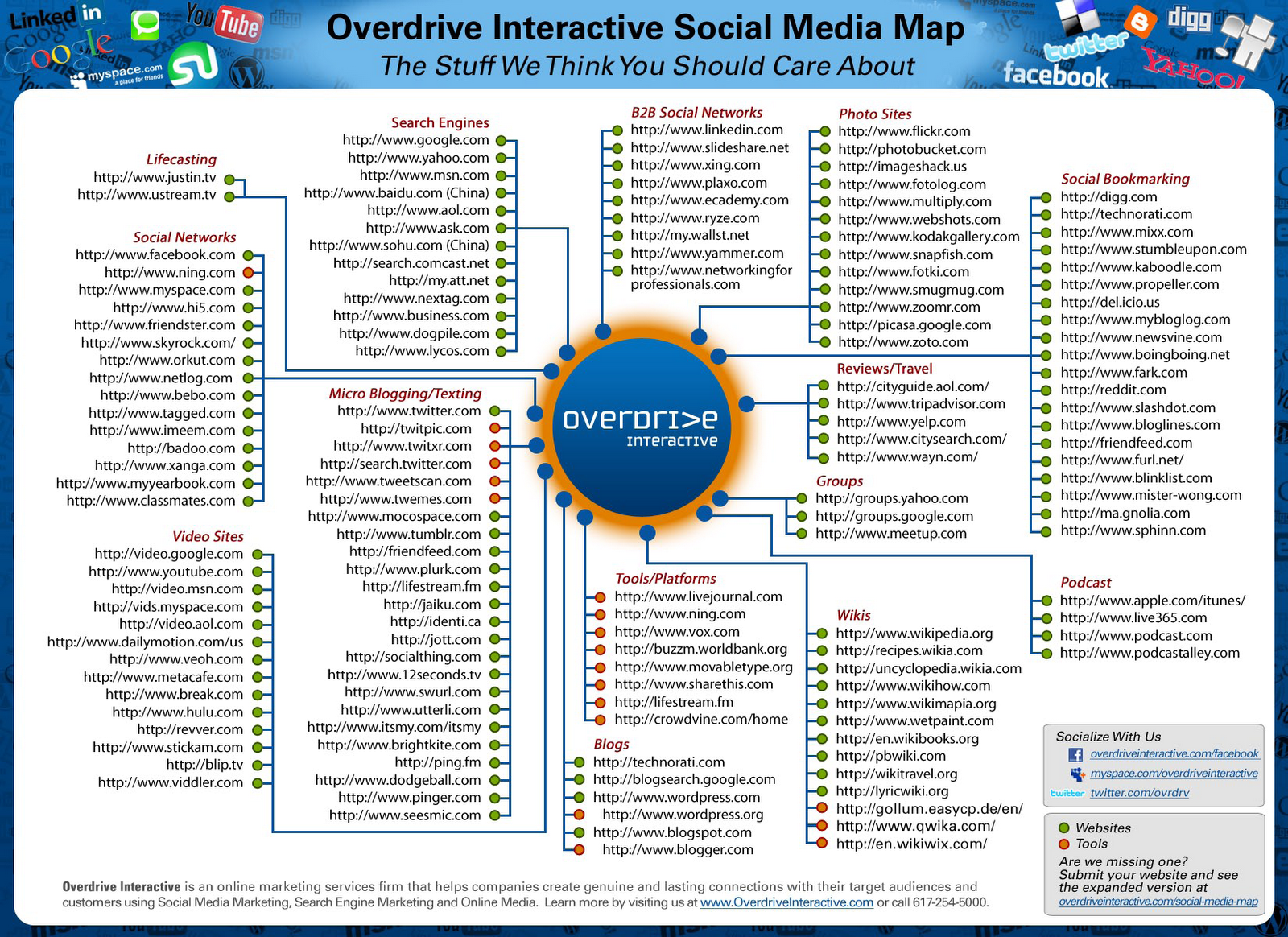
Source: https://www.ovrdrv.com/social-media-map/pdf/social-media-map.pdf
(via A.Kipta`s Blog)
Digitale Lehre an und rund um der Technischen Universität Graz
Eine sehr schöne Übersicht zeigt dieses Bild:
Source: https://www.ovrdrv.com/social-media-map/pdf/social-media-map.pdf
(via A.Kipta`s Blog)
Ich beschäftige mich ja auch damit, welche Applikationen am iPhone für die Bildung relevant sind und nebenbei kommen einem ja einige Ideen.
Wie auch immer, hier gibt es einmal zwei Listen, wo sich andere schon um dieses Thema angenommen haben:
 Andrea Back und Jochen Robes rufen zu einem Blog Karneval auf und fragen uns:
Kann ich mit Web-2.0-Tools effektiver mit Information und Wissen umgehen? Verbessern sich die Produktivität und Qualität der Arbeit? Werden die Vorteile der neuen Arbeitsmittel durch negative Seiteneffekte überkompensiert? Wie verläuft der persönliche Lernprozess, sich diese Arbeitspraktiken anzueignen?
Klar kann ich mir den Versuch einer Antwort nicht verkneifen und es freut mich, dass ich wieder mal ein wenig vor mich hin sinnieren darf (ich finde, dass ich das noch viel zuwenig mache). Gut aber alles der Reihe nach.
Ob man mit Web 2.0 Tools effektiver mit Informationen umgehen kann – im Sinne des Webs der ersten Stunde ein klares Ja, im Sinne von semantischen Technologien eigentlich Nein. Ich bin immer noch ein Vertreter jener, der gerade Web 2.0 als (Entwicklungs-)Stufe sieht, die am Anfang einer Treppe liegt. Wir sind noch längst nicht dort, was ich heute als effektiv oder effizient bezeichnen würde, aber wir bewegen uns vorwärts. Was das Wissen betrifft bin ich schon skeptischer, nachdem dies ja ein personenbezogenes Merkmal ist. Ich bin heute immer noch nicht in der Lage alle im Web hinterlassenen Spuren (Blogeinträge, Bookmarks oder was weiß ich) tatsächlich auch in einer vernünftigen Zeit wiederzufinden bzw. mich daran teilweise zu erinnern.
Ob sich die Qualität der Arbeit verbessert kann ich schwer beurteilen, was sich definitiv verändert hat ist die Globalisierung – ich bin heute mit mehr Personen in Kontakt als je zuvor, habe noch nie gleichzeitig soviel disktutiert und nachgedacht aufgrund vieler Perspektiven.
Web 2.0 hat mich transparenter und kommunikativer gemacht – und im Sinne der Wissenschaft macht mich das reicher, denn ja erst der Diskurs uns wieder auf neue Gedanken bringt.
Klar gab es Lernkurven, muss man sich verschiedene Dinge aneignen, aber der Gewinn steht in keiner Relation zum Aufwand. Für Personen die im internationalen Austausch stehen bzw. wie ich darauf angewiesen sind, ist das Internet als großer Informations- und Kommunikationsraum ein riesen Gewinn – definitiv 🙂 .
Dank eines Hinweises meines Kollegen (@clienhardt) bin ich auf dieses nette Tool gestoßen: Tabbloid.
Man füttert einfach einen RSS-Feed, gibt an wie oft man den Inhalt per e-Mail hätte und bekommt quasi einen gedruckten Newsletter (als .pdf) zugesandt.
Einfach – praktisch – gut 🙂 .
Also Twitter ist schon allein deswegen so eine interessante Anwendung, weil man nicht einmal den dauernden Neuentwicklungen von Drittapplikationen folgen kann. Deswegen die x-te Zusammenfassung im Blog, auf was ich schon wieder gestoßen bin:
Mark Prensky der für seine Aufsätze rund um „Digital Natives und Digital Immigrants“ für Aufsehen und seither auch für viel Diskussion sorgte, kehrt diesen Begriffen (wie er selbst schreibt) ein wenig den Rücken. In einem Journal Article (Journal of Onlice Education) bringt er den Begriff Digital Wisdom ein:
In 2001, I published „Digital Natives, Digital Immigrants,“ a two-part article that explained these terms as a way of understanding the deep differences between the young people of today and many of their elders (Prensky 2001a, 2001b). Although many have found the terms useful, as we move further into the 21st century when all will have grown up in the era of digital technology, the distinction between digital natives and digital immigrants will become less relevant. Clearly, as we work to create and improve the future, we need to imagine a new set of distinctions. I suggest we think in terms of digital wisdom.
Mehr soll nicht verraten werden, aber ich bin mir sicher, dass er damit wieder für Zündstoff gesorgt hat und wir als Forscher nun wieder schauen müssen, wie es denn sich wirklich verhält.
Referenz: This article was originally published in Innovate (https://www.innovateonline.info/) as: Prensky, M. 2009. H. sapiens digital: From digital immigrants and digital natives to digital wisdom. Innovate 5 (3). (accessed February 3, 2009).
Bin auf ein weiteres historisches Video gestoßen (ähnlich dem „Als der Journalismus online ging„) – The Amazing Internet:
Bad late 80s early 90s CBC video about the growning phenomina of „Internet“
Eigentlich ist das jetzt ein Gastbeitrag, denn ich habe alle diese Links via Twitter bekommen. Also einen wunderschönen Dank an meine KollegInnen, die mir diese zukommen ließen.
Weiters eine Ergänzung auch zu Mandys Artikel über Twitter – ich bin davon überzeugt, dass man nicht Fragen sollte ob Microblogging zu informellen Lernen oder Lernen überhaupt führt, man muss Twitter & Co. als Kommunikationsmittel ansehen. Es ist einfach eine weitere Möglichkeit mit Personen zu kommunizieren (und eine sehr mächtige, wie sich herausstellt). Das Lernen über Gespräche, Diskussionen eingebettet in sozialen Kontexten passiert, ist dann lediglich der „schöne Nebeneffekt“.
So nun aber die Links (danke nochmals):
Nachsatz: Bin natürlich dankbar für weitere Hinweise zu solch tollen Listen 🙂
Ich bin ja ein Liebhaber von Filmen die in die Zukunft schauen oder die uns aus der Vergangenheit berichten. Also 1981 hat man die ersten Ansätze des „Online-Journalismus“ folgendermaßen empfunden:
Richard Halloran, geschätzte 70 Jahre alt und einer der wenigen privaten Computer-Besitzer damals, zählt die Vorteile der elektronischen Publikation auf: „Mit diesem System haben wir nicht nur die Möglichkeit, die Nachrichten auf dem Bildschirm zu lesen, sondern wir können sie auch kopieren. Wenn uns etwas interessiert, können wir zurück ins System gehen, die Artikel ausdrucken und sie ablegen. Ich glaube, das ist die Zukunft .“
(via Spreeblick)