[presentation] Fächerintegrativer Unterricht am Beispiel des BBC micro:bit #research #tugraz #bildungsinformatik

Patrick hat seine Diplomarbeit über den fächerintegrativen Unterricht geschrieben und Beispiele entwickelt wie man den BBC micro:bit einsetzen kann. Hier findet man die Folien seiner Verteidigung:

Klicken Sie auf den unteren Button, um den Inhalt von www.slideshare.net zu laden.

Inhalt laden

Open Acces Tage in Graz – wir sind dabei #OER #imoox #OEA

Wir freuen uns, dass wir heuer auch bei den Open-Access-Tagen in Graz mit unserem Lieblingsthema (OER) vertreten sein werden. Es wurde heuer auch als Schwerpunkt aufgenommen und da haben wir natürlich die Chance genutzt. Sowohl die OER-Stratgie, iMooX oder auch das Open Education Austria Projekt – zu erzählen haben wir ja viel. Noch mehr freuen würde uns, wenn viele vorbei schauen und mitdiskutieren 🙂

Unserer Programmpunkte:

  1. 25.9 11.30-13.00 Uhr: Wie erstelle ich OER? (Open Training Workshop)
  2. 25.9 16.30-18.20 Uhr: OER in Österreich – ein Überblick über die nationale Strategie (Aufbau einer nationalen OER-Infrastruktur am Beispiel des Open-Education-Austria-Projektes)
  3. 26.9 9.30-11.00 Uhr: iMooX – eine MOOC-Plattform mit OER? (Communities & Community-Tools)

[Programm der Open-Access-Tage 2018]

[ijet, journal] Journal of Emerging Technologies in Learning Vol. 13 / No. 7 #ijet #research

Issue 13(7) of our journal on emerging technologies for learning got published. Enjoy the readings as usual for free :-).

Table of Contents:

  • Personalized Distance Education System Based on Data Mining
  • New Scheduling Algorithm for Mobile Teaching Cloud Resource Push
  • Application of Data Mining Technology in the Subject Tactical Teaching of Badminton
  • Design and Implementation of a College English Listening Learning System Based on Android Platform
  • The Application of Augmented Reality Visual Communication in Network Teaching
  • Design and Application of a Situation Simulation Technology in Financial Teaching
  • Exploration of Key Technologies in a Personalized English Learning System
  • Self-organizing Community Learning Based on P2P Network in a University Computer Foundation Course
  • Design and Analysis of an Interactive MOOC Teaching System Based on Virtual Reality
  • Japanese Informatization Teaching Model Based on MOOC
  • Application of Computer aided Collaborative Learning Model in English Virtual Electronic Teaching
  • Development and Application of an English Network Teaching System Based on MOOC
  • Exploration of English Composition Diagnosis System Based on Rule Matching
  • Application of Virtual Environment in the Teaching of Basketball Tactics
  • Design and Application of a Fuzzy Evaluation Algorithm for Stroke Force in Calligraphy Teaching
  • Design and Application of Children’s Entertainment Education Software in Preschool Education
  • Design of Digital Network Shared Learning Platform Based on SCORM Standard
  • Perception and Text Comprehension. It’s a Matter of Perception!
  • Adaptive Internet Technology as a Tool for Flipping the Classroom to Develop Communicative Foreign Language Skills

[Link to Issue 13/7]

Nevertheless, if you are interested to become a reviewer for the journal, please just contact me :-).

[presentation] Increasing Learning Efficiency and Quality of Students Homework by Attendance Monitoring and Polls at Interactive Learning Videos #edil18 #tugraz #edmedia #InnovateLearning

At this year ED-Media conference in Amsterdam we present also our LIVE-system. which deals with interactivity in videos. This year we did a first study within a lecture. Here you can find the slides:

Klicken Sie auf den unteren Button, um den Inhalt von www.slideshare.net zu laden.

Inhalt laden

[presentation] Should You Go for Smartphones at School? #digitalNatives #edmedia #edil18 #InnovateLearning

At this year ED-Media conference in Amsterdam we present our yearly study about our beginners‘ survey. As usual the yearly progress is shown as well as some special research questions. Here you can find the slides:

Klicken Sie auf den unteren Button, um den Inhalt von www.slideshare.net zu laden.

Inhalt laden

[publication] Increasing Learning Efficiency and Quality of Students´ Homework by Attendance Monitoring and Polls at Interactive Learning Videos #video #videoanalyses #tugraz #research

At this year Ed-Media conference in Amsterdam we published our research work about „Increasing Learning Efficiency and Quality of Students´ Homework by Attendance Monitoring and Polls at Interactive Learning Videosn“.

Abstract:

Due to the fact that students are confronted with a growing amount of texts, colours, figures and shapes and due to their ability to process only a limited number of such information simultaneously, it seems to be obvious that efforts should be made to increase the students‘ attention-levels. This is important because research results have indicated that selective attention is considered as the most valuable resource in the process of human learning. The application of interaction and communication to the process of learning is a useful strategy to direct the students‘ attention. It seems to be obvious that this is also true for learning videos. Therefore, this work contains a description of how a video platform with interactive components can be used to support the students and teacher. The video platform is explained and evaluated by analysing its usage in a large teaching course at an institution of higher education. The application of this strategy improved the students‘ performance and optimized the teacher’s workload.

[Draft @ ResearchGate]

Reference: Wachtler, J., Scherz, M. & Ebner, M. (2018). Increasing Learning Efficiency and Quality of Students´ Homework by Attendance Monitoring and Polls at Interactive Learning Videos. In Proceedings of EdMedia: World Conference on Educational Media and Technology (pp. 1337-1347). Amsterdam, Netherlands: Association for the Advancement of Computing in Education (AACE)

[presentation] German Language Training Apps for Primary School Children #tugraz

Alexander Schwaiger defended successfully his master thesis about an innovative app for the IdERblog project. Find here his slides:

Klicken Sie auf den unteren Button, um den Inhalt von www.slideshare.net zu laden.

Inhalt laden

[publication] Lernen unter der Lupe – Wie „Learning Analytics“ individuelles Lernen unterstützt #LearningAnalytics

Im neuen Computer + Unterricht Heft wurden wir gebeten einen kurzen Beitrag zur unseren Learning-Analytics-Aktivitäten beizusteuern. Der Beitrag ist nun erschienen und berichtet kurz über die Möglichkeiten die wir in dieser Entwicklung sehen.

Zusammenfassung:

Learning Analytics ist die Möglichkeit aus gesammelten Daten durch entsprechende Analyseverfahren neue Erkenntnisse für die pädagogische Praxis zu erhalten. In diesem Beitrag soll eine kurze Einführung gegeben werden, sowie anhand von zwei konkreten Beispielen gezeigt werden wir man es für den Schulalltag nutzen kann.

[Vorabzug @ ResearchGate]

Referenz: Ebner, M. & Ebner, M. (2018) Lernen unter der Lupe – Wie „Learning Analytics“ individuelles Lernen unterstützt. Computer + Unterricht Nr. 110/2018, S. 11-12

[conference] Freie Bildungsmaterialien in der Hochschullehre #OER #tugraz

Es freut mich, dass ich zu einer OER-Konferenz in Karlsruhe mit dem Titel „OER-KA: Freie Bildungsmaterialien in der Hochschullehre“ eingeladen worden bin. Ich möchte dort die letzten Entwicklungen aus Österreich überblicksmäßig darstellen, insbesondere die letzten Arbeiten auf nationalem Level vorstellen.

Ich freue mich auf viele TeilnehmerInnen und spannende Diskussionen 🙂 .

MakerDays for Kids in Graz #Sommer18 #tugraz #makerdays #makereducation

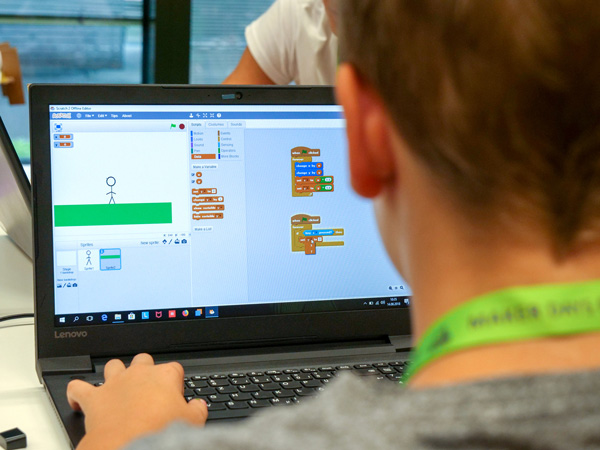
Es freut uns sehr, dass die TU Graz im Rahmen ihres Sommerangebotes heuer erstmals auch MakerDays für Kinder und Jugendliche anbieten kann. Vom 13.8 – 17.8.2018 wird folgendes unternommen:

In einer offenen (digitalen) Werkstatt können Kinder und Jugendliche im Alter von 10-14 Jahren kreativ arbeiten und verschiedene Produkte mit unterschiedlichen (digitalen) Werkzeugen und Materialien gestalten und herstellen.

Folgende Stationen erwarten dich:

#textiles Gestalten #Programmieren und Physical Computing #Roboter steuern #Arbeiten mit dem 3D-Drucker und dem Vinyl-Schneider #Basteln, Bauen, Malen #elektronisches Basteln #Lernen mit neuen Medien #verschiedene Workshops #und noch vieles mehr

WICHTIG: Die Teilnahme für Jugendliche von 10-14 Jahren ist kostenlos (!), man braucht sich bitte nur hier anmelden. Wir freuen uns wirklich, neue Wege zu beschreiten und eine Woche lang in einer offenen (digitalen) Werkstatt arbeiten zu können.