Ich durfte im einer Arbeitsgruppe der österreichischen Hochschulkonferenz als nominierter der UNIKO mitarbeiten zu meinem Kernthema: Digitales Lehren und Lernen an Hochschulen.
Das Ziel war aus der herausfordernden CoViD19-Zeit erste Rückschlüsse zu ziehen und Empfehlungen zu formulieren, wie die Hochschulen in Österreich zukünftig das Thema behandeln sollten. Der Prozess dauerte fast ein Jahr, mit vielen spannenden Diskussionen, Unterarbeitsgruppen etc. Jedenfalls denke ich, dass ein erster brauchbarer Entwurf enstanden ist, der hoffentlich auch zur Umsetzung gelangt.
Es freut uns, dass wir nun den sechsten Teil unserer Podcast-Serie „Lehren – Lernen – Lauschen“ auf der TELucation-Webseite zur Verfügung stellen können. Diesesmal spricht Marisol Vidal Martinez über ihren Werdegang:
Marisol Vidal Martinez, Coordinator for International Affairs an der Architekturfakultät der TU Graz, spricht in diesem Podcast über ihren eigenen Werdegang sowie die Auswirkungen der Pandemie auf Erasmus und Lehre.
Selbstverständlich trägt auch die TU Graz zur allgemeinen Forschung zur oder über die CoVID19-Pandemie bei. Dazu gibt es jetzt einen ersten Übersichtsartikel. Besonders freut uns natürlich, dass auch unsere Forschungsarbeiten sich darin wiederfinden:
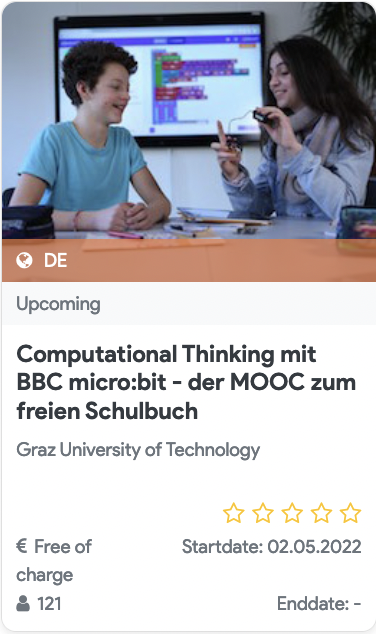
Das Schulbuch „Digitale Bildung in der Sekundarstufe: Computational Thinking mit BBC micro:bit“ wurde 2018 von einer Gruppe von österreichischen FachexpertInnen von sieben verschiedenen Pädagogischen Hochschulen und der Technischen Universität Graz. erstellt. Der MOOC wurde dann im Jahr 2019 erstmalig auf iMooX angeboten, mit dem Ziel, den BBC micro:bit und seine Einsatzmöglichkeiten im Schulunterricht bzw. im Fach „Digitale Grundbildung“ kennen zu lernen. In den letzten Jahren haben sich nicht nur der BBC micro:bit und die zugehörigen Entwicklungsumgebungen weiterentwickelt, sondern es sind auch viele neue Unterrichtsbeispiele für den fächerintegrativen Einsatz entstanden. Das hat die Autorinnen und Autoren nun dazu bewegt, das Schulbuch bzw. auch die Online-Inhalte und Videos bis zu Beginn des Schuljahres 2022/23 zu aktualisieren und um neue Beispiele zu erweitern. Konsequenterweise wurden auch die Inhalte des MOOC überarbeitet, damit die KurteilnehmerInnen bestmöglich bei der Arbeit mit dem BBC micro:bit unterstützt werden können.
Hier noch der Trailer zum MOOC:
Mit dem Laden des Videos akzeptieren Sie die Datenschutzerklärung von YouTube. Mehr erfahren
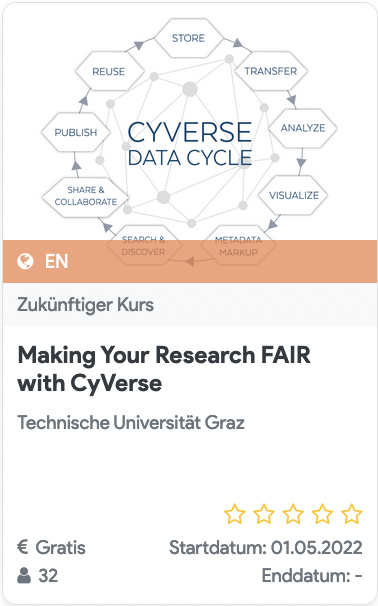
The course ‚Making your Research FAIR with CyVerse‘ is intended to help researchers getting to know the cyberinfrastructure CyVerse and to learn how to work with CyVerse as well as attached HPC resources. This infrastructure is setup at different locations – among others Graz University of Technology, Medical University of Graz and University of Graz.
Of course the online course is free of charge and can be done by anyone. So feel free to register and join us: [register right here]
Es freut uns sehr, dass unser Podcast „Lehren – Lernen – Lauschen“ nun auch auf den wichtigsten Podcast-Kanälen frei zur Verfügung steht:
Lehren – Lernen – Lauschen der Lehre eine Stimme geben. Persönliche Gespräche mit VertreterInnen der TU-Graz die uns in die Welt der Lehre einladen, über ihre Motivation und auch Herausforderungen berichten.
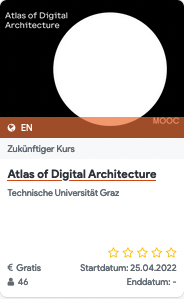
We are very happy that we can announce that our third excellence MOOC from Graz University of Technology is starting today at iMooX.at. The topic is „Atlas of Digital Architecture“ and offers an orientation to the myriad ways in which computers are used in architecture today, such as: 3D Modelling and CAD; Rendering and Visualisation; Scripting, Typography, Text & Code; Digital Manufacturing and Model Making; GIS, BIM, Simulation, and Big Data & Machine Learning, to name but these.
Digital technology and architecture have become inseparable, with new approaches and methodologies not just affecting the workflows and practice of architects, but shaping the very character of architecture. This MOOC is named after and based on the Atlas of Digital Architecture, a compendious textbook about the myriad ways in which computers are used in architecture today. Through a series of engaging, episodic online lectures and discussions, the MOOC offers an introduction and orientation to the fascinating and fast changing world of digital architecture. The Atlas of Digital Architecture, the book that this MOOC is based on, brings together the knowledge of two dozen university professors and lecturers from the German speaking world, many of whom feature in this MOOC, sharing their vast range of expertise. The book was written by London-based writer Sebastian Michael who also acts as the presenter of the course in the videos. This is the first of five MOOCs that the group is preparing to eventually represent the whole thematic breadth of the book. Each episode provides both a historical perspective and a conceptual outlook to convey a sense of continuity between past, present, and future. Going beyond the confines of the traditional textbook, the Atlas also postulates a theoretical framework for architecture in the 21st century, which is reflected in this MOOC. The MOOC is mostly in English, though German is spoken in some of the discussions and lectures. Note that subtitles in both English and German are available throughout for all videos.
Here you can find the trailer of the MOOC:
Mit dem Laden des Videos akzeptieren Sie die Datenschutzerklärung von YouTube. Mehr erfahren
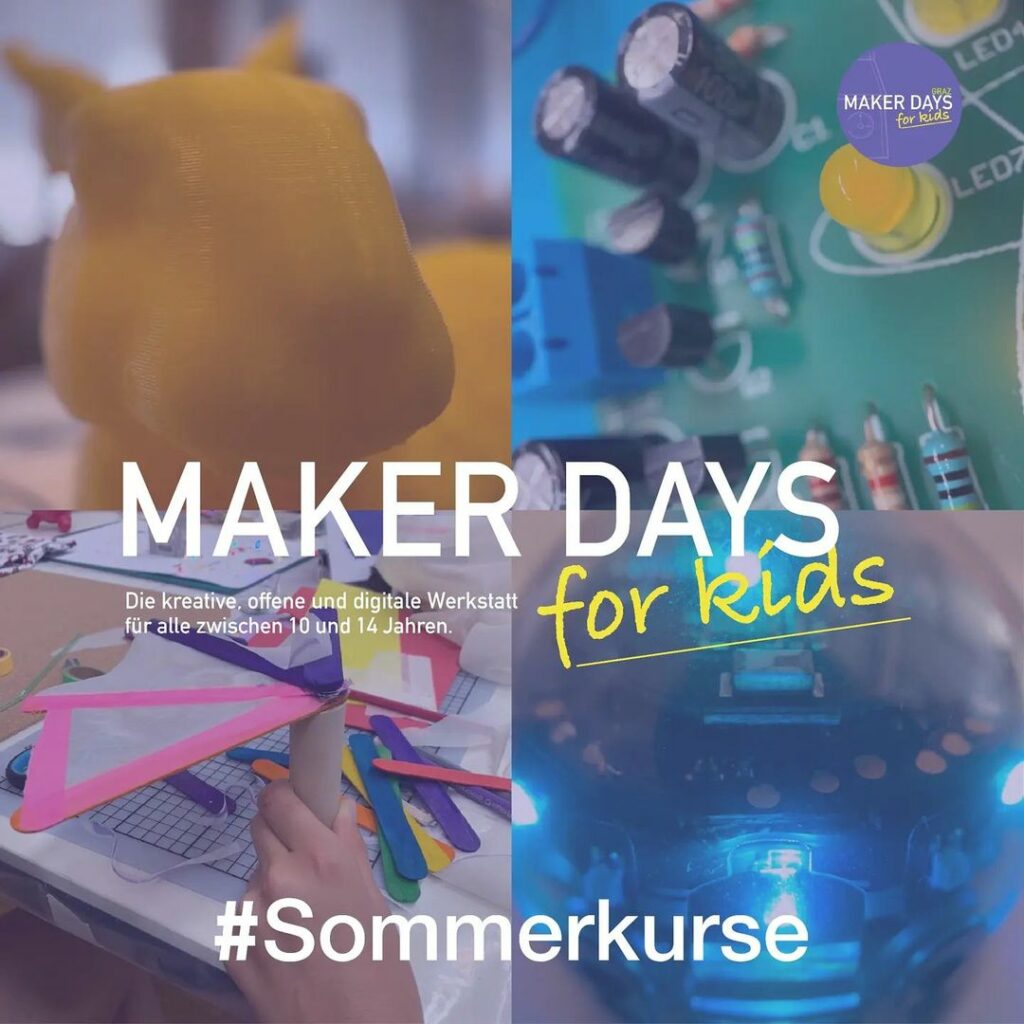
Wir freuen uns, dass wir im Sommer 2022 wiederum die Makerdays for kids anbieten können und laden Jugendliche von 10 bis 14 Jahren ein mit uns ein paar nette Tage zu verbringen und dabei kreatives (digital) Schaffens zu erleben 🙂
Stattfinden wird es heuer vom 1. – 4. August 2022 und man kann sich bereits hier kostenlos anmelden [Anmeldung Sommerkurse TU Graz].
Achja und hier gibt es noch viele weitere Informationen zum Konzept.
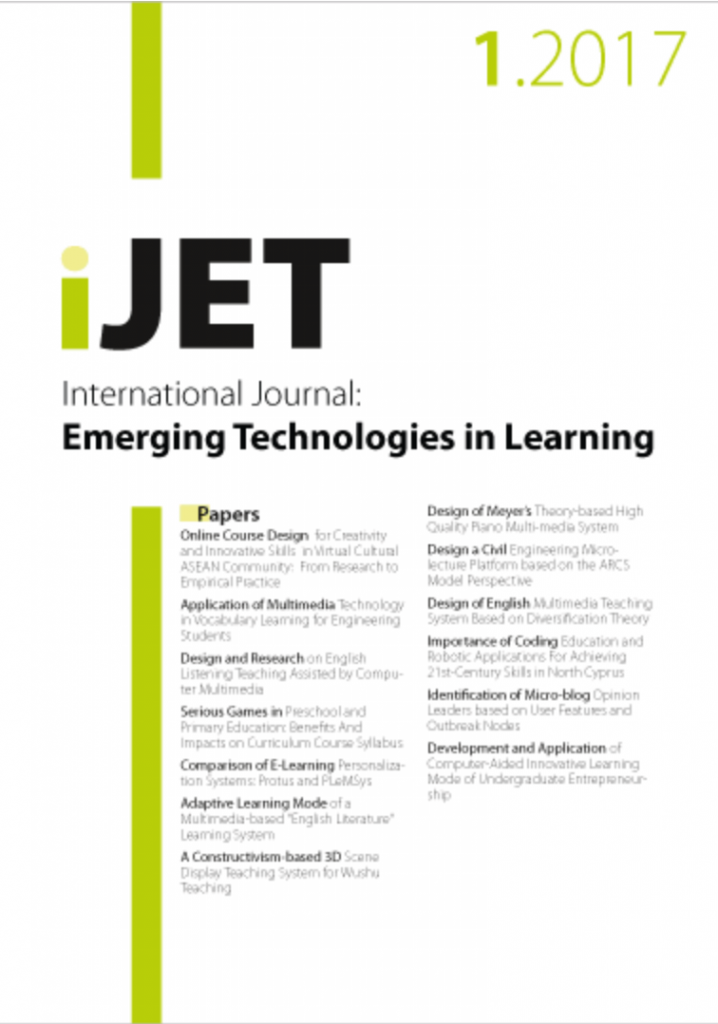
Issue 17(7) of our journal on emerging technologies for learning got published. Enjoy the readings as usual for free :-).
Table of Contents:
Heuristic Strategies: Achieving Influence Motivation with Success to Design Industrial Products in Projects from the Department of Architectural Education and Design
The Efficacy of REV-OPOLY Augmented Reality Board Game in Higher Education
Training and Educational Innovation: An Evaluative Perspective of the Digital Teaching Competence
University Students’ Perceptions on the Use of Quizlet in Learning Vocabulary
Construction and Application of a Major-Specific Knowledge Graph Based on Big Data in Education
Application of Knowledge Chain in the Construction of Online Tourism Education Resources
Research on Constructing Online Learning Performance Prediction Model Combining Feature Selection and Neural Network
An Efficient Framework for Intelligent Learning Based on Artificial Intelligence and IoT
Evaluation of Learning Management Systems
The Evaluation of User Experience on Learning Management Systems Using UEQ
Effects of a New Media Data Interaction System on Teaching Efficiency in Vocational Education
Application of a Teaching Plan for Algorithm Subjects Using Active Methodologies: An Experimental Report
Hybrid Genetic Algorithm and Modified-Particle Swarm Optimization Algorithm (GA-MPSO) for Predicting Scheduling Virtual Machines in Educational Cloud Platforms
Design and Realization of Experiential Teaching Based on Knowledge Feature Transformation of Course Teaching
Digital Textbook and Flipped Classroom: Experimentation of the Self-Learning Method Based on the Development of Soft Skills and Disciplinary Knowledge
Motivation of Students’ Persistency for Online Learning under Multiple Mediation Effect
Modelling Students’ Adoption of E-Learning During the COVID-19 Pandemic
Flipped Classroom Real-World Activities for Learning Open Computing Concepts