n-tes Twittersammelsurium

Nun schön langsam scheint Twitter wirklich bei der Masse anzukommen, also der Mainstream erfolgt fast 2 Jahre nach dem Start.
Wie auch immer habe ich wieder ein paar nette Sachen gefunden:

  • Quote of the Day: „Social media is like teen sex,“ Kaushik tweeted. „Everyone wants to do it. No one actually knows how. When finally done, there is surprise it’s not better.“
  • Beitrag zu „Top Trends and Apps: How Do People Use Twitter?“

Und noch ein Video wie Twitter bereits in den Nachrichten angekommen ist:
[report] pockets of potential

Ich bin auf einen sehr interessanten Bericht in Bezug auf m-Learning gestoßen: „pockets of potential, Using Mobile Technologies to Promote Children’s Learning„.

Summary:

This report, undertaken by the Joan Ganz Cooney Center at Sesame Workshop, draws on interviews with a cross-section of research, policy, and industry experts to illustrate how mobile technologies such as cell phones, iPod devices, and portable gaming platforms might be more widely used for
learning. More than half of the world’s population now owns a cell phone and children under 12 constitute one of the fastest growing segments of mobile technology users in the U.S. Examining over 25 handheld learning products and research projects in the U.S. and abroad, the report highlights early evidence and examples of how mobile devices may help
re-defi ne teaching and learning in the decade ahead.

Hier das pdf.

Blogparade zu QR Codes

Der Startup.de Blog rief zur Blogparade über das Thema QR-Code auf. „Rief“ deshalb, da diese eigentlich am 20.2.2009 geschlossen wurde. Nicht möglich, aber meine Suchmaschinen, Agenten, RSS-Feeds usw. haben es erst jetzt zu Tage gebracht.
Egal, wie auch immer versuch ich noch eine schnelle Zusammenfassung (die aus eigenen Blogbeiträgen besteht) zum Thema zu erstellen:

Jakob Nielsen: Mobile Web 2009 = Desktop Web 1998

Jakob Nielsen hat in einem seiner letzten Beiträge das mobile Web respektive die mobile Usability angesprochen. Wie der Titel verrät vergleicht er den Stand der Usability von mobilen Webseiten mit jenen des Webs im Jahre 1998.
Im Wesentlichen stellt er fest, dass viele Seiten schlicht und einfach für mobile Endgeräte (im speziellen Mobiltelefone) noch ungeeignet sind.
Besonders interessant fand ich aber folgende Aussage:

Alan Kay famously said that the Mac was „the first computer worth criticizing.“ Similarly, the iPhone is the first mobile Internet device worth criticizing. It’s a starting point for mobile online-services access, not an endpoint.

Er bestätigt hiermit meine Erfahrung, dass das iPhone wirklich das erste Mobiltelefon ist, mit dem man mobil surfen kann und er macht damit den Startpunkt des „tatsächlich-genutzten-mobilen-Webs“ fest.

iPhone und iPod beherrschen den mobilen Markt

AdMob Mobile Metrics erstellt Studien über die Internetnutzung mit mobilen Endgeräten (Smartphones und Handsets).

AdMob stores and analyzes the data from
every ad request, impression, and click and uses this to optimize ad matching in the network. This monthly report offers a snapshot of the data to provide insight into trends in the mobile ecosystem.

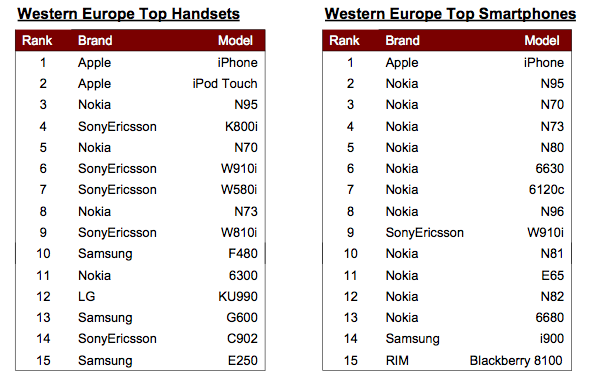
Eigentlich wenig überraschend, aber sehr deutlich zeigt sich, dass die Apple Geräte (iPhone und iPod) deutlich den Markt in Westeuropa beherrschen – 31% aller mobilen Aufrufe kommen von diesen Endgeräten.
Interessant auch diese Aussagen:

This month we also feature Western Europe. Traffic from Western Europe increased 132% in the last 12 months to 550 million requests in January 2009. Growth was strong across France, Germany, Italy, and Spain. Over the last year, Apple devices have shown strong growth throughout Western Europe with the iPhone becoming the number one device by usage. However, Nokia still dominates the smartphone category with 11 of the top 15 devices.

Hier noch die Grafik im Detail:

mobile_use
Die gesamte Studie findet man hier.

Workshops at ED-Media 2009

At this year ED-Media Conference we will do two workshops – or other way round both submitted workshops were accepted.

Workshop 1: Quick Start to e-Learning 1.0 and e-Learning 2.0 (Bring Your Laptop) Edgar R. Weippl, Secure Business Austria, Austria; Martin Ebner, Graz University of Technology, Austria (details)

Workshop 2: M-Learning – On the Move towards a Wired Society (Bring Your Laptop) Martin Ebner, Graz University of Technology, Austria; Walther Nagler, Graz University of Technology, Austria (details)

Of course we would be very happy, if anyone is interested in it and will attend to one or two of these workshops – see you, there 🙂 .

iPhone als Push für m-Learning?

Nun dieser Frage gehe ich schon ein paar Monaten nach – sprich ich glaub es wissen eh schon alle, aber ich besitz seit nun fast 2 Monaten ein iPhone.
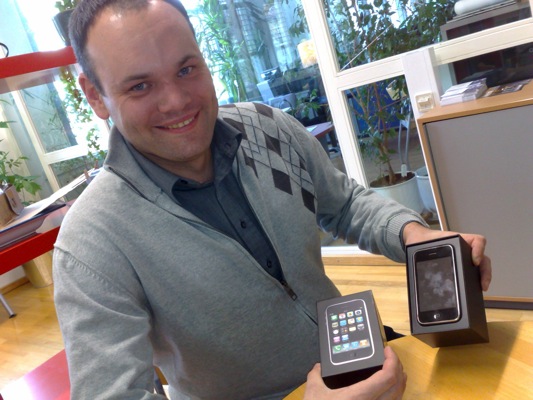
Walther hat es sich damals nicht nehmen lassen und ein Foto meines „Unpacking“ machen müssen:

martin_iphone1
Ich bin derzeit also am testen von zig iPhone Applikationen und habe mir fest vorgenommen, diese im Sinne von m-Learning zu beleuchten – Stärken, Schwächen und Ideen herauszuarbeiten.
Generell kann man sagen ich bin von dem Gerät gerade in Hinblick auf m-Learning schwer begeistert bin und es wird tatsächlich langfristig Veränderungen hervorrufen. Oder vielleicht sollte ich es anders ausdrücken, das iPhone wird helfen das mobile Internet stark zu pushen und damit auch andere Hersteller zwingen nachzudenken (wie man ja auch am Nokia N97 sieht).
Alles in allem, werde ich versuchen ab sofort über Applikationen zu berichten in Hinblick auf das Lehren und Lernen.