Erstes Twittagessen in Graz

Nun also gestern haben wir das erste Twittagessen hier in Graz abgehalten. In einer lockeren Runde haben wir also über das geredet, was wir nicht twittern können 🙂 . Nein es war wirklich nett, ein paar Gleichgesinnte zu treffen und sich auch real kennen zu lernen und ich denke, wir sollten im Herbst das zweite Twittagessen stattfinden lassen.
Hier einmal ein Foto im Gastgarten des Glöcklbräu:

Moblog vom Nokia N95:


Lifeblog-Inhalt

Di 11.08.2009 12:35 110820091259

Originally uploaded by Martin Semriach


TeilnehmerInnen: @behi_at, @dobnik, @grr_mono, @heinz, @hzirl, @jakobh, @karlgsoe, @langzahnratte, @walthern und meine Wenigkeit @mebner

Bilder:

Dann bis zum Nächstenmal 🙂 .

[publication] Emotion Detection: Application of the Valence Arousal Space for Rapid Biological Usability Testing to enhance Universal Access

A Draftversion of our publication „Emotion Detection: Application of the Valence Arousal Space for Rapid Biological Usability Testing to enhance Universal Access“ at this year HCII Conference is now online available.
Abstract:

Emotion is an important mental and physiological state, influencing cognition, perception, learning, communication, decision making, etc. It is considered as a definitive important aspect of user experience (UX), although at least well developed and most of all lacking experimental evidence. This paper deals with an application for emotion detection in usability testing of software.
It describes the approach to utilize the valence arousal space for emotion modeling in a formal experiment. Our study revealed correlations between low performance and negative emotional states. Reliable emotion detection in usability tests will help to prevent negative emotions and attitudes iproducts. This can be a great advantage to enhance Universal Access.

Reference: Stickel, C.; Ebner, M.; Steinbach-Nordmann, S.; Searle, G.; Holzinger, A. (2009) Emotion Detection: Application of the Valence Arousal Space for Rapid Biological Usability Testing to enhance Universal Access. – in: Springer Lecture Notes in Computer Science. (2009) In Press
Here you will find the Draftversion and here the slides.

[publication] A Study on the Compatibility of Ubiquitous Learning (u-Learning) Systems at University Level

A Draftversion of our publication „A Study on the Compatibility of Ubiquitous Learning (u-Learning) Systems at University Level“ at this year HCII Conference is now online available.
Abstract:

Graz University of Technology has a long tradition in the design, development and research of university wide Learning Management Systems
(LMS). Inspired by the iPhone Style, the available system has now been extended by the addition of a mobile viewer, which grants the student mobile accessibility to all available online content. In this paper, we report on the lessons learned within a study on user experience with this specially designed LMS mobile viewer. The User Experience (UX) was measured by application of a 26 item questionnaire including the six factors Attractiveness, Perspicuity, Efficiency, Dependability, Stimulation and Novelty, according to Laugwitz et al. (2008). The results showed high rates of acceptance, although the novelty of our approach received a surprisingly low rating amongst the novice end users.

Reference: Ebner, M.; Stickel, C.; Scerbakov, N.; Holzinger, A. (2009) A Study on the Compatibility of Ubiquitous Learning (u-Learning) Systems at University Level . – in: Springer Lecture Notes in Computer Science. (2009), S. 34 – 43
Here you will find the Draftversion and here the slides.

[video] Augmented Reality und Twitter: TwitARound

Bevor ich mich nun eine Woche in den Urlaub verabschiede und mich wohl ausschließlich über Twitter melden werde, gibt es noch eine interessante bald erscheinende iPhone Applikation die Augmented Reality mit Twitter verbindet: TwitARound

This is a video of the first beta version of TwittARound – an augmented reality Twitter viewer on the iPhone 3GS. It shows live tweets around your location on the horizon.

In diesem Sinne also eine schöne Woche 🙂

YouTube Mobile Uploads Up 400% Since iPhone 3GS Launch

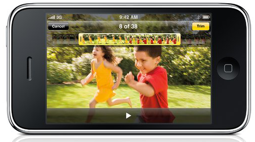
iphonevidshot…. ist zwar grundsätzlich nicht überraschend, aber wir sollten bedenken, es ist EIN Telefon, welches diesen Traffic erzeugt. TechCrunch berichtet hier:

If there was any question about the significance of the iPhone 3GS’s impressive video functionality, here’s your answer: YouTube reports that in the six days since the iPhone 3GS was released last week, the number of mobile uploads has increased by a whopping 400%. For a single phone model to have such a major impact on the site is simply phenomenal.

Es scheint als hätte Apple den Puls der Zeit wieder einmal perfekt erfasst – es war nie so einfach seine Videos online zu stellen. Und ich behaupte mal die Auswirkungen werden wir spüren – die Zunahme des digitalen Contents wird uns bald ins Unermessliche steigen und wir uns fragen wie konnten wir in einer Zeit leben wo wir alle diese Dinge nicht hatten. Es ist wohl nur eine Frage der Zeit bis andere Mobiltelefonhersteller nachziehen und dies auch ermöglichen.
Dass ich mir im Zuge von m-Learning hier große Änderungen erwarte, brauch ich nicht anführen. Es wird irgendwann einmal völlig normal sein, dass Bilder, Audios und Videos einfach Teil des Unterrichts sind und ja ich freu mich darauf 🙂 .