[mooc] Atlas of Digital Architecture #imoox #architecture #mooc #tugraz

We are very happy that we can announce that our third excellence MOOC from Graz University of Technology is starting today at iMooX.at. The topic is „Atlas of Digital Architecture“ and offers an orientation to the myriad ways in which computers are used in architecture today, such as: 3D Modelling and CAD; Rendering and Visualisation; Scripting, Typography, Text & Code; Digital Manufacturing and Model Making; GIS, BIM, Simulation, and Big Data & Machine Learning, to name but these. 

Digital technology and architecture have become inseparable, with new approaches and methodologies not just affecting the workflows and practice of architects, but shaping the very character of architecture. This MOOC is named after and based on the Atlas of Digital Architecture, a compendious textbook about the myriad ways in which computers are used in architecture today. Through a series of engaging, episodic online lectures and discussions, the MOOC offers an introduction and orientation to the fascinating and fast changing world of digital architecture.
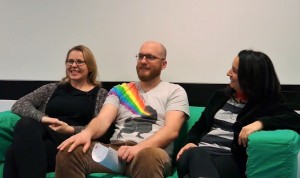
The Atlas of Digital Architecture, the book that this MOOC is based on,  brings together the knowledge of two dozen university professors and lecturers from the German speaking world, many of whom feature in this MOOC, sharing their vast range of expertise. The book was written by London-based writer Sebastian Michael who also acts as the presenter of the course in the videos.
This is the first of five MOOCs that the group is preparing to eventually represent the whole thematic breadth of the book. Each episode provides both a historical perspective and a conceptual outlook to convey a sense of continuity between past, present, and future. Going beyond the confines of the traditional textbook, the Atlas also postulates a theoretical framework for architecture in the 21st century, which is reflected in this MOOC.
The MOOC is mostly in English, though German is spoken in some of the discussions and lectures. Note that subtitles in both English and German are available throughout for all videos.

Here you can find the trailer of the MOOC:

YouTube

Mit dem Laden des Videos akzeptieren Sie die Datenschutzerklärung von YouTube.
Mehr erfahren

Video laden

And of course the registrationa is completly free – so join us 🙂 [Free registration for the course]

MakerDays auch 2022 wieder an der TU Graz #makermovement #making

Wir freuen uns, dass wir im Sommer 2022 wiederum die Makerdays for kids anbieten können und laden Jugendliche von 10 bis 14 Jahren ein mit uns ein paar nette Tage zu verbringen und dabei kreatives (digital) Schaffens zu erleben 🙂

Stattfinden wird es heuer vom 1. – 4. August 2022 und man kann sich bereits hier kostenlos anmelden [Anmeldung Sommerkurse TU Graz].

Achja und hier gibt es noch viele weitere Informationen zum Konzept.

[mathe, MINT] Lektion 8: Mathe-Kompass-MOOC in letzter Woche zu Matrizen #imoox #mathe #mint22 #mathekompass

So der Brückenkurs zur Mathematik ist leider schon in der letzten Woche und da greifen wird das Thema Matrizen auf:

Die Lektion 8 befasst sich mit Matrizen. In dieser Lektion wird zuerst erklärt was Matrizen sind. Danach werden die Multiplikation von Matrizen und Vektoren, die Multiplikation von Matrizen , sowie die inverse Matrix behandelt.

Auch haben wir wieder interaktive MATLab-Übungen hinterlegt, um das Gelernte gleich selbst zu Erproben.

Mehr aber dazu wie immer im Video:

[Anmeldung ist jederzeit hier noch kostenlos möglich]

Hackathon eAccessibility Challenge 2022 #fnma #tugraz #fhtw #hackathon

Es freut uns sehr, dass wir im Rahmen eines Projektes des Forums Neue Medien Austria an einem ganz speziellen Hackathon mitwirken dürfen:

Barrierefreiheit? In der digitalen Welt kein Problem- oder…? Die Digitalisierung von Leben und Lernen mag auf den ersten Blick die Überwindung bekannter Barrieren ermöglichen – sie eröffnet schließlich eine Teilhabe zu jeder Zeit und von jedem Ort. Die digitalen Barrieren sind weniger offensichtlich und brauchen neue Lösungen – ein Blindenleitsystem lässt sich im virtuellen Raum schwer auf dem Boden anbringen.
In einem vom Forum Neue Medien in der Lehre Austria geförderten, gemeinsamen Hackathon von Technikum Wien und der TU Graz wollen wir uns mit verschiedene Hürden und Barrieren dieser neuen Welt befassen und in mehreren Kategorien praktische Lösungen hierfür entwerfen.

Wer darf kostenlos teilnehmen?
Teilnehmen dürfen Studierende und Lehrende der FHTW, der TU Graz und aller anderen Hochschulen.

Wann?
Die Veranstaltung findet am Freitag den 27.05.2022 von 09:00-21:00 Uhr in den Räumen der Fachhochschule Technikum Wien statt

Wer nun Lust bekommen hat, darf sich hier gerne anmelden: [Link zur Anmeldung]


Mit diesem Hinweis, dürfen wir uns die Osterpause verabschieden – frohe und vor allem auch schöne Ostern 🥚

[ijet, journal] Journal of Emerging Technologies in Learning Vol. 17 / No. 6 #ijet #research

Issue 17(6) of our journal on emerging technologies for learning got published. Enjoy the readings as usual for free :-).

Table of Contents:

  • Distance Learning at the University of Jordan in the Setting of Covid-19 Pandemic from the Students’ Perspectives
  • Selection of Audio Learning Resources Based on Big Data
  • Development of a Technology-Assisted Assessment for Sign Language Learning
  • Threats Posed by Social Media and Computer and Video Games from the Perspective of Sport Education
  • Remote Supervision in Times of Pandemic at the University Level Under the Systemic Approach
  • Influencing Factors of Teachers’ Sharing Behaviors of Digital Teaching Resources in Online Teaching Activities
  • Emotion Recognition of College Students’ Online Learning Engagement Based on Deep Learning
  • How Has Gamification Within Digital Platforms Affected Self-Regulated Learning Skills During the COVID-19 Pandemic? Mixed-Methods Research
  • Acceptance of E-Learning Among University Students During Covid-19 Crisis: Bangladesh Perspective
  • The Impact of Blended Learning Assisted with Self-Assessment toward Learner Autonomy and Creative Thinking Skills
  • Implementation of Emergency Management Exercises as Alternate Reality Games – Students’ Perceptions
  • The Use of Mobile Phones in Classrooms: A Systematic Review
  • Optimal Allocation of Mobile Learning Resources Based on a Complex Network
  • Validation of an Instrument to Measure Students’ Perceptions of Online Learning
  • Recommendation of Micro Teaching Video Resources Based on Topic Mining and Sentiment Analysis
  • An Experience of Using a Canvas-Based Template for Blended-Learning in a Master in Drug Discovery

[Link to Issue 17/6]

Nevertheless, if you are interested to become a reviewer for the journal, please just contact me 🙂 .

[mooc, mint] Mathe-MOOC in Woche 6: Nach der Differential- kommt die Integralrechnung #imoox

So der Brückenkurs zur Mathematik ruft die 6. Woche aus und es geht nach der Differential- nun um die Integralrechnung:

Die Lektion 6 befasst sich mit der Integralrechnung. In dieser Lektion werden unter anderem die grafische Darstellung eines Integrals sowie die Berechnung der wichtigsten Stammfunktionen behandelt.

Auch haben wir wieder interaktive MATLab-Übungen hinterlegt, um das Gelernte gleich selbst zu Erproben.

Mehr aber dazu wie immer im Video:

[Anmeldung ist jederzeit hier noch kostenlos möglich]

[mooc, imoox] Woche 6: Medienrecht, Medienwirkung und Mediennutzung #lul22 #imoox

Und schon sind wir in Woche 6 und damit leider auch schon beim Ende des MOOC zu „Lehren und Lernen mit digitalen Medien I“. Abschließend gibt es noch spannende Themen, vor allem im Bereich des Rechts, neben der DSGVO kommt auch noch das Thema OER zur Sprache.

Viel Spaß nochmals mit den Inhalten – hier das Video zur DSGVO und Privatsphäre:

YouTube

Mit dem Laden des Videos akzeptieren Sie die Datenschutzerklärung von YouTube.
Mehr erfahren

Video laden

Mitmachen ist natürlich jederzeit noch möglich, einfach hier anmelden: [Link zum Kurs]

[mooc] Atlas of Digital Architecture #imoox #tugraz #architecture

We are very happy, that we can announce a first MOOC in the field of architecture at iMooX.at. The „Atlas of Digital Architecture“ is the third MOOC of our excellence MOOC series at Graz University of Technology:

Digital technology and architecture have become inseparable, with new approaches and methodologies not just affecting the workflows and practice of architects, but shaping the very character of architecture. This MOOC is named after and based on the Atlas of Digital Architecture, a compendious textbook about the myriad ways in which computers are used in architecture today. Through a series of engaging, episodic online lectures and discussions, the MOOC offers an introduction and orientation to the fascinating and fast changing world of digital architecture.
The Atlas of Digital Architecture, the book that this MOOC is based on,  brings together the knowledge of two dozen university professors and lecturers from the German speaking world, many of whom feature in this MOOC, sharing their vast range of expertise. The book was written by London-based writer Sebastian Michael who also acts as the presenter of the course in the videos.
This is the first of five MOOCs that the group is preparing to eventually represent the whole thematic breadth of the book. Each episode provides both a historical perspective and a conceptual outlook to convey a sense of continuity between past, present, and future. Going beyond the confines of the traditional textbook, the Atlas also postulates a theoretical framework for architecture in the 21st century, which is reflected in this MOOC.
The MOOC is mostly in English, though German is spoken in some of the discussions and lectures. Note that subtitles in both English and German are available throughout for all videos.

The MOOC will start on 25th of April 2022 and as usual it is completly free of costs. So we are happy if you join us there: [Register for free right here]

Here you can find a first teaser video:

YouTube

Mit dem Laden des Videos akzeptieren Sie die Datenschutzerklärung von YouTube.
Mehr erfahren

Video laden

[podcast] Entwerfen für Studienanfänger:innen lehren #tugraz #telucation

Es freut uns, dass wir nun den fünften Podcast unserer Serie „Lehren – Lernen – Lauschen“ auf der TELucation-Webseite zur Verfügung stellen können. Diesesmal spricht Wolfgang List über seine Lehre an der Architektur-Fakultät:

Wolfgang List, Senior Lecturer, spricht in diesem Podcast darüber, wie man kreative Prozesse unter Studierenden fördern kann sowie über die Lehre im Fach Architektur am Studienbeginn.

[Podcast #5 Entwerfen für Studienanfänger:innen lehren]

Und nicht übersehen – der Podcast ist auch in allen gängigen Portalen verfügbar: