[publication] Workshop: Creating Educational Videos with an AI Avatar Video Generator #tugraz #research

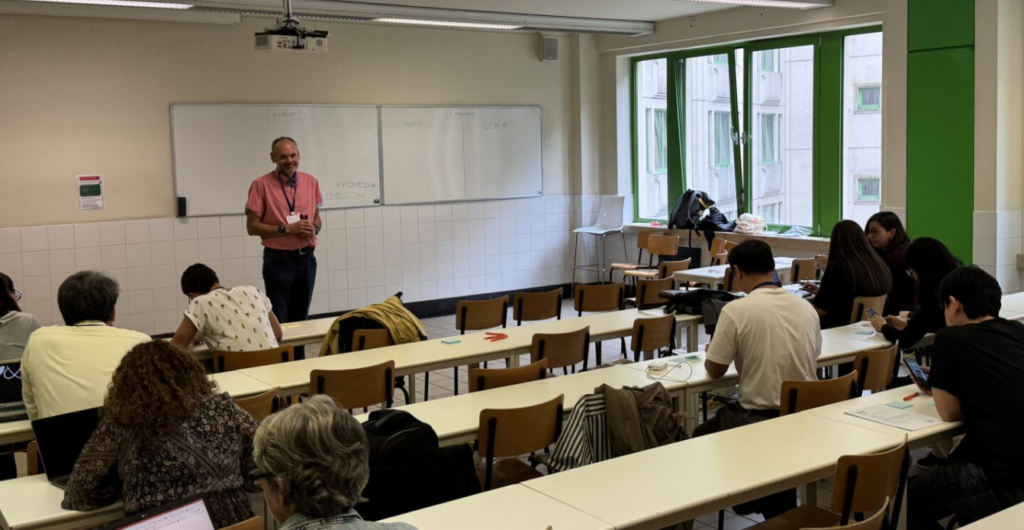
We did a workshop at this year’s ED-Media conference in Brussels about „Creating Educational Videos with an AI Avatar Video Generator

Abstract:
The integration of Artificial Intelligence (AI) into the creation of learning materials represents a cutting-edge frontier. This workshop is designed for educators, content creators, and instructional designers, and will introduce participants to the potential of AI avatar software in the production of educational videos. Through interactive demonstrations and guided practice, participants gain practical skills in utilizing AI avatar software to create educational videos that meet different learning styles and needs. We will explore case studies of successful implementations and discuss strategies for integrating AI avatars into various educational contexts, from K-12 to higher education and corporate training. Additionally, the workshop will address ethical considerations and best practices in the use of AI in education, ensuring that participants are equipped to responsibly navigate the challenges of digital content creation. Participants will leave the workshop with an initial understanding of the capabilities of AI avatar software and their first experience in creating educational videos with this new technology.

[article @ publisher’s homepage]
[article @ ResearchGate]

Reference: Brünner, B. & Ebner, M. (2024). Creating Educational Videos with an AI Avatar Video Generator. In T. Bastiaens (Ed.), Proceedings of EdMedia + Innovate Learning (pp. 1165-1166). Brussels, Belgium: Association for the Advancement of Computing in Education (AACE). Retrieved July 22, 2024 from https://www.learntechlib.org/primary/p/224664/.

[publication] Shaping learning analytics technology through human- centredness #learninganalytics #lak23 #research

We did a small contribution to the 4th International Workshop on Human-Centred Learning Analytics (HCLA) co-located with the 13th International Learning Analytics and Knowledge Conference (LAK2023) about our learning analytics efforts at Graz University of Technology. Our publication titled „Shaping learning analytics technology through human- centredness“ is now online availble, too

Abstract:
Learning Analytics (LA) researchers and practitioners are growing interested in applying human-centred design methods and techniques to design LA technology. This approach finds solutions by involving the perspectives of students, teachers, and other educational stakeholders in all process steps. It enables the creation of technology that resonates and is tailored to the end-users needs. The „Learning Analytics-Students in Focus“ project aims to support the learning and teaching process in the higher education context. Our interdisciplinary team focuses on LA technology that facilitates acquiring and developing students‘ self-regulated learning skills, such as goal setting, planning, monitoring progress, and reflecting. We embraced a Human-Centred Learning Analytics (HCLA) approach since the start of our project, and it helped us to understand students‘ points of view and needs and find solutions together. This article summarises the design process of a LA tool named Planner, which aims to support students in planning and monitoring coursework. We share our experience with various methods and techniques applied in our research and present insights about the benefits and limitations of the HCLA approach. Finally, we highlight how the HCLA approach helped to build a LA community at our university and promote trust towards LA.

[full article @ ResearchGate]
[full article @ workshop’s homepage]

Reference: Barreiros, C., Leitner, P., Ebner, M., Linstädt, S. (2023) Shaping learning analytics technology through human- centredness. In: Proceedings of 4th International Workshop on Human-Centred Learning Analytics (HCLA) co-located with the 13th International Learning Analytics and Knowledge Conference (LAK2023), Virtual, March 13, 2023
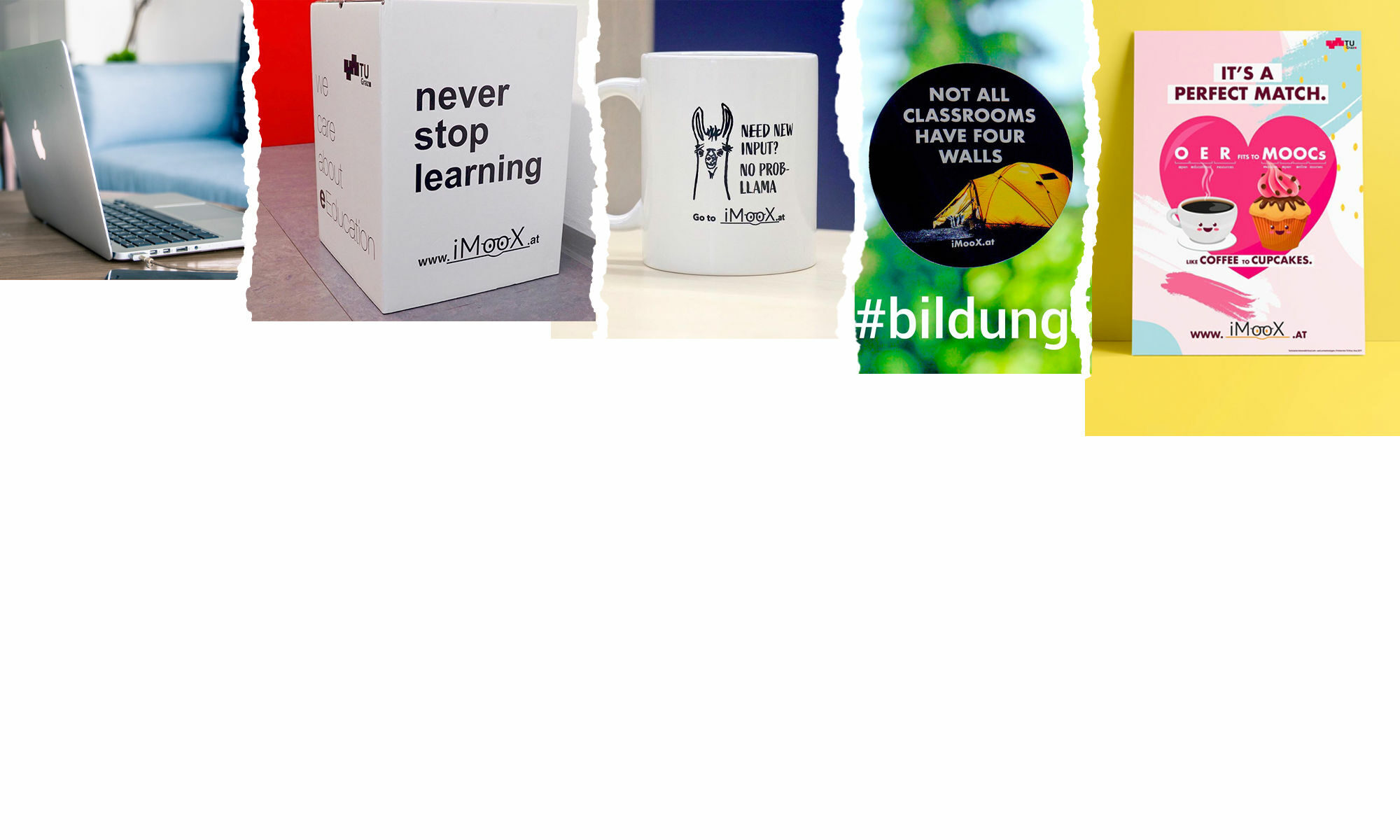
[workshop] Eigene Lehrvideos – von Macharten zu didaktischen Überlegungen #video #workshop

Der Foliensatz für den heutigen (ganztägigen) Workshop ist online hier verfügbar:

Weitere wichtige Links sind:

  • Honkomp-Wilkens, Verena, Karsten D. Wolf, Patrick Jung, und Nina Altmaier. 2022. «Informelles Lernen Auf YouTube: Entwicklung Eines Analyseinstruments Zur Untersuchung Didaktischer Und Gestalterischer Aspekte Von Erklärvideos Und Tutorials». MedienPädagogik: Zeitschrift für Theorie Und Praxis Der Medienbildung 18 (Jahrbuch Medienpädagogik):495-528. https://doi.org/10.21240/mpaed/jb18/2022.03.08.X
  • Lernvideo-Canvas: Ideensammlung für das Lernvideo https://doi.org/10.5281/zenodo.4663702

Neue OER für Lehrer:innen und Schüler:innen – Ergebnisse eines Workshops #oer #phooe

Quelle: CC 0 https://www.flickr.com/photos/195513695@N02/52038174741/

Im Rahmen eines Lehrauftrags an der PH Oberösterreich haben Sandra Schön und ich wieder einen zweitägigen Workshop zu den Themen OER und MOOCs angeboten. Als Arbeitsauftrag gilt es dabei auch, OER zu veröffentlichen. Wir freuen uns sehr, dass es damit wieder gelungen ist, vielen Knowhow und Spaß am OER-Machen vermitteln zu können – und natürlich auch darüber, dass es nun wieder vier Handvoll mehr OER gibt:

[workshop] Offene Bildungsressourcen (OER) erfolgreich finden, korrekt nutzen und nachhaltig erstellen #OER #OpenEducation #tugraz

Heute darf ich einen Workshop zu „Offene Bildungsressourcen (OER) erfolgreich finden, korrekt nutzen und nachhaltig erstellen“ an der Universität Erlangen/Nürnberg halten. Dazu gibt es einen Foliensatz, der einerseits dazu dient ins Thema einzuführen und andererseits auch noch weitere Informationen zu liefern.

Hier die Unterlagen:

[publication] Die Monster-MOOC-Weiterbildung – Erfahrungen mit der Übertragung eines interaktiven Präsenzworkshops in den digitalen Raum #covid19 #research #workshop

Einen interaktiven Workshop gestalten: geschenkt. Doch wie bringt man ihn in den virtuellen Raum? Ich habe die Herausforderung in der COVID-19-Krise angepackt und ein Workshopdesign, mit dem wir im Präsenzformat bei der Universität Passau (Lehre+ Hochschuldidaktik) gute Erfahrungen gemacht haben möglichst 1:1 in den virtuellen Raum übertragen und dort mit Lehrenden der FH Salzburg durchgeführt.

Im Beitrag wird das Konzept eines Präsenzworkshops zur Einführung von MOOCs (Massive Open Online Courses) für Lehrende an Hochschulen vorgestellt, wie es im Jahr 2013 mit hohen Anteilen von Interaktion und Gruppenarbeit entwickelt wurde. In der Folge der COVID-19-Krise und Umstellung auf Home Office und Online-Begegnungen wurde versucht, das methodisch-didaktische Konzept möglichst gleichartig in den digitalen Raum zu übertragen. Im Artikel wird beschrieben, welche Tools dabei zum Einsatz kamen und wie sie sich auf die Arbeitsweisen und -ergebnisse ausgewirkt haben.

Man kann jetzt nicht nur nachlesen wie wir Workshops für MOOC-Einsteiger/innen gestalten in Präsenz und Online gestalten, sondern auch, auf was man beim Übertragen ins Online-Format achten sollte.

[workshop] Offene Bildungsressourcen in (Hoch-)Schulen

Ich darf heute wieder einen Workshop um das Thema Open Educational Resources halten. Hier einmal der Foliensatz:

Klicken Sie auf den unteren Button, um den Inhalt von www.slideshare.net zu laden.

Inhalt laden

Weiters besprechen wir auch den OER-Canvas für OER-Projekte, welchen ich bereits hier einmal veröffentlicht habe.